
orN Hebrew Vision News Exclusive
by Miykael Qorbanyahu aka The End Time Scribe
Torah: Deuteronomy 1.1-3.22 Haftarah: Isaiah 1.1-27 Witness: Mark 14.1-16
=====================================================
This is how the rabbis understood Moshe’s statement: “Who am I that I should go before Pharaoh” (Exodus 3.11). “Did You not say,” Moshe demands of [Elohim], ‘I will surely raise you out?” (Genesis 46.4) [i.e., it is [Elohim’s “I,” not Moshe’s, that should go before Pharaoh]. But this word was actually fulfilled through Moshe, who was entirely Torah; “Shekinah spoke from within his throat.” Thus Scripture says: “‘Are not My words like fire?’ says יהוה” (Jeremiah 23.29). It is the way of fire that all who draw near to it are turned into fire. So it was with Moshe: he became entirely Torah. Something like this happens to everyone who studies Torah; such a person is transformed into a “master of Torah,” all in accordance with the amount of study.”
Sefat Emet: Parashat Debarim. pg. 285
Across the Jordan in the land of Moab, Moses began to explain this Torah saying…
Deuteronomy 1.5
=====================================================
 Many a hero’s journey begins with self-doubt. As a seeming necessary stage of development for assuming their calling, doubt serves as the darkness that allows for the light-seeds of faith and certainty to gestate in the womb of consciousness. Then as the light-seeds of faith and certainty begin to grow, the darkness of doubt dissipates and eventually is completely disappeared when the light-seeds take root and bear fruit. And so it is that with the springing forth of this new found life of faith and certainty that there also arises a renewed consciousness that redefines the entire existence of whomever has decided to respond to the higher call and embark on a transformative journey into the inner depths of their soul where the answers to the mysteries of the meaning of life are discovered.
 Being the initial stage of the heroes journey, we find that the steps taken from doubt to faith are present in various cinematic and literary productions. Perhaps the most famous of type of this journey were those of Luke Skywalker in the Star Wars trilogy and Neo in the Matrix series. For both of those heroes, self-doubt was the first obstacle that had to be defeated in order for their destiny to be made manifest. So when considering the common elements associated with this heroic formula, according to scholar Joseph Campbell, author of The Power of Myth and other notable books, we see that there is a common 12 stage process that is essential to prove the credibility and fortitude of the hero which ends with the individual being recognized and celebrated by all his peers due to the accolades that they have either personally accomplished or assisted a group of others to fulfill. With this in mind, Campbell identifies the Hero’s Journey as follows:
- THE ORDINARY WORLD. The hero, uneasy, uncomfortable or unaware, is introduced sympathetically so the audience can identify with the situation or dilemma. The hero is shown against a background of environment, heredity, and personal history. Some kind of polarity in the hero’s life is pulling in different directions and causing stress.
- THE CALL TO ADVENTURE. Something shakes up the situation, either from external pressures or from something rising up from deep within, so the hero must face the beginnings of change.
- REFUSAL OF THE CALL. The hero feels the fear of the unknown and tries to turn away from the adventure, however briefly. Alternately, another character may express the uncertainty and danger ahead.
- MEETING WITH THE MENTOR. The hero comes across a seasoned traveler of the worlds who gives him or her training, equipment, or advice that will help on the journey. Or the hero reaches within to a source of courage and wisdom.
- CROSSING THE THRESHOLD. At the end of Act One, the hero commits to leaving the Ordinary World and entering a new region or condition with unfamiliar rules and values.
- TESTS, ALLIES AND ENEMIES. The hero is tested and sorts out allegiances in the Special World.
- THE APPROACH. The hero and newfound allies prepare for the major challenge in the Special world.
- THE ORDEAL. Near the middle of the story, the hero enters a central space in the Special World and confronts death or faces his or her greatest fear. Out of the moment of death comes a new life.
- THE REWARD. The hero takes possession of the treasure won by facing death. There may be celebration, but there is also danger of losing the treasure again.
- THE ROAD BACK. About three-fourths of the way through the story, the hero is driven to complete the adventure, leaving the Special World to be sure the treasure is brought home. Often a chase scene signals the urgency and danger of the mission.
- THE RESURRECTION. At the climax, the hero is severely tested once more on the threshold of home. He or she is purified by a last sacrifice, another moment of death and rebirth, but on a higher and more complete level. By the hero’s action, the polarities that were in conflict at the beginning are finally resolved.
- RETURN WITH THE ELIXIR. The hero returns home or continues the journey, bearing some element of the treasure that has the power to transform the world as the hero has been transformed.
 For the people of Israel, one of the greatest hero’s that is recognized and celebrated in our long list of dignitaries is the prophet and priestly-king Moshe ben Amram. His journey to national recognition and celebrity comes as a result of his successful engagement of the 12 stages that Campbell outlines, as from his appearance in the scroll of Shemot unto the completion of his mission in Bemidbar, each of the stages clearly redefined and prepared Moshe for the role that he was called to assume for the embryonic nation of Israel.
As such, it was the ominous birth of Moshe that set the tone for the beginning of his journey. In a dream that the Pharaoh had which disturbed him, it was symbolically forecasted to him of the coming of a Hebrew deliverer who would not only break the yoke of oppression off the necks of the Hebrew people that the Mitzrites would come to place on them, but the entire country Mitzrayim itself would also come to be broken, along with their idol deities, by Moshe and his Power. Intensifying the intrigue of this brewing ordeal, and as destiny would have it, the wicked Balaam, descendant of Laban the Aramean – nemesis of Ya’aqob – was for the first time introduced as his role here was to provide the interpretation of the dream, as well as a solution, for the Pharaoh, as he informed him that
This [dream] means nothing else but a great evil that will spring up against Egypt in the latter days. For a son will be born to Israel who will destroy all Egypt and its inhabitants, and bring forth the Israelites from Egypt with a mighty hand. Now therefore, O king, take counsel upon this matter, that you may destroy the hope of the children of Israel and their expectation, before this evil arise against Egypt.
Jasher 67.18b-20
 As we are well aware of the circumstances, the slaughter of the innocents then took place, as well as the initiation of a most gruesome bondage which would come to break the spirit of the Hebrew people which nearly extinguished all hints of light that they once bore. It is against this setting that Moshe would enter the world where his people were being brutally afflicted and obstinately oppressed under the heavy and burdensome hand of the Mitzrites. But being trained in all the wisdom of the Mitzrites, the Torah tells us how Moshe was raised in the house of Pharaoh after being found by the Pharaoh’s daughter in the Nile river after being placed there by his sister because he could be hid no longer in the house of his parents from the murderous taskmasters of the Mitzrites.
 Interestingly at his birth the child Moshe received several names, including his most prominent one by which we have come to know him from Bathia, Pharaoh’s daughter, which she gave him after she drew him out of the Nile’s waters. However, we find in the book of Jasher that he received several names from his people in expectancy of who he would become to and for them. His father Amram named him Chabar in light of his reassociation with his wife of whom he left after the decree by Pharaoh to exterminate the Hebrew infants was made. His mother Yocheved named him Yekuthiel because she had hoped for Elohim to restore Amram, her husband, back to her after their separation. His sister Miriam named him Yered as she descended to the river Nile to know what his end would be. His brother Aharon named him Abi Zanuch being that their father returned to their mother on his account. His grandfather Kehath called him Abigdor as on his account Elohim restored the breach of the house of Ya’aqob and the Mitzrites no longer threw the Hebrew babies alive in to the water. His midwife named him Abi Socho as a result of being hidden in his parents tabernacle for three months. All of Israel named had him Shemiyah as they had come to perceive that יהוה had heard their cries and rescued them from their oppressors.
With these names that Moshe received from his people, it served as an integral factor in his destiny, as within Hebrew culture names are significant for not only identifying the individual who has been born, but also for capturing the unique essence and the prophetic mission that its bearer is to fulfill. Moshe, from birth, was conceived of by the people as the deliverer and reedemer of the Hebrews; a reality that he would have to come to perceive and believe himself and then vie and convince an entire generation of his mission against the most defying of odds.
Being raised by his biological parents until the time he was weaned, Moshe was instilled with the consciousness of Hebrew peoplehood from birth. So with his first dilemma of witnessing a Mitzrite taskmaster beating a Hebrew, his innate sense of empathetic connection to his people kicked in and he responded by killing the Mitzrite with the Divine name of יהוה. Now fleeing for his life, Moshe runs off into the wilderness where his journey was then to officially begin.

 From being crowned king of Kush to becoming a prisoner in the house of his future father-in-law, the Midianite high priest Reuel, the second stage for Moshe’s journey was set as his transition from the ordinary world to the call to his mission was marked with the polarity and stressors that every hero encounters at that particular juncture in their life. Now beyond the age of his fifties, after ten years of confinement, receiving the staff of Adam and marrying Reuel’s daughter Zipporah, it was while seeking for one lost kid from the goats he was tending that Moshe encounters Existence’s innermost reality in the mountains of Horeb. His calling begins at the burning bush where he initially refuses the call in his encounter with יהוה, eventually to accept it as his heavenly mentor encourages him to cross the threshold as his tests were to begin with he and his brother Aharon’s approach to the new Pharaoh with the demand to let his people go.
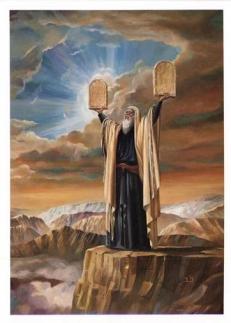 Now slate to face his greatest fear of returning to Mitzrayim, Moshe undergoes an ordeal whose reward is beset with seemingly insurmountable challenges in the form of the world’s greatest known empire of its time. It is, in a sense, his resurrection from the dead, replete with his backing of the power of his Elohim who the Pharaoh, nor the archives of Mitzrayim, knew not. After eventually toppling the oppressors and enslavers of his people, he leads the newly liberated nation to Mount Sinai where for forty days and nights he goes into the fiery mountain to return with the elixir, the Torah, fully illuminated in the brilliance of the Shekinah of יהוה, invoking fear in the hearts of all who see his face. And for the rest of the story up unto this week’s parashat, which is called Devarim (Hebrew for words), Moshe continually experienced power struggles with the people who he came back to liberate.
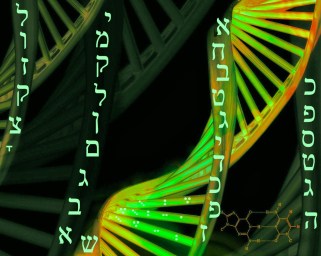 But now that the entire generation of grumblers and rebels have perished in the wilderness, Moshe stands uncontested before their children who have matured into adults and are now primed and ready to move forward into their promise. With this new harvest of souls situated on the precipice of the Promised Land in the Arabah, as their undisputed leader, it is in this light that we now see Moshe as the incarnate Torah. Through each of the stages of his journey, he has been shaped and molded into the embodied Mind of יהוה, fully capable of explaining the inner meaning and application of the living Word of Elohim, which he now has encoded within his very DNA. Fully and clearly aware of the divine intentions and heavenly secrets, Moshe’s disclosure of the Torah in Deuteronomy comes from a different prophetic perspective in that he now speaks as an authority in regards to the matters of יהוה’s Word, while prior to this he spoke as the representative and spokesperson for יהוה. This delineation in his capacity as prophet that Moshe assumed in Deuteronomy was the first occasion of only two individuals who have come to attain this heightened level of consciousness and intimate attachment to the Spirit of יהוה; the other being Yahoshua ben Yoseph.
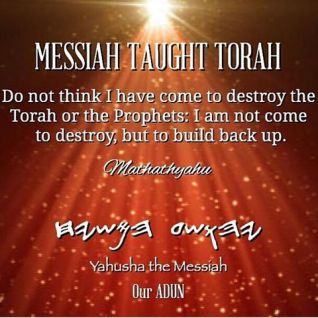 Like Moshe who was charged with the mission of leading souls to redemption from their bondage to materialism, Yahoshua’s teachings on the Torah are considered intensifications and in the Spirit of the Law spoken to break the yoke of sin and death off of the souls of the children of Israel. Though stating definitively that his teachings were not exclusively his, but his Father’s who sent him, the authority in which he taught was uncanny and a challenge to the power structure of his day. An example of his teaching can be recalled with these words recorded from his famous Sermon on the Mount,
You have heard that it was said, ‘you shall love your neighbor and hate your enemy.” But I tell you, love your enemies and pray for those who persecute you, so that you may be the children of your Father in heaven. He causes His sun to rise on the evil and the good, and sends rain on the righteous and the unrighteous. For if you love those who love you, what reward do you have? Even the tax collectors do the same, don’t they? And if you greet only your brothers, what more are you doing than anyone else? Even the pagans do that, don’t they? Therefore be perfect, just as your Father in heaven is perfect.
Matthew 5.43-48
 This perfection of which Yahoshua spoke is the exact same standard of observance that Moshe exhorted his generation to fulfill in accordance with the observance of Torah. This is a standard, in principle, that goes back to Adam, Noah and Abraham, of which each are expected to reflect the image and likeness of our Father and King through the means of our consciousness, intellect and actions. Herein lies the key to receive the authority to successfully complete each of the hero’s 12 stage journey. This perfection is also what gives individuals the access to become the Torah. And while Moshe nor his predecessors were never expressly called the incarnate Torah, it is Yahoshua who is called the Word made flesh, a mission that he and our righteous patriarchs and matriarchs accomplished. For this too is the destiny of each and every one of us who have been called to the Wedding Feast of the Lamb in the Promised Land where those who have embarked on their journey to heroism finds its ultimate fulfillment.
 This is the meaning of Devarim, or the words which Moshe spoke to the new generation of Hebrews who found themselves on the brink of breakthrough, dedicated and faithful to the instructions of their leader and hero, Moshe ben Amram. Ultimately, we are all to become the embodiment of the Torah; a Messianic nation; a living scroll if you will, completely devoted to a life of righteous fulfillment of the commandments of Elohim. So as it was for our ancestors with Moshe, so it is for us today with Yahoshua ben Yoseph, as the Lamb of Elohim, who is able to bring us into perfection and the promises of the covenant, as it is written
Then the messenger tells me, ‘write: blessed are those who have been invited to the wedding feast of the Lamb!’ He also tells me, ‘these are the true words of Elohim.’
Revelation 19.9

Selah…
Discover more from SHFTNG PRDGMZ
Subscribe to get the latest posts sent to your email.


2 Comments