
Hebrew Vision News Exclusive
by Miykael Qorbanyahu aka The End Time Scribe
Torah: Genesis 12.1-17.27 Prophet: Isaiah 40.27-41.16 Witness: Matthew 1.1-17
________________________________________________________________
And it came to be when Aḇram was ninety-nine years old, that יהוה appeared to Aḇram and said to him, “I am Ěl Shaddai – walk before Me and be perfect.
Genesis 17.1
Nearly the entire body of religious law that Judaism knows as Halakhah belongs, according to Maimonides, to a very widely conceived “corporeal perfection” that includes a minimal set of beliefs that such perfection requires. These include the basic tenets of traditional monotheism. Other precepts require striving for the ultimate human perfection, a state described as “love of [Elohim] and related unequivocally to a knowledge of [Elohim] for which philosophical learning is required. The two perfections are therefore clearly ranked in the order of perfection: corporeal perfection is a means to the supreme end. The question in what sense exactly security, health, and virtue are means to the highest human excellence, is central to any understanding of Maimonides’ philosophy of religion.
________________________________________________________________
 It is a common notion in Western civilization that perfection is an unattainable ideal for which humanity should strive but never expect to reach. We have been led to believe, even from most of our esteemed spiritual “leaders”, that there is nothing that we can possibly do in life to accomplish such a grandiose state of being. However, nothing could be further from the truth given our dormant powers and abilities that have been invested within us by heaven’s Host that await awakening once we turn back and surrender ourselves to the One who is able to keep [us] from stumbling, and to present [us] blameless. More significant to this factor are the instructions that we have been given to attain the state of perfection in the form of the Torah, which in fact, is more simplistic in its application than we have customarily been led to believe. The reason for this blunder of belief is the result of the fundamental misunderstanding of what the Hebraic connotation, idiom and the heavenly imperative for perfection is all about.
In Hebrew, the root word for perfection is תָּמַם/tamam, which has as its meaning to complete, in a good or a bad sense, literally or figuratively, transitively or intransitively: accomplish, cease, be clean [pass-]ed, consume, have done, (come to an, make an) end, fail, come to the full, be all gone, be all here, be (make) perfect, be spent, sum, be (shew self) upright, be wasted, whole. Furthermore, tamam idiomatically implies the spotless condition of the lambs or the offerings, signifying that all of the attributes of life have been developed and that there is no lack or shortcoming of representation concerning the being of יהוה. This is the state into which our father Abraham was able to develop himself, transforming from an idolater to a tzaddik, or righteous man. This accomplishment was able to take place within him given the reality that he was able to live his life as יהוה had commanded him. It is this very simple act of following the commandments and instructions of Elohim, in Spirit and Truth, that allows for humanity to become refined spiritually along their journey in, through and with life. This is also what the psalmists sought to explain to us when he wrote, blessed are the perfect in the way, who walk in the Torah of יהוה. As heaven’s imperative, the standard is reaffirmed and also established by Yisrael’s Messiah who informs his taught one’s as he expounded on the beatitudes to be perfect, as your heavenly Father is perfect.

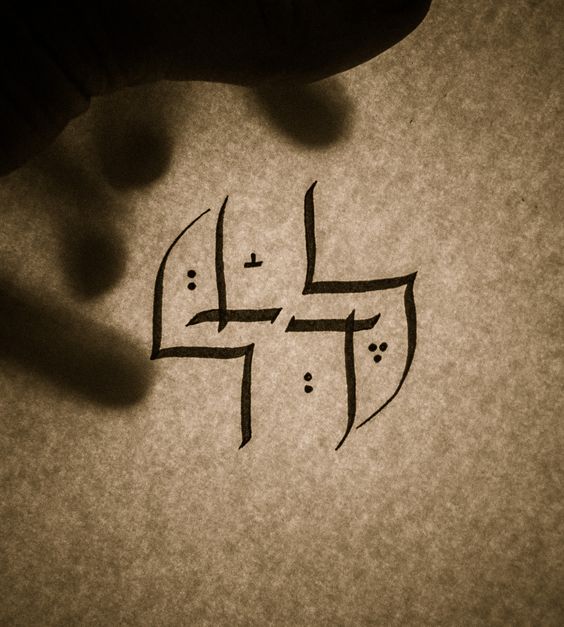
That each of us are on a journey in a life is an absolute truth. It is also absolute that the way in which we walk on our path ultimately determines the quality of life which we experience. An interesting point to make known at this point is that the only identification given to the ministry of Messiah Yahoshua in the apostolic writings was called the Way. The Hebrew word for way in this context is דרך/derekh. As such, it means way, road, path, a journey…manner [or] custom of life. Furthermore, according to Study Light’s Language Study of Hebrew Thoughts, derekh is similar to הלך/hâlak [which means] “to go” or “go along with”. This is also the root word for this week’s parashat Lekh Lekha. Technically, halakha is the corpus of case law and right-rulings that surrounds the Torah which provides context for the governing life relative to the high calling of the nation of Israel. When we put these two words together, therefore, we have the phrase derech halakha, or the Way of the Walk; the essential manner of life for one who is observant of Torah. With this in our sights, it is the aim of this writing to definitively identify the principle mode by which those who walk along the way of this journey through life as the seed of Abraham are to accordingly conduct ourselves.
In this week’s sidrah, we come to find that one of the most significant standard conditions of being party to the covenants of promise, which was first revealed to our father Abraham, is to walk before יהוה and be perfect. Perceived and innerstood as an alignment of wills with the Most High, perfection is a state of mind that is founded and grounded in the Torah which then produces right behavior, which Hebrew Vision has earlier identified in previous writings as orthopraxy. Through proper perception of the will of heaven and orthopraxy, one is able to come to properly reflect the image and likeness of יהוה which, according to the taught one Peter, is the revelation of יהושע Messiah, as he expounds upon in his first epistle;
Therefore, having girded up the loins of your mind, being sober, set your expectation perfectly upon the favor that is to be brought to you at the revelation of יהושע Messiah, as obedient children, not conforming yourselves to the former lusts in your ignorance, instead, as the One who called you is set-apart, so you also should become set-apart in all behavior, because it has been written, “Be set-apart, for I am set-apart.”
I Peter 1.13-16
 Being that the Messiah is the goal of the Torah, it is the objective of the Torah to refine the nature of humanity by regenerating not only the soul of humankind, but also the human body. For it is in the regeneration of nature that humanity is able to ascend from their base nature to their peak consciousness and so enter the state of perfection. This does not come, however, without trial and judgment. The evolution of the soul is akin to Abram ben Terah becoming Abraham ben Elohim after being renamed by יהוה; a transformation of his very material substance (i.e., thoughts, words, actions) and nature (i.e., desires, proclivities, interests, vision) that is befitting of the spiritual essence that he came to embody after his probation period was completed. This was done through his exposure to, internalization and application of the Torah in light of his encounters with the daily rigors and challenges of life. Without his awareness of the emanation and vibration of the Torah, however, Abram would have never become Abraham, the child of the Most High, who received the promises of the covenant and became the father of all who would become members of the household of faith of Israel. With Abraham leaving the land of his origin at the direction of the Power of his ancestors, his journey to the realm of perfection began, as we are told by the Zohar that
…[e]verything, however, occurs by the secret of Wisdom. David was not ready to receive the kingship until he had connected himself to the Patriarchs buried in Hebron, through whom he was to receive the kingship. Therefore, he remained IN HEBRON for seven years, until he was fit to receive the kingship properly. Thus, everything occurred by the secret of Wisdom so that his kingship would be properly established! The same applies to Abraham; he did not achieve complete fulfillment with the Holy One, blessed be He, until he entered the land of Yisrael.
For Abraham, his journey from Babel to Yisrael was a matter upon which he embarked at the behest of יהוה for the purpose of perfecting his walk in life for the sake of manifesting Heaven’s Kingdom on Earth. Like the 10 utterances from heaven that brought forth creation, Abram was recreated and then called Abraham after a succession of ten tests which he passed, causing him to be one of the world’s first chassidim, or lovers of יהוה. These ten utterances are reflective of and related to the Kabbalah’s ten sephirot which brought all of existence into being, as well as the ten commandments which gave birth to the new national reality of Israel following their Exodus from Mitzrayim. Interestingly, the number ten represents the divine order established in a complete congregation, body or kingdom. This is what Abraham was able to achieve; the perfection of the soul, the completion of his development as he underwent the process of refinement in perfect harmony and alignment with the Torah. Of Abraham’s sojourn unto life and perfection, the Rambam, Moshe ben Maimon (Maimonides) identifies what perfection is and states how to go about achieving such levels in his classic work, Mishneh Torah, informing us that
One who serves [Elohim] out of love occupies himself in the Torah and the mitzvot[/commandments] and walks in the paths of wisdom for no ulterior motive: not because of fear that evil will occur, nor in order to acquire benefit. Rather, he does what is true because it is true, and ultimately, good will come because of it. This is a very high level which is not merited by every wise man. It is the level of our Patriarch, Abraham, whom [Elohim] described as, “he who loved Me,” for his service was only motivated by love…What is the proper [degree] of love? That a person should love [Elohim] with a very great and exceeding love until his soul is bound up in the love of [Elohim]. Thus, he will always be obsessed with this love as if he is lovesick.
 That love is the fulfillment of the Torah and the perfection of the soul, so as demonstrated by our father Abraham, provides us with the essence of the Way by which we are to Walk. With our focus on the love of our heavenly Father we are able to make evident our perfection relative to the importance and priority of placing יהוה before us in every matter of our life. The consequence of such prioritization is expressly stated within the ten commandments where it states that the Most High show[s] kindness to thousands, to those who love [Him] and guard [His] commands. Herein lies the key to the embarking on the path of perfection which those in covenant with יהוה are to utilize in order to bring the world in to alignment with the will of Heaven.
For when we are found loving our Creator and our neighbor, then we will bring the entire Torah into fulfillment as Abraham did throughout his life with his love directed towards the Power of his ancestors and those he encountered. It is unequivocal that the way of love is the defining principle in our walk, as members of the household of faith. For love is the force by which we are able to manifest the divine presence of the Most High on Earth. It is also with, through and by love that we are able to arrive at the state of perfection. It is love that will also allow us to be able to fully keep the Torah of יהוה, because it is our love for our heavenly Father and King that motivates us to do so. It is also because we are loved by the Most High and have been given the best of what is to be offered from Heaven that we are able to reciprocate our love for the Most High and give our best to our Power and to our neighbor. In the final analysis, let it be known again that to selflessly love Creator and creature, according to the Torah, which is the will of Heaven, is to achieve perfection on Earth in the here and now. This principle is clearly stated in Rav Shaul’s epistle to the Romans when he explains to them the sovereign law of love, stating that one should
Owe no one anything except to love one another, for the one who loves another has fulfilled the Torah. For the commandments—“You shall not commit adultery, you shall not murder, you shall not steal, you shall not covet,” and any other commandment—are summed up in this word: “You shall love your neighbor as yourself.” Love does no harm to a neighbor; therefore love is the fullness of the Torah.
Romans 13.8-10

Selah…
_____________________________________________________
Additional information on perfection:
http://www.chabad.org/library/article_cdo/aid/137287/jewish/Tav-Perfection.htm
https://torah.org/torah-portion/dvartorah-5763-vayakhel/
http://www.crivoice.org/perfect.html
http://www.hebrew4christians.com/Meditations/Tamim/tamim.html
https://www.blueletterbible.org/lang/lexicon/lexicon.cfm?Strongs=H8549&t=KJV
http://lexiconcordance.com/hebrew/8549.html
http://www.dictionary.com/browse/perfect
There is a unique process of preparation that a soul undergoes prior to entering our physical realm. This process consists of promises and commitments made by the soul to the Creator. The soul pledges to embrace the spiritual path of change through Torah and Kabbalah during its lifetime. The specific Torah portion that relates to this passage of Zohar is Lech Lecha, which translates into Go You, Out of Your Country. The verse concerns [Elohim]’s call to Abraham to leave and go out from his homeland and enter into the Land of Israel. The story is a code and a metaphor concerning the journey of the soul as it leaves the Upper World on its sojourn into our earthly realm.
Zohar Synopsis to Lech Lech Chapter 3
Discover more from SHFTNG PRDGMZ
Subscribe to get the latest posts sent to your email.


1 Comment