
Hebrew Vision News Exclusive
by Miykael Qorbanyahu aka The End Time Scribe
In the one hundred and seventieth year the yoke of the Gentiles was removed from Israel, and the people began to write in their documents and contracts, “In the first year of Simon the great high priest and commander and leader of the Yahudim.” In those days Simon encamped against Gazara and surrounded it with troops. He made a siege engine, brought it up to the city, and battered and captured one tower. The men in the siege engine leaped out into the city, and a great tumult arose in the city. The men in the city, with their wives and children, went up on the wall with their clothes rent, and they cried out with a loud voice, asking Simon to make peace with them; they said, “Do not treat us according to our wicked acts but according to your mercy.” So Simon reached an agreement with them and stopped fighting against them. But he expelled them from the city and cleansed the houses in which the idols were, and then entered it with hymns and praise. He cast out of it all uncleanness, and settled in it men who observed the law. He also strengthened its fortifications and built in it a house for himself. The men in the citadel at Jerusalem were prevented from going out to the country and back to buy and sell. So they were very hungry, and many of them perished from famine. Then they cried to Simon to make peace with them, and he did so. But he expelled them from there and cleansed the citadel from its pollutions. On the twenty-third day of the second month, in the one hundred and seventy-first year, the Yahudim entered it with praise and palm branches, and with harps and cymbals and stringed instruments, and with hymns and songs, because a great enemy had been crushed and removed from Israel. And Simon decreed that every year they should celebrate this day with rejoicing. He strengthened the fortifications of the temple hill alongside the citadel, and he and his men dwelt there. And Simon saw that John his son had reached manhood, so he made him commander of all the forces, and he dwelt in Gazara.
1 Maccabees 14.41-53
The Jews, to be sure, played only a small part on the grand stage of the Hellenistic world—or even in the vast realm nominally under the hegemony of the Seleucid kings. An imbalance of information, it can be claimed, brings undue notice to the Jewish nation, obscuring the fact that in the sphere of high politics and amidst the titanic clashes of the Hellenistic monarchies the Jews were hardly more important than the denizens of Pontus or Cyrene. True enough—up to a point. Yet no apologies need be made for reopening the subject. It carries significance on a broad front and for substantial reasons: not only because of the long-range religious and cultural influence of Judaism for which this persecution—and the reaction it provoked, the Maccabean revolt—proved to be a pivotal moment in history, but also because the episode presents our best-documented example of the tensions between Hellenism and native traditions in the Near East, and the strains inherent in imperial rule over disparate societies in the Hellenistic Age. The drive to resolve this intractable puzzle remains potent, and justifiably so: why did Antiochus IV break sharply with the long-standing policy of both the Ptolemies and the Seleucids in Palestine and engage in a brutal repression with such fateful consequences for Jewish history and for Hellenism in the East?
Hellenism and Persecution: Antiochus and the Jews by Erich S. Gruen
 According to Webster’s Dictionary, hegemony is defined as the social, cultural, ideological or economic influence exerted by a dominant group. Indicative of imperial pursuits, the civilization that seeks to impose its hegemony on those whom they’ve conquered inevitably comes to subject the conquered peoples to the norms and policies that through victory get enforced upon the vanquished, often with the penalty of death if their decrees are not heeded. In this light, it should be clear to see that the hegemony of Western Civilization, a hallmark expression of a insatiable civilization intent on controlling other lands, peoples and resources, has forced its way on the geopolitical landscape for the past two thousand years plus. And for Afrika, the oldest continent on earth, the impact of Western imperialism has ravaged the world’s richest land on Earth.
From the days of Alexander the Macedonian’s defeat of the empire of the Medo-Persians, Western Civilization has maintained its strong foothold on controlling the affairs of the world. In fact, the Greco-Roman hegemony has so influenced the course of events for the past two and a half millennia that most today believe that civilization began with Euro-Gentile ingenuity. While the world has undeniably felt the effects of the Western hegemony, nonetheless, Afrika has felt the heaviest weight of the West’s imprint on their way of life. Though Afrika has suffered longer and more than any other continent on Earth, Afrika has also offered the longest and most resistance to the West’s hegemonic incursions.
 One of the first countries in Afrika to resist the West’s hegemonic offensive was the small kingdom of Israel. With the death of Alexander the Grecian empire was divvied up in three which caused a struggle of power to ensue between the divisions. With the kingdoms of Lysimachus, Ptolemies and Seleucids, the land of Israel became a hotly contested area between the Ptolemy and Seleucid empires. It was in 198 BCE when Antiochus III gained a major victory over the Hellenic Egyptian empire under the Ptolemies after which the land of Judea was annexed into the Seleucid empire.
With this annexation, an initial continuation of the Judeans way of life was allowed. It wasn’t until Antiochus’s successor, his son Antiochus IV, rose to power that a full fledged program of Hellenization was enforced on the Israelites starting around 176 BCE. With this political move, in response to Rome’s ascending power, the Western hegemony revved up its political machinery and began aggressively implementing policies that disallowed any trace of indigenous Israelite culture to be expressed. These policies resulted in a rebellion which was in response to such acts by Antiochus such as the desecration of the Jerusalem temple, the erection of an altar to Zeus, allowing swine to be sacrificed on the altar, the banning of Sabbath observance and circumcision as well as other essential requirements of the Torah.
Yet, as if the imperial exploits of the Seleucid empire weren’t enough, it was the foretold events by the prophet Daniel of the apostatizing acts of faithless Israelites that pushed the righteous remnant of the covenant observant members of the household of faith to their limits which finally sparked their rebellion. Ingratiated by the Hellenist sympathizers among the Judeans, Antiochus was cajoled into bringing Hellenism to Jerusalem as the apocryphal book of 1 Maccabees records these words,
At that time there appeared in the land of Israel a group of traitorous Jews who had no regard for the Law and who had a bad influence on many of our people. They said, “Let’s come to terms with the Gentiles, for our refusal to associate with them has brought us nothing but trouble.” This proposal appealed to many people, and some of them became so enthusiastic about it that they went to the king and received from him permission to follow Gentile customs. They built in Jerusalem a gymnasium like those in the Greek cities. They had surgery performed to hide their circumcision, abandoned the holy covenant, started associating with Gentiles, and did all sorts of other evil things.
1 Maccabees 1.11-15
For the faithful remnant of Israelites, however, these terms did not bode well at all. Instead, there was a fervency of resistance stoked among the faithful to put an end to such Israelite ways of self-hatred, so much so that an outright rebellion was sparked. Led by a priest named Mattithyahu, the rebellion formally began when he killed a fellow priest who was about to follow the decree from one of Antiochus’s officials who attempted to persuade him to make a sacrifice to one of their idols. Following this event, Mattithyahu went through the town of Modein proclaiming to every faithful Israelite willing to obey the Torah to follow him and forsake everything that they possessed to another location. Of this, the book of Maccabees states,
At that time also many of the Israelites who were seeking to be right with [Elohim] through obedience to the Law went out to live in the wilderness, taking their children, their wives, and their livestock with them, because of the terrible oppression they were suffering. The report soon reached the king’s officials and the soldiers in the fort at Jerusalem that some men who had defied the king’s command had gone into hiding in the wilderness.
1 Maccabees 2.29-31
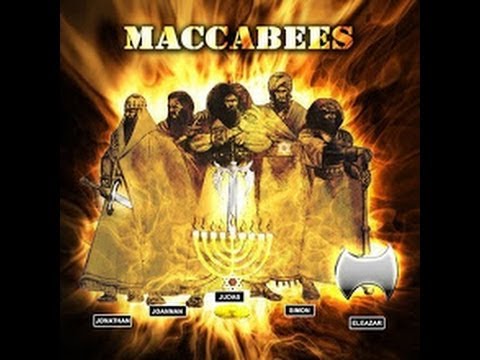
With his band of rebels, eventually led by his son Yahudah the Hammer, a strategic front of guerrilla warfare was successfully launched against the Grecian empire’s siege of Judea and Jerusalem. With the victorious campaign against the vicious Western hegemon, the Hasmonean dynasty began to take root in the land of Israel following the rededication and purification of the Jerusalem temple in 164 BCE. The events surrounding the reclaiming of lands and locations in Judea have come to be memorialized with the festival known as Hanukkah.
The word Hanukkah in the Hebrew lexicon means to dedicate or consecrate. It comes from a root word meaning to train up, initiate or discipline. Interestingly, this word also provides us with the root for the proper name Hanoch, or Enoch, which has as its inner meaning the lifting up of the potentials of united branches unto the favor of יהוה which is upon those who are combining their life branches freely unto the overcoming of death’s actions and words. From the book of Enoch, we find this most interesting prophetic utterance which was given to encourage future generations to remain steadfast during troubled and perilous times. As he foretold of the seventh prophetic week which will witness an apostate generation arise, he also shares insight on how to overcome such treachery by the apostates and their Gentile paramours, writing
And now I say unto you, my sons, love righteousness and walk therein; F\for the paths of righteousness are worthy of acceptation, But the paths of unrighteousness shall suddenly be destroyed and vanish. And to certain men of a generation shall the paths of violence and of death be revealed, and they shall hold themselves afar from them, and shall not follow them. And now I say unto you the righteous: walk not in the paths of wickedness, nor in the paths of death, and draw not nigh to them, lest ye be destroyed. But seek and choose for yourselves righteousness and an elect life, and walk in the paths of peace, and ye shall live and prosper. And hold fast my words in the thoughts of your hearts, and suffer them not to be effaced from your hearts; for I know that sinners will tempt men to evilly-entreat wisdom, so that no place may be found for her, and no manner of temptation may diminish. Woe to those who build unrighteousness and oppression and lay deceit as a foundation; for they shall be suddenly overthrown, and they shall have no peace. Woe to those who build their houses with sin; for from all their foundations shall they be overthrown, and by the sword shall they fall.
Enoch 94.1-7
 The resistance, which was led by the Maccabee, or Hasmonean family, is documented in two volumes; first and second Maccabees. Inspired by a cultural revolution, this historic fight to reclaim the Holy City of Jerusalem in the Holy Land of Israel marks one of, if not the first collective effort by an Afrikan people to resist the aggressive Western Hegemon on the Afrikan continent. Being that Israel is a part of the Afrikan continent, as it sits on the African tectonic plate, it would behoove those of Pan-African consciousness to study and analyze the successful defeat of an imperial power against a small and overlooked Afrikan people. Yet, with their faith and devotion to their Power/Elohim, the small kingdom of Israel was able to defeat a world superpower and re-establish their national way of life with its focus on the Jerusalem temple. As a classic example of the small overcoming the great, the story of the Maccabees and Hanukkah is a historical witness of what the power of ideology, unity and solidarity in the African consciousness is able to accomplish against all odds.
As history would have it, the tale of the Maccabees has come to be memorialized for Israelites from the days of their rebellion to the present. The sheer courage to resist the invaders should inspire those who are presently oppressed to never underestimate their collective power, especially given their spiritual connection to the Elohim of Abraham, Isaac and Jacob. For when the power of inspiration is upon an individual who has been raised up by the Most High to lead, like a Judah Maccabee, it can be assured that the power and favor of heaven will be with those who find themselves under the heavy hand of their enemies. This is the fear of the West, as one of their chief aims is to prevent the rise of a Black Messiah. Therefore, let us as an Afrikan Messianic people still suffering under the hegemony of Western Imperialism, look to the Maccabees as a source of inspiration and find the courage to not only resist any and all hegemonic forms of oppression, but to defeat it in the spirit of the Judah the Maccabee as it is written about him that
…[Judah] Maccabee had ever sure confidence that יהוה would help him: wherefore he exhorted his people not to fear the coming of the heathen against them, but to remember the help which in former times they had received from heaven, and now to expect the victory and aid, which should come unto them from the Almighty. And so comforting them out of the law and the prophets, and withal putting them in mind of the battles that they won before, he made them more cheerful. And when he had stirred up their minds, he gave them their charge, shewing them therewithall the falsehood of the heathen, and the breach of oaths. Thus he armed every one of them, not so much with defense of shields and spears, as with comfortable and good words: and beside that, he told them a dream worthy to be believed, as if it had been so indeed, which did not a little rejoice them. And this was his vision: That Honiyah, who had been high priest, a virtuous and a good man, reverend in conversation, gentle in condition, well spoken also, and exercised from a child in all points of virtue, holding up his hands prayed for the whole body of the Yahudim. This done, in like manner there appeared a man with gray hairs, and exceeding esteem, who was of a wonderful and excellent majesty. Then Honiyah answered, saying, This is a lover of the brethren, who prays much for the people, and for the holy city, to wit, Jeremiah the prophet of Elohim. Whereupon Jeremiah holding forth his right hand gave to Judah a sword of gold, and in giving it spake thus, Take this holy sword, a gift from Elohim, with the which thou shalt wound the adversaries. Thus being well comforted by the words of Judah, which were very good, and able to stir them up to valur, and to encourage the hearts of the young men, they determined not to pitch camp, but courageously to set upon them, and manfully to try the matter by conflict, because the city and the sanctuary and the temple were in danger. For the care that they took for their wives, and their children, their brethren, and folks, was in least account with them: but the greatest and principal fear was for the holy temple. Also they that were in the city took not the least care, being troubled for the conflict abroad. And now, when as all looked what should be the trial, and the enemies were already come near, and the army was set in array, and the beasts conveniently placed, and the horsemen set in wings, Judah Maccabee seeing the coming of the multitude, and the divers preparations of armor, and the fierceness of the beasts, stretched out his hands toward heaven, and called upon יהוה that works wonders, knowing that victory comes not by arms, but even as it seems good to Him, He gives it to such as are worthy: Therefore in his prayer he said after this manner; O יהוה, you didst send Your angel in the time of Ezekiel king of Judea, and did slay in the host of Sennacherib an hundred fourscore and five thousand: Wherefore now also, O Master of heaven, send a good angel before us for a fear and dread unto them; and through the might of Your arm let those be stricken with terror, that come against Your set-apart people to blaspheme. And he ended thus. Then Nicanor and they that were with him came forward with trumpets and songs. But Judah and his company encountered the enemies with invocation and prayer. So that fighting with their hands, and praying unto Elohim with their hearts, they slew no less than thirty and five thousand men: for through the appearance of Elohim they were greatly cheered. Now when the battle was done, returning again with joy, they knew that Nicanor lay dead in his harness. Then they made a great shout and a noise, praising the Almighty in their own language. And Judah, who was ever the chief defender of the citizens both in body and mind, and who continued his love toward his countrymen all his life, commanded to strike off Nicanor’s head, and his hand with his shoulder, and bring them to Jerusalem. So when he was there, and called them of his nation together, and set the priests before the altar, he sent for them that were of the tower, and showed them vile Nicanor’s head, and the hand of that blasphemer, which with proud brags he had stretched out against the set-apart temple of the Almighty. And when he had cut out the tongue of that wicked Nicanor, he commanded that they should give it by pieces unto the fowls, and hang up the reward of his madness before the temple. So every man praised toward the heaven the glorious יהוה, saying, Blessed be He that has kept his own place undefiled. He hanged also Nicanor’s head upon the tower, an evident and manifest sign unto all of the help of יהוה. And they ordained all with a common decree in no case to let that day pass without solemnity, but to celebrate the thirtieth day of the twelfth month, which in the Syrian tongue is called Adar, the day before Mardocheus’ day. Thus went it with Nicanor: and from that time forth the Hebrews had the city in their power. And here will I make an end.
2 Maccabees 15.7-37
Selah…
Discover more from SHFTNG PRDGMZ
Subscribe to get the latest posts sent to your email.

