
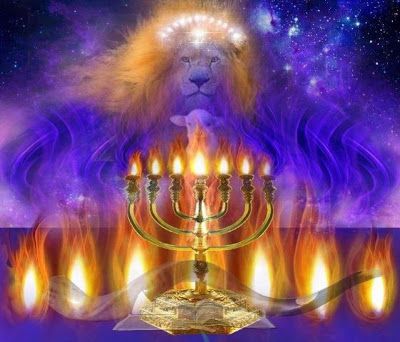
Opening Passage – Revelation 12.11: And they overcame him because of the Blood of the Lamb, and because of the Word of their witness, and they did not love their lives to the death.
Blood: דָּם dâm, dawm; from H1826 (compare H119); blood (as that which when shed causes death) of man or an animal; by analogy, the juice of the grape; figuratively (especially in the plural) bloodshed (i.e. drops of blood):—blood(-y, -guiltiness), (-thirsty), + innocent…juice; to facilitate fullness; the means of exchange between members unto wholeness; lit., to hold exchange all together: the blood of Yahushúa exchanges, or transfers, alignment/righteousness to those accepting the image of Elohim; we are washed in/by the blood of the Word, that whatever energy or soul expression has been defiled or polluted may be cleansed in the exchange thus established between the earthly and the heavenly and may be renewed in agreement with the Word/the Son/Formulation of YHWH; note: at every point the Torah is unfolded, there is the shedding of blood, signifying the giving of life: its designation unto service for the spiritual function of man. The sprinkling of blood represents the flow from an open vein. We understand that blood is given as a medium of mortality to attain unto the goal of immortality; thus, sprinkling is performed seven times, or from alef initiation to zayin fulfillment. Value,44: to anoint the heart.
Lamb: שֶׂה seh, seh; or שֵׂי sêy; probably from H7582 through the idea of pushing out to graze; a member of a flock, i.e. a sheep or goat:—(lesser, small) cattle, ewe, goat, lamb, sheep…small cattle; a flock; the spiritual fire-form of life at the core of every person; lit., the fire of life; the lamb for Pesach—lit., Wisdom’s emanation, pertaining to the formulations at the beginning. Value, 305: the Glory of Yahúwah within innumerable gifts. Compare sheep/lamb; flock.
Genesis 3.21: And יהוה Elohim made coats of skin for the man and his wife and dressed them.
“Rabbi Simlai taught: The Torah begins with deeds of loving-kindness and ends with deeds of loving-kindness. It begins with deeds of loving-kindness as it is written, ‘And יהוה Elohim made for Adam and his wide garments of skin and clothed them’ (Genesis 3.21). It ends with deeds of loving-kindness, as it is written, ‘And he buried him in the valley in the land of Moab’ (Deuteronomy 34.6).”
Sotah 14a
First Book of Adam and Eve 50: 1 Then Adam and Eve went forth and nmkame into the Cave of Treasures, and they stood praying in it the whole of that day, until the evening. 2 And this took place at the end of the fifty days after they had left the garden. 3 But Adam and Eve rose again and prayed to God in the cave the whole of that night, and begged for mercy from Him. 4 And when the day dawned, Adam said to Eve, “Come! Let us go and do some work for our bodies.” 5 So they went out of the cave, and came to the northern border of the garden, and they looked for something to cover their bodies with*. But they found nothing, and knew not how to do the work. Yet their bodies were stained, and they were speechless from cold and heat. 6 Then Adam stood and asked God to show him something with which to cover their bodies. 7 Then came the Word of God and said to him, “O Adam, take Eve and come to the seashore where you fasted before. There you will find skins of sheep that were left after lions ate the carcasses. Take them and make garments for yourselves, and clothe yourselves with them.
Prophetic Purpose
Genesis 22.1-8
THE doctrine of trials is open to great objections: it is in fact more exposed to objections than any other thing taught in Scripture. It is mentioned in Scripture six times, as I will show in this chapter. People have generally the notion that trials consist in afflictions and mishaps sent by God to man, not as punishments for past sins, but as giving opportunity for great reward. This principle is not mentioned in Scripture in plain language, and it is only in one of the six places referred to that the literal meaning conveys this notion. I will explain the meaning of that passage later on. The principle taught in Scripture is exactly the reverse; for it is said: “He is a God of faithfulness, and there is no iniquity in him” (Deut. xxxii. 4).
The teaching of our Sages, although some of them approve this general belief (concerning trials], is on the whole against it. For they say, “There is no death without sin, and no affliction without transgression.” (See p. 285.) Every intelligent religious person should have this faith, and should not ascribe any wrong to God, who is far from it; he must not assume that a person is innocent and perfect and does not deserve what has befallen him. The trials mentioned in Scripture in the [six] passages, seem to have been tests and experiments by which God desired to learn the intensity of the faith and the devotion of a man or a nation. [If this were the case] it would be very difficult to comprehend the object of the trials, and yet the sacrifice of Isaac seems to be a case of this kind, as none witnessed it, but God and the two concerned [Abraham and Isaac]. Thus God says to Abraham, “For now I know that thou fearest God,” etc. (Gen. xxii. 12). In another passage it is said: “For the Lord your God proveth you to know whether ye love,” etc. (Deut. xiii. 4). Again, “And to prove thee to know what was in thine heart,” etc. (ibid. Viii. 2). I will now remove all the difficulties.
The account of Abraham our father binding his son, includes two great ideas or principles of our faith. First, it shows us the extent and limit of the fear of God. Abraham is commanded to perform a certain act, which is not equalled by any surrender of property or by any sacrifice of life, for it surpasses everything that can be done, and belongs to the class of actions which are believed to be contrary to human feelings. He had been without child, and had been longing for a child; he had great riches, and was expecting that a nation should spring from his seed. After all hope of a son had already been given up, a son was born unto him. How great must have been his delight in the child! how intensely must he have loved him! And yet because he feared God, and loved to do what God commanded, he thought little of that beloved child, and set aside all his hopes concerning him, and consented to kill him after a journey of three days. If the act by which he showed his readiness to kill his son had taken place immediately when he received the commandment, it might have been the result of confusion and not of consideration. But the fact that he performed it three days after he had received the commandment, proves the presence of thought, proper consideration, and careful examination of what is due to the Divine command and what is in accordance with the love and fear of God. There is no necessity to look for the presence of any other idea or of anything that might have affected his emotions. For Abraham did not hasten to kill Isaac out of fear that God might slay him or make him poor, but solely because it is man’s duty to love and to fear God, even without hope of reward or fear of punishment. We have repeatedly explained this. The angel, therefore, says to him, “For now I know,” etc. (ibid. ver. 12), that is, from this action, for which you deserve to be truly called a God-fearing man, all people shall learn how far we must go in the fear of God. This idea is confirmed in Scripture: it is distinctly stated that one sole thing, fear of God, is the object of the whole Law with its affirmative and negative precepts, its promises and its historical examples, for it is said, “If thou wilt not observe to do all the words of this Law that are written in this book, that thou mayest fear this glorious and fearful name, the Lord thy God,” etc. (Deut. xxviii. 58). This is one of the two purposes of the ‘akedah (sacrifice or binding of Isaac).
The second purpose is to show how the prophets believed in the truth of that which came to them from God by way of inspiration. We shall not think that what the prophets heard or saw in allegorical figures may at times have included incorrect or doubtful elements, since the Divine communication was made to them, as we have shown, in a dream or a vision and through the imaginative faculty. Scripture thus tells us that whatever the Prophet perceives in a prophetic vision, he considers as true and correct and not open to any doubt; it is in his eyes like all other things perceived by the senses or by the intellect. This is proved by the consent of Abraham to slay “his only son whom he loved,” as he was commanded, although the commandment was received in a dream or a vision. If the Prophets had any doubt or suspicion as regards the truth of what they saw in a prophetic dream or perceived in a prophetic vision, they would not have consented to do what is unnatural, and Abraham would not have found in his soul strength enough to perform that act, if he had any doubt [as regards the truth of the commandment]. It was just the right thing that this lesson derived from the ‘akedah (“sacrifice”) should be taught through Abraham and a man like Isaac. For Abraham was the first to teach the Unity of God, to establish the faith (in Him], to cause it to remain among coming generations, and to win his fellow-men for his doctrine; as Scripture says of him: “I know him, that he will command,” etc. (Gen. viii. 19). In the same manner as he was followed by others in his true and valuable opinions when they were heard from him, so also the principles should be accepted that may be learnt from his actions; especially from the act by which he confirmed the principle of the truth of prophecy, and showed how far we must go in the fear and the love of God.
This is the way how we have to understand the accounts of trials; we must not think that God desires to examine us and to try us in order to know what He did not know before. Far is this from Him; He is far above that which ignorant and foolish people imagine concerning Him, in the evil of their thoughts. Note this.
Guide for the Perplexed: On Trials
Antiquities of the Jews XIII 1-4
64. In fact, there is a midrash that says at the time of creation, when God was about to make man, the angels asked what man’s significance was. One of his answers was this: “You shall see a father slay his son, and the son consenting to be slain, to sanctify my Name” (Tanhuma, Vayyera, sec. 18). That was the height of sacrificial service: A father offering up his own son, and the son willingly laying down his life for the glory of God. Yes, I know that sounds like the gospel. In fact, the midrash compares Isaac, who carried on his shoulder the wood for the burnt offering (himself!), to “one who carries his cross on his own shoulder.” 270
Footnote 270: See Genesis Rabbah 56:3, cited in this context by Jon D. Levenson, the Death and Resurrection of the Beloved Son: The Transformation of Child Sacrifice in Judaism and Christianity (New Haven: Yale, 1993), 105.
65. One ancient source, compiled less than two hundred years after the death of Jesus, states, “The Holy One, blessed be He, said to Moses: ‘I keep faith to pay the reward of Isaac the son of Abraham, who gave one fourth of his blood on the altar’” (Mekhilta d’Rashbi, p. 4; Tanh. Vayerra, sec. 23). 271 – Brown, Answering Jewish Objections to Jesus, Volume 2, Theological Objections, p. 159
Footnote 271: See also the note of Buber in his edition of Tanhuma.
66. Vermes also notes that the “blood of the Binding of Isaac” is mentioned four times in the early Jewish midrash called the Mekhilta of Rabbi Ishmael. In Exodus 12:13, God promise the Israelites that when he passed through the land to destroy the firstborn sons of the Egyptians, he would pass over the houses of the Israelites who had applied the blood of the Passover lambs to the lintels and doorposts of their houses. The midrash interprets the verse to mean, “‘And when I see the blood, I will pass over you’ – I see the blood of the Binding of Isaac.” God wasn’t looking at the blood of the lambs, he was looking at the blood of Isaac. Vermes even states that
According to ancient Jewish theology, the atoning efficacy of the Tamid offering [the fixed, daily offering], of all the sacrifices in which a lamb was immolated, and perhaps, basically, of all expiatory sacrifice irrespective of the nature of the victim, depended upon the virtue of the Akedah [the binding of Isaac], the self-offering of that Lamb whom God had recognized as the perfect victim of the perfect burnt offering. 272 – Brown, Answering Jewish Objections to Jesus, Volume 2, Theological Objections, p. 159-160
Akedah Binding of Issac
Messiah Texts chapter 12 pgs 111-112
John 11.41-53
Atonement
Leviticus 17.11, Leviticus 16.15-19, Hebrews 9.22
The atonement of suffering and death is not limited to the suffering person. The atoning effect extends to all the generation. This is especially the case with sufferers as cannot either by reason of their righteous life or by their youth possibly have merited the afflictions which have come upon them. The death of the righteous atones just as well as certain sacrifices [with reference to b. Mo’ed Qatan 28a]. “They are caught (suffer) for the sins of the generation. If there are no righteous, the children of the schools (that is, the innocent young children) are caught for the sins of the generation” [b. Shabbat 32b]. There are also applied to Moses the scriptural words, “And he bore the sins of many” (Isa. 53:12), because of his offering himself as an atonement for Israel’s sin with the golden calf, being ready to sacrifices his very soul for Israel when he said, “And if not, blot me, I pray thee, out of thy book (that is, from the Book of the Living), which thou hast written” (Exod. 32:32 [b. Sotah 14a; b. Berakhoth 32a). This readiness to sacrifice himself for Israel is characteristic of all the great men of Israel, the patriarchs and the Prophets acting in the same way, whilst also some Rabbis would on certain occasions, exclaim, “Behold, I am the atonement of Israel” [Mekhilta 2a; m. Negaim 2:1].
Expectation
Psalm 40.5-8
Victory
Revelation 5.1-10
Our Walk
Romans 12
Parshiot Nitzvaim/Vayeilech Study here
Discover more from SHFTNG PRDGMZ
Subscribe to get the latest posts sent to your email.

