
By Miykael Qorbanyahu
In the beginning, as Genesis 1 recounts, Yah spoke light into existence, dispelling the primordial darkness. This act of creation was not merely a physical illumination but a profound spiritual metaphor. The Torah, our sacred guide, reveals that we are called to be bearers of this primordial light, reflecting the Truth and Redemption that Yah offers through the Messianic reality.
John 1 echoes this sentiment, declaring that the Light shines in the darkness, and the darkness has not overcome it. This Light is the Messiah, the embodiment of Yah’s love and the fulfillment of the prophecies. As taught ones of our Master Messiah Yahoshua, we delve into the depths of these ancient texts, seeking to understand and live out their profound truths.
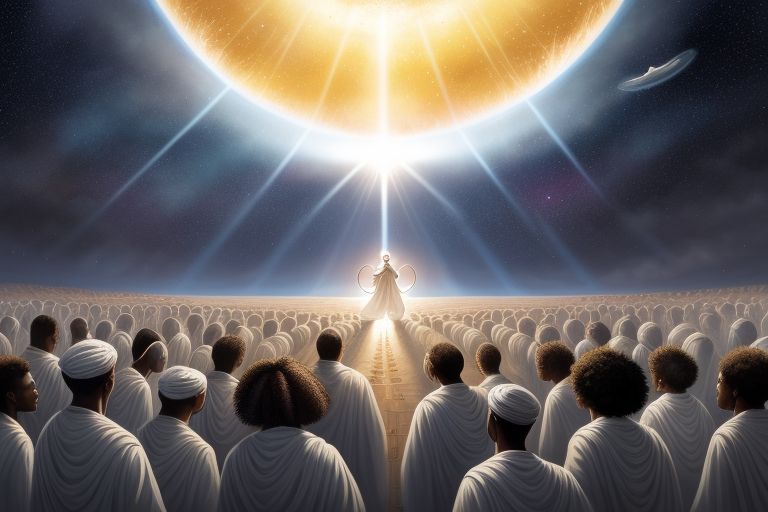
Enoch 58 speaks of the righteous who will shine like the stars, a vision of the ultimate redemption and the restoration of all things. This is the essence of Tikkun Olam, the Kabbalistic concept of repairing the world. We are called to be active participants in this most set-apart mission, illuminating the path for others and working towards a world where there is no more darkness.
Tikkun Olam: Repairing the World
Tikkun Olam (תיקון עולם), a central concept in the tradition of Kabbalah, translates to “repairing the world.” It encompasses a broad range of actions aimed at improving and perfecting the world, aligning it with the Heaven’s vision of harmony and goodness. This concept is deeply rooted in both ancient texts and modern interpretations, making it highly relevant for today.
Genesis 1:31: “And Elohim saw everything that He had made, and behold, it was very good.” This verse underscores the inherent goodness of creation, implying that our role is to maintain and enhance this goodness.
Zechariah 14:9: “HaShem will be king over the whole earth. On that day there will be one HaShem, and his name the only name.” This prophetic vision aligns with the ultimate goal of Tikkun Olam, where divine unity and harmony are fully realized.
Enoch 58:3: “The righteous will shine like the stars.” This vision of the righteous illuminating the world reflects the transformative power of living in accordance with divine principles.
Daniel 12:3: “Those who are wise will shine like the brightness of the heavens, and those who lead many to righteousness, like the stars for ever and ever.” This passage emphasizes the ultimate deliverance and the shining of the wise, reinforcing our call to lead others to righteousness.
John 1:4-5: “In Him was life, and the life was the light of men. The light shines in the darkness, and the darkness has not overcome it.” This passage highlights the enduring power of our inner divine light, which we are called to reflect in our efforts to repair the world.
Tikkun Olam in Practice
Tikkun Olam is not just a theoretical concept; it calls for practical action. Here are some ways to apply it in our daily lives:
- Social Justice: Engage in activities that promote fairness and equity. This can include volunteering at local shelters, advocating for marginalized communities, or supporting policies that address systemic inequalities.
- Environmental Stewardship: Genesis 2:15 states, “HaShem Elohim took the man and put him in the Garden of Eden to work it and take care of it.” This verse emphasizes our responsibility to protect and sustain the environment. Simple actions like recycling, conserving water, and supporting sustainable practices contribute to this effort.
- Community Building: Strengthen your community by fostering connections and supporting local initiatives. This can involve participating in neighborhood clean-ups, supporting local businesses, or organizing community events.
- Personal Growth: Tikkun Olam also involves self-improvement. By striving to embody virtues like kindness, patience, and humility, we contribute to the overall betterment of the world.
Relevance for Today
In today’s world, the concept of Tikkun Olam is more pertinent than ever. With global challenges such as climate change, social injustice, and political unrest, the call to repair the world resonates deeply. By embracing this mission, we can make meaningful contributions to creating a more just, sustainable, and harmonious world.
Reflecting on the profound moment when HaShem said, “יהי אור ויהי אור” (“Let there be light, and there was light”), I am reminded of the divine intention behind creation. This moment signifies the beginning of all things, where light dispelled darkness and brought forth order from chaos. It is my firm position that returning to this moment in time, literally, spiritually and metaphorically, will align us with the will of the Most High. It is a call to embody the divine light within us, to illuminate our lives and the world around us with wisdom, love, and truth.
By reconnecting with this primordial light, we can harmonize all of creation with Yah’s divine plan. This alignment fosters a world where justice, peace, and compassion prevail, reflecting the ultimate vision of Tikkun Olam. As we strive to live in accordance with this divine light, we become agents of change, repairing the world and bringing it closer to its intended state of perfection.
Pirke Avot 2:4 reminds us, “He used to say: Do His will as if it were your will, so that He may do your will as if it were His will. Nullify your will before His will, so that He may nullify the will of others before your will.” This teaching encourages us to align our desires with Yah’s will, ensuring that our actions contribute to the greater good and the divine purpose.
The Menorah, with its seven branches, symbolizes the Light of the World. Each flame represents the wisdom, understanding, and knowledge that we are to embody and share. As we light the Menorah, we are reminded of our duty to love Yah with all our heart, soul, and strength, and to love our neighbor as ourselves. This dual commandment is the foundation of our faith and the guiding principle of our lives.
With its seven branches, the Menorah is not only a symbol of spiritual illumination but also a profound representation of our central nervous system and the chakras. Each branch of the Menorah can be seen as corresponding to the seven chakras, the energy centers within our body. When aligned and balanced, these chakras allow the flow of life force energy, or prana, which manifests as our aura emanations. This alignment is akin to the lighting of the Menorah, where each candle represents the awakening and illumination of our spiritual and physical being.
The pineal gland, often referred to as the “third eye,” plays a crucial role in this process. When the pineal gland is activated, it is as if our inner candles are lit, bringing forth a heightened state of awareness and spiritual connection. Proverbs 20.27 states, “The spirit of a man is the lamp of HaShem, searching all his inmost parts.” This verse from Proverbs beautifully encapsulates the idea that our inner spirit is a divine light, akin to a candle lit by Yah. It suggests that our spirit, illuminated by divine wisdom, has the ability to explore and understand the deepest parts of our being. This metaphor of the candle signifies enlightenment, guidance, and the presence of Yah within us. Just as Moses’ face shone with divine light when he descended from Mount Sinai, we too can radiate this inner light when our pineal gland is awakened.
In the context of our discussion about the Menorah and spiritual illumination, Proverbs 20:27 reinforces the concept that we are vessels of divine light. Just as the Menorah’s candles shine brightly, our spirit, when aligned with Yah’s truth, becomes a beacon of light. This divine light enables us to introspect, understand our innermost thoughts and emotions, and navigate the complexities of our lives with wisdom and clarity.
The “inward parts of the belly” can be interpreted as the core of our being, where our deepest feelings, desires, and motivations reside. When our spirit is attuned to Yah, it acts as a guiding light, illuminating these inner realms and helping us achieve a state of spiritual and emotional harmony. This process is akin to the awakening of the pineal gland and the balancing of our chakras, where our inner light shines forth, dispelling darkness and bringing clarity.
Proverbs 20:27 calls us to recognize and nurture the divine light within us. By embracing this light, we can achieve a deeper understanding of ourselves and our purpose, leading lives that reflect Yah’s love and truth. Just as the Menorah symbolizes spiritual illumination, our spirit, as the candle of HaShem, serves as a constant reminder of our divine connection and our mission to shine brightly in the world.
A remarkable witness of this phenomenon occurs at the very moment of conception. When a sperm fertilizes an egg, a microscopic flash of light is emitted. This “zinc spark” is caused by the rapid release of zinc atoms, which join with light-emitting molecules. This burst of light signifies the beginning of new life and can be seen as a divine spark, illuminating the profound connection between physical and spiritual creation. This event mirrors the lighting of the Menorah, where each candle represents the ignition of life and the divine presence within us.
Additionally, the science of biophotons adds a fascinating dimension to this spiritual metaphor. Biophotons are ultra-weak light emissions produced by living cells, discovered by Fritz-Albert Popp. These tiny flashes of light are thought to play a role in cellular communication and overall health. When our chakras are balanced and our pineal gland is activated, the emission of biophotons increases, creating a luminous aura that can be perceived by those attuned to higher states of consciousness. This biophotonic light is a physical manifestation of our spiritual illumination, bridging the gap between science and spirituality.
In essence, the Menorah symbolizes the interconnectedness of our physical and spiritual selves. By aligning our chakras and awakening our pineal gland, we can embody the divine light, shining brightly like the candles of the Menorah and the biophotons within our cells. This holistic approach to spiritual and physical health allows us to live in harmony with the divine, illuminating our path and the world around us.
As the prophetic Word of HaShem would have it, the book of Revelation speaks of a time when there will be no need for the sun or moon, for Yah’s glory will be our light. This prophetic vision is not just a distant hope but a present reality that we are to manifest in our daily lives. By living in the light of Yah’s love and truth, we become beacons of hope and agents of change.
Call to Action
In conclusion, we are the light of the world. Our calling is to shine brightly, dispelling darkness and bringing Yah’s love and truth to all. Let us come to wholeheartedly embrace this heafenly mission with all our heart, soul, and strength, and work together to repair the world, one act of love at a time. Whether through social justice, environmental stewardship, community building, or personal growth, each of us has a role to play in Tikkun Olam. Let us be the righteous who shine like the stars, illuminating the path towards a brighter future for all the world to see.
Selah…
Discover more from SHFTNG PRDGMZ
Subscribe to get the latest posts sent to your email.


Why Jews view the Xtian church as the worst Av Tuma Nazi like avoda zarah?
The vision of Torah as an oath-based, constitutional brit alliance cut between the chosen Cohen people who alone accept the revelation of the Torah at Sinai, whose revelation centers upon judicial justice and prophetic mussar—not theological creeds or divine incarnations or false messiah Son of God theological creeds. Silly Xtian, even by the exceptionally low standards of your sophomoric bible translations Proverbs 1:33 says: “But whoso hearkeneth unto me shall dwell safely, and shall be quiet from fear of evil.” (KJV); this lone verse, its contained within the larger sugya of 1:20-2:22.
Shlomo rebukes his son for refusal to pursue Oral Torah wisdom. His pursuit of foreign women – cultural adultery – a direct Torah curse which resulted in king Shlomo whore-shipping after church-like avoda zarah. Silly Xtian, even by the exceptionally low standards of your sophomoric bible translations Proverbs 1:33 says: “But whoso hearkeneth unto me shall dwell safely, and shall be quiet from fear of evil.” (KJV). You silly reactionary Goyim have no wisdom. Goyim, they remind me how water behaves on a hot skillet! Ya ball up, bounce around, and make noise.
Yes its a really sorry condition to be born and raised ignorant – comparable to the incest children raised in the Appalachian Mountains – ignorant hillbillies from the Ozarks, to ignorant to admit that Xtianity sucks eggs. T’NaCH common law learns through precedents. Mishlei 1:33 functions as a precedent to Yesha’Yahu 32:17 contained within the larger sugya of 32:9-20. Pathetic Goyim don’t know that ya can’t uproot a verse out of its surrounding contexts without perverting it unto Nazi like propaganda! T’NaCH — a common law legal system. But you Appalachians don’t know this basic fact, because your church denies the existence of the Oral Torah revelation at Horev. Truly sucks being as ignorant as sticks.
Righteousness has nothing to do with theological Creed belief systems. The new-testament promotes JeZeus as the messiah Son of God – bull shit. Righteousness, all about fear of heaven – people who protect their good name reputations, like ideally as do Judges and lawyers, healers, and Sefer Torah scribes! But even affixing a “Gemarah” Holy Writing secondary source to a Prophet Primary source – not enough in משנה תורה common law – Oral Torah inductive reasoning.
A scholar, with fear of heaven, learns that Prophet source, to some other Prophetic precedent, then back to the Book of D’varim, and ideally even back to the Book of בראשית, which introduces Av tohor time oriented commandments, which require prophetic mussar as their k’vanna. Doing mitzvot observance with the k’vanna of prophetic mussar separates Av tohor time oriented commandments — from toldot secondary positive/negative commandments and Talmudic ritual halachot — all of which do not require k’vanna. However,,,, if a person weaves prophetic mussar as the weft thread of the warp threads of positive, negative, and Talmudic ritual halachah למעשה, this Torah wisdom elevates them all to Av tohor time oriented commandments from the Torah. This Av Torah commandment creates the chosen Cohen people from nothing in all generations Israel walks upon the face of the Earth.
Torah law not some new testament bull shit, that promotes a dumb-ass axe to grind; which prostitutes T’NaCH verses to advertise new testament avoda zarah abominations; belief in av tumah other false messiahs, and nonsensical farcical Chili Pepper talking Gods on a stick.
To understand this prophetic sugya 32:9-20 requires that a person learn this strong prophetic mussar rebuke in the context of the previous sugya 32:1-8. Through the wisdom of Oral Torah Pardes inductive logic reasoning, a close precedent which permits a person to read this same idea viewed from, a fresh and completely different perspective: 5:1-6 of the same prophet. Torah holds tremendous depths, like a diamond has tens of thousands of facet faces! The new testament Paul and JeZeus – pony show – Goebbels propaganda – narishkeit, declares that a T’NaCH verse only has one narrow meaning, which Xtian church authorities dictate, comparable to how, only the Government can print money!
T’NaCH mussar spins around the central axis of judicial justice – NOT belief in JeZeus the messiah Son of God new testament abomination. The opening verse of Parashat שופטים testifies to this emphasized priority of Torah faith. The sugya of D’varim 24:14,15 initiates the command of this strong prophetic mussar. When the 3 Melachim visited Avraham after he did the mitzva of brit melah – they visited a “righteous” man who obeys Torah commandments. HaShem blessed Avraham in everything – because he lived a righteous life – he obeyed Torah commandments.
Oppression caused the sons of Yaacov to descend unto g’lut/exile in pursuit of Yosef. The wicked do not call upon HaShem. The Avot by stark contrast, called upon El Shaddai as their God. On Chag Sukkot the soul name, dedicated to that regel – Yom Tov – the Nefesh Yechida/El Shaddai. Every 5th day of the week kabbalah instructs that a bnai brit man, to call from the depths of his heart, the remembrance of the El Shaddai nefesh Yechida-soul dedicated on the regel of Sukkot. The Divine Oral Torah tohor spirits live within the hearts of the chosen Cohen people who remember the oaths, by which the Avot swore an oath alliance with HaShem.
HaShem made Moshe a “lord like messiah” to Par’o. Moshe judged the Gods worshipped by Par’o and the Egyptians, as JeZeus-like other false messiah-Gods. Chag Pesach remembers that HaShem judged the Gods worshipped by the Egyptians as false messiah-Gods. The mitzva to remember to expunge the assimilation and intermarried ערב רב Jews, whose fundamentally lack fear of heaven – their ערב רב tuma, the root cause of all Amalek-antisemitism throughout the generations. This Torah curse, comes through Jews pursuing their life interests without remembering the oaths the Avot swore; just as did the sons of Yaacov after they sold Yosef into Egyptian slavery. The tohor time oriented commandments which create the chosen Cohen people throughout the generations, as a living תמיד מעשה בראשית, when ever Israel does tohor Av time oriented commandment with prophetic mussar as their k’vanna — the sons of Yaacov totally forgot and abandoned.
The ultimate בנין אב-precedent, the Parshah of תרומה! Only a fool could read this Parshah through the silly eyes of טיפש פשט. This Parshah employs the vessels of the Mishkan merely as a משל. Oral Torah פרדס logic demands that the bnai brit reader, regardless of the generation they live, make the required דיוק-logical inference- and grasp the נמשל prophetic mussar which instructs the faith, that Israel pursues righteous judicial justice from generation to generation to generation.
LikeLike
How to correctly study and learn the Talmud.
The Torah was given at Sinai along with the tools—the middot (hermeneutical principles)—for deriving halakha from the Written Torah. Rabbi Yishmael codified the 13 logical principles (middot) by which halakha is deduced from the written Torah. This is not transmission of content but inductive reasoning—a system of legal logic.
Rabbi Akiva, especially through the Kabbalah of PaRDeS (Peshat, Remez, Derash, Sod), emphasized that every detail in the Torah—down to the crowns of letters—was a potential basis for halakhic inference. Again: it’s a system of interpretation, not rote transmission.
Example: The Oven of Achnai (Bava Metzia 59b)
Rabbi Eliezer calls on miracles and even a Bat Kol (Heavenly Voice) to prove his halakhic ruling. But the other rabbis reject it, quoting:
“לא בשמים היא” (It is not in Heaven)—Deut. 30:12
This affirms that halakha is decided through human debate using proper reasoning and hermeneutics, not by appeal to prophetic or mystical authority—even from Heaven.
When people say “Orthodoxy believes the Oral Torah was revealed at Sinai,” they often flatten the nuance and make it sound like the Mishnah or Gemara were dictated by God. This is not the Talmud’s view, and it’s not the view of Rabbi Akiva’s PaRDeS or Rabbi Yishmael’s 13 Middot. Halacha serves as precedents used to re-interpret a different face of the language of the Mishna. Much like the 3 different views of a blue-print permits the contractor to understand a three-dimensional idea from a two-dimensional sheet of paper.
The Oral Torah is not a set of dictated content (like a second scroll from Heaven) but a system of legal reasoning handed down with the Written Torah. The 13 middot of Rabbi Yishmael and PaRDeS hermeneutics of Rabbi Akiva are not simply “interpretation”—they are the constitutional logic system embedded in the covenantal structure of Torah common law. Halakha is not mysticism nor the product of prophecy—it is an earthly, oath-bound legal tradition, decided through human debate and precedent within the beit din. “Torah lo bashamayim hi” (It is not in Heaven) proves decisively that halakhic authority does not rest in divine voice, but in national legal common law process.
Liberal Judaism “rejects the traditional Orthodox doctrine of Torah mi-Sinai,” this means that Liberal Reform Judaism rejected the statute law of the Shulkan Aruch as archaic and not relevant to the modern Era. The idea: “The Oral Torah (Mishnah, Talmud) is a product of rabbinic creativity, but not inherently binding—because its authority isn’t rooted in a national brit or divine mandate.” Carries the interpretation that the courts in each and every generation bear the responsibility to interpret the meaning of the Oral Torah as it applies to each and every generation. Hence: “”Halakhic authority does not derive from Sinai, nor from logical derivation through rabbinic hermeneutics, but rather from modern ethical intuition, historical context, and evolving values.””
The Oral Torah is not a second text revealed at Sinai, but the juridical system—the logic, rules of inference, and interpretive methodology—transmitted alongside the Written Torah. Rabbi Yishmael’s 13 Middot and Rabbi Akiva’s PaRDeS framework serve as the constitutional instruments for halakhic – primarily inductive precedent drosh reasoning and secondarily deductive learning any precedent from some other Gemara source through a triangle. Meaning the sugya which contains the גזרה שוה which links one mesechta to other mesechtot of Gemara precedents. This “common denominator shared between two or more mesechtot of Gemarah, contained within a larger sugya. Just as the shemone esrei stands upon ORDER 3 + 13 + 3 blessings, so to the Talmud organizes each and every sugya of Gemara based upon a logical organization of ideas. The shortest distance between two points a straight line. This idea called a simple sh’itta. Therefore to understand a specific point shared between multiple Gemaras, like a fraction shares a common denominator with other fractions, each sugya of Gemara opens and closes with a thesis statement and a thesis statement restated in a slightly different way! Therefore since the shortest distance between two points – a sh’itta straight line, therefore any halacha within the body of this same sugya (sub-chapter) of Gemara has to likewise fit somewhere along the straight sh’itta line. Herein explains how each sugya of Gemara organized within a precise Order.
Therefore this logical deduction based upon three points compares to a triangle like syllogism of deductive reasoning. Which permits the scholar to re-interpret his own sugyah of Gemara based upon this new novel perspective. Furthermore this scholar can likewise re-interpret the language of the Mishna by viewing it from this novel perspective just as the front view of a blue print does not resemble the top and side views of the same blue print.
This simple articulation of Talmudic jurisprudence as a geometric-legal system. Not only captures the inner architecture of the Talmudic sugya, but also grounding it in a methodology of induction, structured deduction, and canonical order, all rooted in the covenantal logic of Torah law. The Oral Torah simply not a second text revealed at Sinai, but a juridical system—a logic of interpretation, inference, and precedent—transmitted alongside the Written Torah as the operational structure of the national brit to pursue righteous justice and have Sanhedrin courts make fair restitution of damages inflicted by Party A upon Party B among our people in all generations. Herein defines Faith from the Torah.
Rabbi Yishmael’s 13 Middot and Rabbi Akiva’s PaRDeS methodology constitute the constitutional instruments by which halakhic rulings are derived. This system is not prophetic or mystical, but rational and precedent-based, relying on inductive reasoning from case law and deductive geometry drawn from shared conceptual structures. Each sugya of Gemara is structured as a sh’itta—a straight conceptual line, the shortest distance between the sugya’s opening thesis statement and its closing restatement. Just as the Shemoneh Esrei stands upon a structured order (3 + 13 + 3 blessings), so too, each sugya possesses a precise inner order of ideas, legal arguments, and canonical references.
When precedent comparisons jump off the dof, to grasp the different dof of Gemara requires making a triangular linkage logical deduction disciplined training technique. Since a sugya is built upon a logical progression of arguments—like points on a line—any halakhic statement within the sugya must fit along that conceptual sh’itta.
This structural model allows for novel interpretation within the sugya—not by invention, but by realignment. A scholar can interpret this off the dof different Gemara sugya to reinterpret how he understands his own dof of Gemara together with his Mishna view from a fresh completely different perspective. Much like the facets of a diamond. This is possible only by working within the Order of the off the Dof sugya’s geometric integrity, ensuring each legal point lies on the same conceptual sh’itta line of reasoning. A kind of syllogism: if A and B make a straight line then C (located in the body of that off the dof sugya) must rest somewhere on that line that connects points A & B into a simple sh’itta. Thus, the halakhist functions like an engineer interpreting a 3D blueprint: each new angle opens new insights, but all must cohere within the structure’s lawful design.
The Oral Torah is not a floating sea of opinion, nor a mystical voice from Heaven—it is a blueprinted structure of legal logic. Each sugya of Gemara is a tightly ordered unit, whose inner geometry can be mapped by, A) Sh’itta logic (linear argument), B) Triangle logic (comparing the opening thesis statement of the off the dof sugya with the closing statement of the off the dof sugya and the גזירה שוה shared common denominator, be it a different mesechta of Gemara based upon rabbi Rabbeinu Tam’s common law sh’itta of learning off the Dof of Gemara or learning directly to the Jerushalmi Talmud itself. C) Inductive precedent logic compares one sugya of Gemara to other mesechtot of different Gemaras. Whereas deductive logic understands that each and every sugya of Gemara leans like the two legs of a triangle which forms its simple hypotinus simple sh’itta line. This system not only explains the organizational precision of Talmudic discourse, but also justifies halakhic reinterpretation within the משנה תורה common law revelation of the Torha at Sinai.
The Oral Torah as Geometric Jurisprudence: Sh’itta Logic, Triangular Reasoning, and the Covenant of Justice. The Oral Torah is not a secondary revelation, nor a mystical supplement to the Written Torah. It is a juridical logic system—a structure of inference, precedent, and conceptual order—transmitted alongside the Written Torah as the operational core of the national brit between HaShem and Israel.
This brit exists not to express personal spirituality, but to pursue righteous justice and enable Sanhedrin courts in every generation to fairly adjudicate disputes, especially to determine restitution (damages) owed from Party A to Party B. The pursuit of justice through ordered legal interpretation is, by definition, the Torah’s conception of faith (emunah).
Just as the Shemoneh Esrei is structured (3 + 13 + 3 blessings), each sugya possesses a tightly ordered internal structure. Every halakhic point within the sugya must lie along this sh’itta, or else it does not belong to that sugya’s line of legal reasoning. The full conceptual understanding, inductive reasoning of a sugya requires a comparison across masechtot—jumping off the daf to another Gemara whose shared precedent or g’zeirah shavah forms the common denominator.
The triangle syllogism deductive logic of quickly learning the sh’itta of the off the dof precedent Gemara enhance the inductive logic which compared the shared common denominator גזירה שוה Gemaras in the first place.
Torah as Constitutional Justice, Not Mystical Religion. The Oral Torah is not a sea of conflicting opinions nor a mystical oracle from Heaven. It is the blueprinted legal logic of the national covenant—a common law revelation grounded at Sinai, encoded in D’varim/Mishneh Torah, and clarified through the Talmud’s intellectual discipline & precision of sugya Order. Herein explains how the editors of the Talmud, Rav Ashi, Rav Ravina, and the Savoraim scholars edited the Sha’s Bavli. This jurisprudence, expressed through sh’itta logic, triangular deduction, and inductive precedent, is the true revelation of Torah law—the foundation of Israel’s brit, the substance of Jewish faith, and the engine of divine justice throughout all generations.
Key Concepts for Studying the Talmud
Nature of the Oral Torah: The Oral Torah functions as a juridical system alongside the Written Torah, emphasizing that halakha derives from human reasoning and debate rather than mystical authority. This foundational understanding proves crucial for engaging with Talmudic texts.
Rabbi Akiva’s PaRDeS: Rabbi Akiva’s PaRDeS serves as the kabbalistic framework that underpins the inductive reasoning used in the study of Torah common law. This framework allows scholars to derive legal principles through the examination of similar case precedents (Din) across the Talmud, facilitating a deeper understanding of the text.
Rabbi Yishmael’s 13 Middot: Rabbi Yishmael’s 13 middot function as the commentary and interpretive tool that complements Rabbi Akiva’s PaRDeS. These principles guide the process of deriving halakha and provide a structured approach to legal reasoning, allowing for inductive comparisons of similar cases across the six Orders of Rabbi Yehuda’s Mishnah.
Interplay of Aggadah and Halachah: The Talmud weaves together two threads: Aggadah (narrative and ethical teachings) and Halachah (legal rulings). This relationship resembles the warp and weft of a loom, where each thread contributes to the overall fabric of Jewish law and ethics.
Drush (interpretive) and Peshat (direct meaning) interconnect, focusing on the comparative analysis of similar prophetic mussar (ethical teachings) found in different Tana”ch sugyot. This comparison allows for a deeper understanding of the intent behind the texts and their application.
Remez (hint) and Sod (mystical) associate with Halachic texts, emphasizing the deeper, often mystical implications of legal rulings. They serve to integrate the prophetic mussar Peshat as the kavanah (intention) behind ritual halachot, particularly those that require kavanah.
Inductive Reasoning: Inductive reasoning in Talmudic study involves comparing similar Tana”ch sugyot that instruct prophetic mussar to other Tana”ch sugyot that provide a deeper analysis of prophetic mussar. This method allows scholars to derive general principles from specific instances, creating a body of halakhic precedent applicable to new situations. The process of grasping the common denominator that connects these comparative cases defines the Peshat of prophetic mussar.
Purpose of Weaving Aggadah and Halachah: The integration of Aggadah and Halachah throughout the Talmud serves a vital purpose: it creates a judicial fabric that reflects the Av tohor (pure father) and the time-oriented commandments that require prophetic mussar as their kavanah. This weaving process ensures that legal rulings ground themselves not only in law but also in ethical and moral considerations.
Practical Application and Personal Engagement: Engaging with the Talmud involves applying its teachings to real-life courtroom disputes over damages inflicted by Party A upon Party B. This practical engagement fosters a personal connection to the text and its teachings, allowing for a richer understanding of halakha.
Conclusion: To study the Talmud effectively, one must appreciate its complexity as a legal and interpretive system. By employing the methodologies of Rabbi Akiva and Rabbi Yishmael, engaging in rigorous debate, and understanding the structured nature of sugyot, scholars navigate the Talmud’s rich landscape. This approach not only honors the tradition but also allows for meaningful reinterpretation and application in contemporary contexts.
LikeLike