

_____________________________________________
Therefore say to the house of Israel, thus says Adonai Elohim: “Return, turn away from your idols; turn your faces from all your abominations.
Ezekiel 14.6
No, I tell you! But unless you repent, you all will perish the same way.
Luke 13.3
_____________________________________________
If you knew me back then, you probably wouldn’t recognize me now, unless you knew me back when I began to transform.
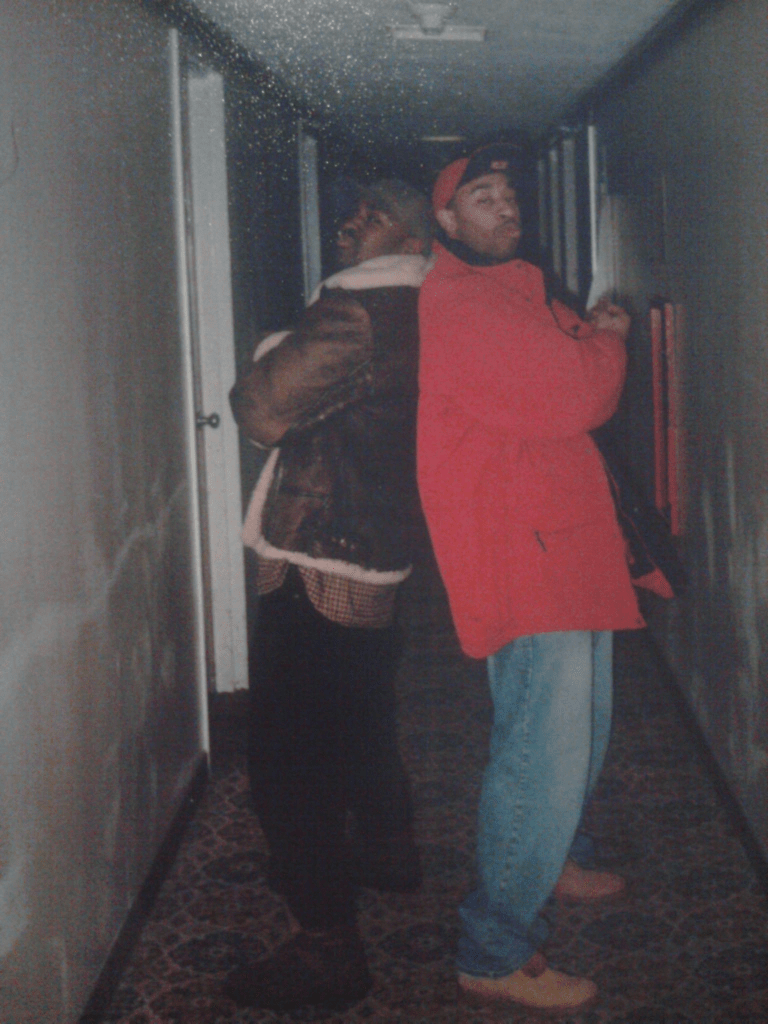
See, back during college days when I was of college age walking in college ways, I was dazed and living in a complete haze. And every time I’d touch down in KC on break, I was forehead deep in the thick of flesh. From 1993 to 1997, I was a weedhead, drunkard and a fornicator. I used to justify my dirt all under the illusion that at least I wasn’t “wilding out like everybody else.” But little did I know, I was wilding out just like everybody else. The sad truth of the matter was, I was just better at dressing up my dysfunction. Or at least I thought I was. I kept a rotation of women under the banner of being a “serial monogamist,” but what I was really doing was serially breaking hearts, including my own. I was lustfully seeking validation, chasing comfort & warmth, and trying to fill a void that only Elohim could fill. Basically, I was running on E filling my tank up with hot air wanting all the smoke!
In two marriages, I broke covenant and fell into adultery, not because I didn’t know better, but because I hadn’t yet become better. I hadn’t truly faced myself. I hadn’t acknowledged my brokenness. I hadn’t repented. Not in the real sense, not in the teshuvah sense. Because before I ever knew what teshuvah really was, I knew what it felt like to be crushed under the weight of conviction. Now just hold on, we’ll get to what teshuvah’s all about shortly.
But that conviction though, was heavy. It wasn’t just guilt, it was like my soul was grieving itself. I couldn’t sleep right, I couldn’t look in the mirror without seeing shame coldly staring back at me. I felt engulfed in darkness and so naturally, I started withdrawing from people I loved, from things I cared about. I would smile on the outside but was dying silently on the inside. Depression sat in my heart like a stone, and I couldn’t shake it.
But I will say that the Spirit was moving, even in my darkness.
Travel back with me to late winter 1997. Probably like in February or March, I remember one night that really shook me like it was yesterday. I was in the UMaine library working on a paper, mind somewhere else, weighed down by everything I’d done and all the lies I was living. Out of nowhere, I felt a firm hand press gently on my shoulder. I got up and looked around thinking one of my teammates or somebody was standing behind me. But no one was there. No one. But this didn’t just happen once, it happened twice. The second time, I didn’t even look for anyway, I just gathered my things and went to my dorm room and started to pray. I can admit it shook me, but not because the experience was eerie; it was certainly something different. I felt like it was more ominous than thing, because both time I felt that hand on my should, I did sense a presence. A strong, still and real presence.
And then, there was the thunder.
So another night that same year, and I believe that same month, I was cold knocked out in my dorm room, 412 Hart Hall. Suddenly, out of nowhere, I was jolted awake by the loudest clap of thunder I’ve ever heard in my life. It was so loud, so clear, and inside that thunderous clap was a voice that I clearly heard say, “I came.” That’s all; two words that hit me like a thousand.
And even now, as I write this, my eyes have welled up and overflowed with tears, because after so many years, I never connected the two experiences together…until just now! It was YaH telling me that It came in the library and placed Its hand on me twice. MIND BLOWN…HalleluYaH…YaH IS SO AWESOME!!!
Digressing back to the story, when I finally got my composure together, I asked Derrick and Mike, two of my teammates who lived across the hall from me, if they heard the storm. They just looked at me confused for a moment, and said there wasn’t a storm. Not a drop of rain. Not a flash of lightening. Not a clap of thunder. I went outside and checked, and nothing. No one heard it but me. Because it wasn’t about the weather. It was about the witness. Elohim was calling me, loud and clear. And now that I really get it, I pray that I move closer to the Presence of YaH with more love and reverential fear.
My most humbling moment, though, came when I returned to my same dorm that year nice and drunk one night. I remember coming in the room and BET was on, and out of everything that was playing, it was some televangelist; probably Peter Popoff. I remember turning that off immediately to not hear the Word. There was also my Scriptures on my desk wide open. That got closed. I then flopped in my bed, and had the nerve to try to pray like my Maw Maw taught me. But this time, I was lost. I didn’t even know who to pray to. All my philosophy classes and comparative religious studies had me confused. I said out loud, “God…Allah…Most High…Jesus…whoever You are, please forgive me, please help me.” After asking whoever to allow me lie down and wake up, I promosed that I would seek and find who the Most High was. When I woke up, that same Scripture that I closed before I flopped in bed, I opened it up right to Ecclesiastes 3.
For everything there is a season and a time for every activity under heaven: a time to give birth and a time to die…
That moment of confusion was the night that led to the moment of clarity in the morning that I had been desiring for two years. The rest is the mystery continuing to be solved.
Now let’s address teshuvah.
As the Hebrew word for repentance, teshuvah (תשובה) goes way deeper than the English definition of just saying sorry, feeling bad about what you did, or changing your mind. Teshuvah means to return; it is a return to who we were created to be, a return to the Source of our breath, the rhythm of righteousness, a return to the image and likeness of Elohim in which we were created. Mashiyach Yahoshua’s ministry, in fact, began with a cry for teshuvah. The Witness of Mattithyahu tells us in chapter 4, verse 17, that after his immersion and 40 day fast with test from the adversary, he began his ministry with these word:
Turn away from your sins, for the kingdom of heaven is near.
Yeshua’s message wasn’t a new message, it was a continuation and fulfillment of the prophetic tradition of Israel, a direct echo of the call from Yochanan the Immerser (John the Baptist), and before him, the prophets of old. But what made Yeshua’s call unique was its urgency and immediacy; the Kingdom wasn’t just coming, it had arrived. The Greek word metanoeo used here translates the Hebrew teshuvah, meaning not just to feel remorse, but to completely turn around in thought, action, and allegiance. Yeshua was calling Israel to return, not just from sin, but back to covenant, to purpose, and to the Presence of Elohim made manifest in Him. This call was the doorway into discipleship, and it remains the first step in the transfiguration journey. Teshuvah is always the foundation upon which Kingdom living is built.
To dive deeper into the meaning of teshuvah, let’s break the word down by its letters, where we find the following:
- Tav (ת) – Truth, completion, the covenant mark
- Shin (ש) – Fire, transformation, supernal refinement
- Vav (ו) – Connection, a hook between Heaven and Earth
- Bet (ב) – House, the inner sanctuary, family
- Hei (ה) – Breath, revelation, the presence of the Elohim
Putting these letters together teshuvah becomes the act we carry out when we go “through the fire of truth, and are able to reconnect to the breath of Elohim and return home to the inner sanctuary.”
Given this connotation, what we’re about to find out is that true teshuvah is a process. It’s not instant result or a one time event, it’s continual, daily soul renovation. And in this Transfiguration Movement, we’re not just talking change, we’re talking rebirth. And here’s how the process unfolds, step by step:
- Acknowledgment – You can’t heal what you won’t name. Psalm 32:5 says, “I acknowledged my sin to You, and my iniquity I did not hide.”
- Conviction – Not guilt, not shame, conviction. That weight in your chest isn’t condemnation, it’s a wake-up call. John 16:8 says ‘when the Spirit comes, He will convicts the world of sin, righteousness, and judgment.”
- Confession – Not just saying it to a priest or a post, it’s telling the truth out loud, to Elohim and to yourself. Proverbs 28:13: “He who covers his sins shall not prosper, but whoever confesses and forsakes them shall find mercy.”
- Correction – This is the turning, the behavioral change. Ezekiel 18:30: “Repent, and turn from all your transgressions, so iniquity shall not be your ruin.”
- Atonement – Bridging the breach. Whether through prayer, fasting, apology, or restitution, make it right with Elohim and people. As Ezekiel 16:63 reveals, “‘that you may remember and be ashamed, and never open your mouth anymore because of your shame, when I provide you an atonement for all you have done,’ says the Most High.”
- Restoration – This is where trust begins to rebuild, inside and out. Psalm 51:12: “Restore to me the joy of Your salvation, and uphold me with a willing spirit.”
- Redemption – When the past is no longer your prison, but your platform. Romans 8:1: “There is now no condemnation for those who are in Messiah Yahoshua.”
These seven steps of teshuvah form a qodesh blueprint for personal and communal transformation. To apply this qodesh process, we must begin by courageously acknowledging our wrongdoing without excuse or blame. We have to learn to allow the Ruach to bring deep conviction to our heart, not to condemn us, but to awaken us. From that place of awareness, let us openly confess our fault before Elohim, then take intentional action to correct our course. Then, we are to seek atonement by making amends where needed, both spiritually and relationally. We then walk in restoration by rebuilding trust and re-aligning with Torah values. Finally, we are to embrace redemption by living forward in the freedom and responsibility of our renewed identity. This methodology is about continually turning toward YaH with a heart willing to be shaped, transformed, and used for Its honor.
It is in this light that he sages teach in Pirkei Avot 4:1, “Who is mighty? One who subdues his evil inclination.” Teshuvah is how we exercise that might. The Talmud (Yoma 86b) goes so far as to say that “Great is teshuvah, for it brings healing to the world.” One soul’s return can ripple out into collective renewal.
Too often, when we talk about teshuvah, we only frame it as turning away from sin. And while that’s part of the process, that’s not the full picture. In fact, the greater power of teshuvah lies not in what we leave behind, but in Who we turn toward.
Teshuvah isn’t just about running from darkness, it’s about returning to light. It’s not simply stopping a behavior, it’s about restoring relationship, reorienting your life to face the Source. The prophet Zechariah recorded these prophetic words: “Return to Me,” declares YHWH of Hosts, “and I will return to you” (Zechariah 1:3). In other words, teshuvah isn’t about perfection, it’s about direction. It’s about facing YaH, even if we have to crawl back on scraped knees and tear-streaked cheeks. The parable of the prodigal son perfectly provides us with perspective of this profound principle.
Then the son said to him, ‘Father, I have sinned against heaven and in your presence. I am no longer worthy to be called your son.’ But the father said to his slaves, ‘Quick! Bring out the best robe and put it on him! Put a ring on his hand and sandals on his feet. Bring the fattened calf and kill it! Let’s celebrate with a feast! For this son of mine was dead and has come back to life—he was lost and is found!’ Then they began to celebrate.
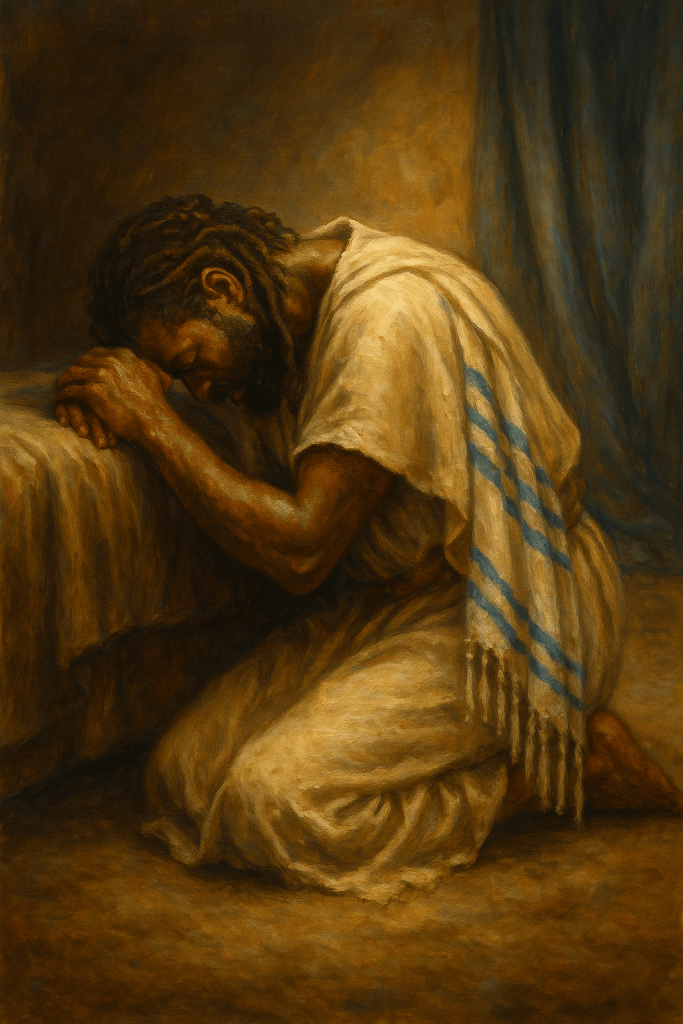
The Talmud in Yoma 86a teaches that “Great is teshuvah, for it brings a person close to the Shechinah (Divine Presence).” It’s proximity that matters. Just as the son was able to again be close to his father and the blessings that came with his sonship, so too are we able to experience the blessings of our coming close to our Father and King as children of Elohim. When we turn our hearts toward Him, we’re welcomed, not with rebuke, but with rachamim, with compassion.
King Dawid understood this deeply. After being confronted by the prophet Nathan for his sin with Bathsheba, Dawid didn’t just say, “I won’t do it again.” He said, “Against You, You only, have I sinned and done this evil in Your sight” (Psalm 51:4). He turned his focus toward Elohim. Not just away from error, but into alignment with the One who makes all things new.
That’s the distinction.
Teshuvah is not a guilt trip, it’s a GPS recalibration.
It doesn’t define us by our falls, it redirects us towards our foundation.
And that’s why teshuvah transforms us.
See, we don’t just turn from our failures.
We turn to our Father.
That’s where our healing is.
That’s where our fire starts.
Teshuvah is where transfiguration takes root and is set in motion. It’s not weakness, like the spiritual weapons we have in our arsenal, when we use it we wage war against our adversary. It’s the weapon that slays our old self and gives birth to our true self. It’s the discipline that aligns you with purpose and power. It’s not a one-time event. It’s a lifestyle of realignment. It’s how we rise, how we heal, and how we shine.
So here’s our call to action:
Let’s non’t wait until guilt eats us alive.
Let’s not wait until we hit rock bottom.
Return now.
Cry out now.
Surrender now.
“Return, O Israel, to YHWH your Elohim, for you have stumbled in your iniquity.” – Hosea 14:1
“Shuvah therefore, and turn again, that your sins may be blotted out, so that times of refreshing may come from the presence of the Master.” – Acts 3:19
Your transformation begins at the point of your teshuvah.
Let’s return.
Let’s become.
Let’s transfigure.
Selah…

Discover more from SHFTNG PRDGMZ
Subscribe to get the latest posts sent to your email.


1 Comment