
__________________________________________________________
…and [YaH] shall love you and bless you and increase you, and shall bless the fruit of your womb and the fruit of your land, your grain and your new wine and your oil, the increase of your cattle and the offspring of your flock, in the land of which He swore to your fathers to give you.
Deuteronomy 7.13
And wine that makes glad the heart of man, oil to make the face shine, and bread which strengthens man’s heart.
Psalm 104.15
And I heard a voice in the midst of the four living creatures saying, “A quart of wheat for a day’s wage, and three quarts of barley for a day’s wage. And do not harm the oil and the wine.”
Revelation 6.6
__________________________________________________________
Growing up, I was always inspired by superheroes; I mean, you name it, I was hooked on comic books, cartoons, kung-fu flicks and action figures. I remember when I graduated high school and my ima made me sale my four boxes full of comics; man, I was hot! I did get some good money for them, but still, those books were worth way more than what I got from the dealer who I sold them to. But anyway, I was particularly drawn to characters who had superpowers and used them to stand against evil and injustice. Looking back on my youthful days, these weren’t just fantasy figures to me. They were more like models given their abilities that I wanted to achieve; they were also reflections of something deeper, something I longed for: the ability to defend, heal, illuminate, and be a vessel of justice and righteousness in a dark world.
Out of all the comics I consumed, without question, Marvel was that one that had me in a headlock. I was fascinated with the moral plots, story lines and origins of their heroes. The Incredible Hulk tighroped the duality between man and beast. The webslinger Spider-Man with great agility and strength carried the great burden of power and responsibility. Moon Knight fought as the mystical warrior chosen by the Egyptian pantheon to fight against the wicked. All of these characters, and so many more, were inspirations to me as I believed that somehow, someway, some day, I’d develop my superpowers.
There was one superhero, however, that I saw on the silver screen who stood out to me more than any and all of them, and even though he wasn’t a Marvel character, Luke Skywalker, of the Star Wars trilogy, the Jedi knight, was that guy. So much so that when I was a shorty, with no exaggeration, and my ima as my witness, I wanted to change my name to Luke Skywalker.
No, but for real!
I’ll tell you something else that’s deep, what made the story of Luke even more compelling for me was when I later learned that George Lucas based the Force, the very essence of the Jedi knight order, on the mystical traditions of Yahadut (Judaism). The Force, he once said, was inspired by the energy that binds all life together, the unseen spiritual fabric that connects all things. Sound familiar? That’s Ruach Elohim. As we touched on this in article 6, that’s the very breath of YaH, hovering over the face of the deep in Genesis 1:2.
Connecting the dots for you and what this has to do with this article, allow me to share that as I’ve grown, studying and continuing my learning to come into the fullness of Torah and Messianic consciousness, I’ve realized that all those comic book stories were shadows of something real. So in real life, the prophets of Israel weren’t just men with poetic language, they were tapped into the Source endowed with supernatural power. They operated at the highest levels of perception, action, and awareness. Call it superconsciousness, prophetic frequency, nirvana, enlightenment, whatever you want, but it’s clear, when we connect to YaH, the Source, we awaken our deepest purpose and potential.

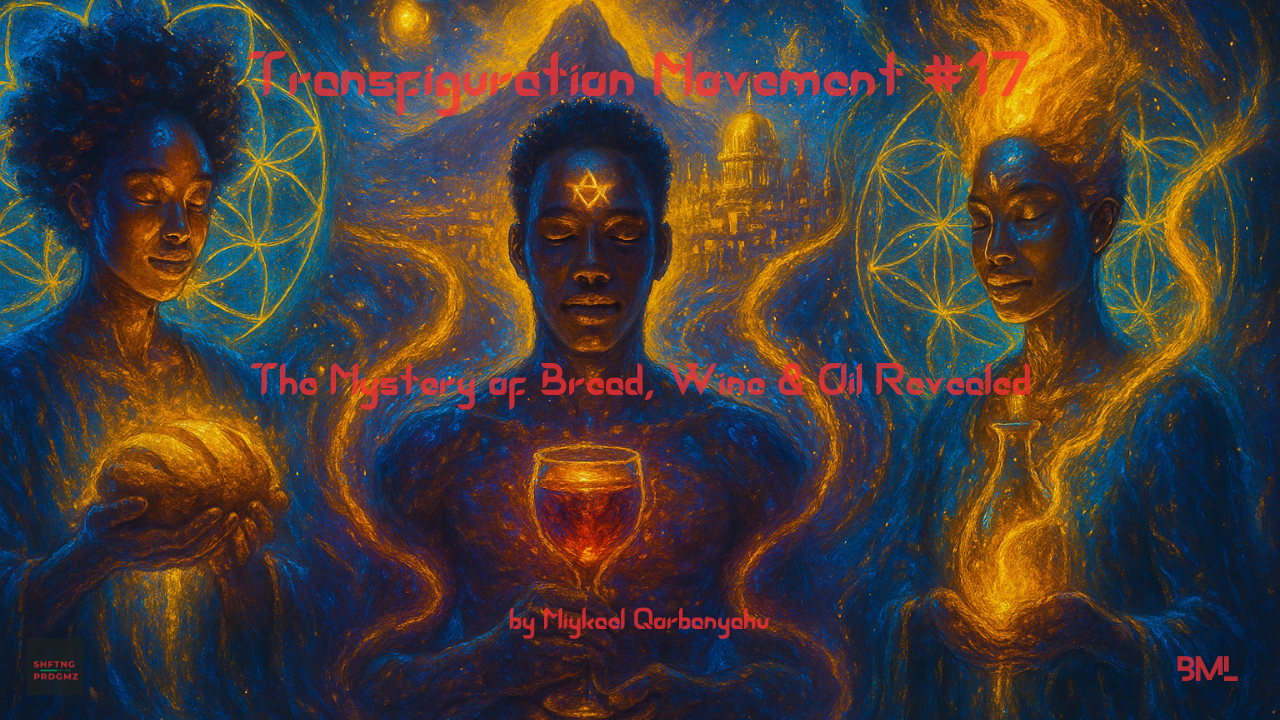
And from the ancient Hebraic Wisdom Tradition, at the heart of that connection are three ancient symbols:
Bread.
Wine.
Oil.
These aren’t just elements of a ritual, they’re portals to purpose, symbols of transfiguration. Together, they form the hidden blueprint of our transformation.
In order to move forward, it is absolutely necessary at this point for us to pinpoint the initial revelation of these most auspicious elements.
Before Israel was a nation, before Torah was given on tablets, before the wilderness tabernacle or the priesthood of Levi, there was a sacred encounter that holds within it the seed of the entire transfiguration process: the day Melchizedek, the king of righteousness, the king of Salem (peace) and priest of El Elyon (the Most High El), presented bread and wine to Avraham.
“And Melchizedek king of Salem brought out bread and wine, now he was a priest of El Elyon. And he blessed him and said: Blessed be Avram of El Elyon, possessor of heaven and earth.”
Bereshit (Genesis) 14:18–19
As the first time that bread and wine are ever mentioned together in Scripture, it was an intentional, prophetic, and deeply symbolic gesture. Melchizedek, the priest-king, wasn’t just performing hospitality; he was imparting a revelation, initiating Abram into a qadosh order, and transferring spiritual technology. And who was Melchizedek? According to the sages of Israel and the oral tradition preserved in Midrash Tanchuma and Targum Yonatan, Melchizedek was none other than Shem, the son of Noach, the righteous ancestor through whom the blessings of the covenant would pass.
Shem, whose name means name or reputation, was the bearer of the original priesthood, a righteous man who walked with Elohim and carried the wisdom of the pre-flood world into the new era after the flood. As priest and king of Salem (later known as Yerushalayim), he ruled over the City of Peace and was entrusted with sacred knowledge passed down from Adam, Chanoch (Enoch), and Noach. As we will soon see, his name prefigures in this article in a major way as relates to the Hebrew word for oil.
So when Shem-Melchizedek met Avraham with bread and wine, he wasn’t just nourishing his body after war. He was confirming Avraham’s initiation into the priesthood of righteousness. He was sealing Avraham’s identity as the father of a spiritual nation. The bread symbolized Avraham’s need for the Torah’s instruction and discipline; the wine, the joy of its revelation and covenantal intimacy. It was a preview of the path of elevation, the same pattern revealed in the Mishkan, in the teachings of Yahoshua, and in the unfolding mystery of the Messianic age.
Yahoshua, who understood the depth of this encounter, says in John 8:56:
“Avraham rejoiced to see My day, and he saw it and was glad.”
This is not allegory, this is sephirotic memory. When Avraham received the bread and wine, he encountered a shadow of the Day of the Messiah. The transference from Melchizedek was a transmission of spiritual DNA that Yahoshua would later bring into its full manifestation.
And why is this important for us in the Transfiguration Movement?
The meeting that took place between Shem and Avraham set the stage for our transformation. It shows us that the bread and wine are not innovations, they are inheritances. They are ancient, priestly symbols that reveal our path from flesh to fire, from battle to blessing, from b’nai Adam to b’nai Elohim. When we receive the bread and wine in their fullness, along with the internal oil, we are stepping into the very mystery that Avraham rejoiced in. We are entering the priesthood of Melchizedek, not by bloodline, but by consciousness and covenant.
And that priesthood has only one goal:
To make a people ready for the Kingdom.
To restore the Light of Torah in the inner man.
To walk in the Way of the Most High and become vessels of the Anointed One.
So when we take up the bread, wine, and oil, we are not just reenacting history, we are participating in prophecy; we are fulfilling the revealed will of the Most High for our lives as we become Messianic.
We are fulfilling the devotion of Avraham.
We are stepping into the Day of Messiah.
We are being transfigured.
May we be found worthy of that priesthood, in holiness, righteousness and peace.
And so, with that established and our sights set, let’s we continue on this journey and proceed to break these elements down piece by piece by piece:
1. Bread = Lechem (לחם)
In Hebrew, lechem means bread, but its root also means to fight or wage war. Bread represents the Word, or the Torah itself, our daily nourishment and defense. The Torah Dictionary of Names and Words gives this profound definition of lechem:
the mature formation of grain, or seeds of life sown, cultivated, reaped, and fashioned into a loaf of being: for the Son to be called “The Bread of Life” indicates that all concepts belonging to the Father have matured and ripened and have been reformulated for man’s utilization; lit., instruction, or teachings that arise within man unto fullness.
It is in this light that Messiah Yahoshua said the following at Yochanan 6.35:
“And יהושע said to them, “I am the bread of life. He who comes to Me shall not get hungry at all, and he who believes in Me shall not get thirsty at all..”
When Yahoshua declared, “I am the bread of life,” He wasn’t just offering poetic speech. Instead He was revealing a deep spiritual truth rooted in the eternal Torah. Bread, in that moment, became more than a staple of physical nourishment; it became a symbol of heavenly sustenance. Yahoshua was speaking of Himself as the living embodiment of the Word, the Torah made flesh, the spiritual provision that truly satisfies the hunger of the soul. Just as physical bread sustains our bodies, the true Bread, Messiah and the Torah He embodied, sustains our inner being, giving us the strength, clarity, and endurance to walk in the Way of Life.
This is why bread, in Hebrew, also means “to fight” or “to engage in battle,” as in the word milchamah (war). This reveals that to receive the bread of life is not a passive act, it is an act of engagement. Studying Torah is spiritual warfare. It demands diligence, focus, humility, and perseverance. We must wrestle with the text as Jacob wrestled with the messenger at the ford of Yabbok, refusing to let go until the blessing is drawn out and internalized.
To understand this, let us now break down the letters of lechem (לחם) which reveals even more about its transformative power:
- Lamed (ל) – Teaching, guidance, authority
- Chet (ח) – Life, inner chamber
- Mem (ם) – Flow, water, divine wisdom
Phrase:
“The bread is the guidance of life that flows through divine instruction.”
Putting this together, lechem is more than food, it is the teaching that flows into our inner chamber and produces life. It is instruction of Elohim that feeds the soul, forms the heart, and makes the vessel suitable for transformation. It is the spiritual nourishment that enables us to rise from being b’nai Adam, children formed of dust, to becoming b’nai Elohim, refined children of the Most High.
To eat this bread is to receive truth that is alive, to metabolize light, and to engage in a process that renews our minds and regenerates our nature. It is the essential fuel of the Transfiguration.
2. Wine – Yayin (יין)
[Wine is] the essence of fruit in a state of natural preservation: [whereas] the double yod [in the Hebrew word] expresses the complete works of understanding through joining with others in the exercise, workings and fulfillment of our assignments of light, [where] we achieve our potentiality.
As the Dictionary of Torah Names and Words reveals, ideologically, wine symbolizes revelation, joy, and mystery to the Hebrew mind. In this conception, wine is not the letter of Torah, but the spirit of it; the hidden truth behind the command, the iner essence of instruction meant to edify and establish the soul. This is what Romans 10:4 alludes to:
“For Messiah is the goal (telos) of the Torah for righteousness to everyone who believes.”
Wine is the inner clarity that comes from Torah maturity. It is the understanding of Elohim’s will, the joy of intimacy with the Ruach.
As the sages say in Eruvin 65a:
“נִכְנַס יַיִן, יָצָא סוֹד”
“Wine goes in, secrets come out.”
This profound saying reveals that wine, when approached in spiritual consciousness, softens the outer self and allows the inner mysteries to rise to the surface. It opens the heart and frees the tongue, not to expose folly, but to unveil truth. In this way, wine becomes a parable for Torah: the more we internalize it, the more it discloses its hidden wisdom.
- Yod (י) – Celestial spark, humility
- Yod (י) – Repetition reinforces its source
- Nun (ן) – Seed, emergence from hidden to revealed
Phrase:
“Wine is the humble spark of heavenly insight that brings joy through hidden revelation.”
To drink the wine is to sip from the cup of the hidden Torah, the soul of the mitzvot, and the rhythm behind the command. When Messiah said, “I will not drink of the fruit of the vine until the Kingdom comes,” He was pointing to a time when the fullness of the secret would be revealed in us, through us, as b’nai Elohim.
3. Oil – Shemen (שמן)
Oil is the most sacred of the three. It is the anointing, not just of position, but of transfiguration. The sages and mystics teach that when the body is purified, the colostrum secretion, formed in the brain and traveling through the spine, is preserved and lifted. This is the mystery revealed in God-Man: The Word Made Flesh. When it reaches the pineal and pituitary glands, called the Mercy Seat and Seat of Wisdom, it produces the inner oil of enlightenment. This is the light of Messiah within. This is our activated and illuminated Menorah.
It is given the following connotation in the Dictionary of Torah Names and Words:
because olive oil depicts the flow of understanding that corresponds to our potential in life, it is used as the oil of anointing to signify that an individual, or a condition or stage of development of that individual, is in accordance with that person’s spiritual positioning, shem (Hebrew word for name) in Life for service, restoration, healing, fulfillment.
This is what Melchizedek brought to Abraham: bread and wine, paired with the mystery of oil, a transfer of Torah consciousness (Genesis 14:18).
- Shin (ש) – Fire, transformation
- Mem (מ) – Waters, hidden depth
- Nun (ן) – Seed, continuity, divine life force
Revealed phrase:
“Oil is the fire of transformation that flows through the hidden waters of divine life.”
Put these three together and you unlock the essence of Messianic consciousness:
- Bread = Torah discipline (Study)
- Wine = Torah revelation (Understanding)
- Oil = Torah transformation (Anointing)
This is not religion, this is spiritual technology.
This is not ritualism, this is alchemical transfiguration.
This is the reality that Messiah Yahoshua walked in and this is the reality that He taught us to manifest.
As it is written in Exodus 19:5-6:
Now therefore, if you will indeed obey My voice and keep My covenant, then you shall be My own possession among all peoples… and you shall be to Me a kingdom of priests and a holy nation.
That is the true goal of Torah: to produce a people who shine, who transform, who embody the very light of YaH on Earth as a Messianic people.
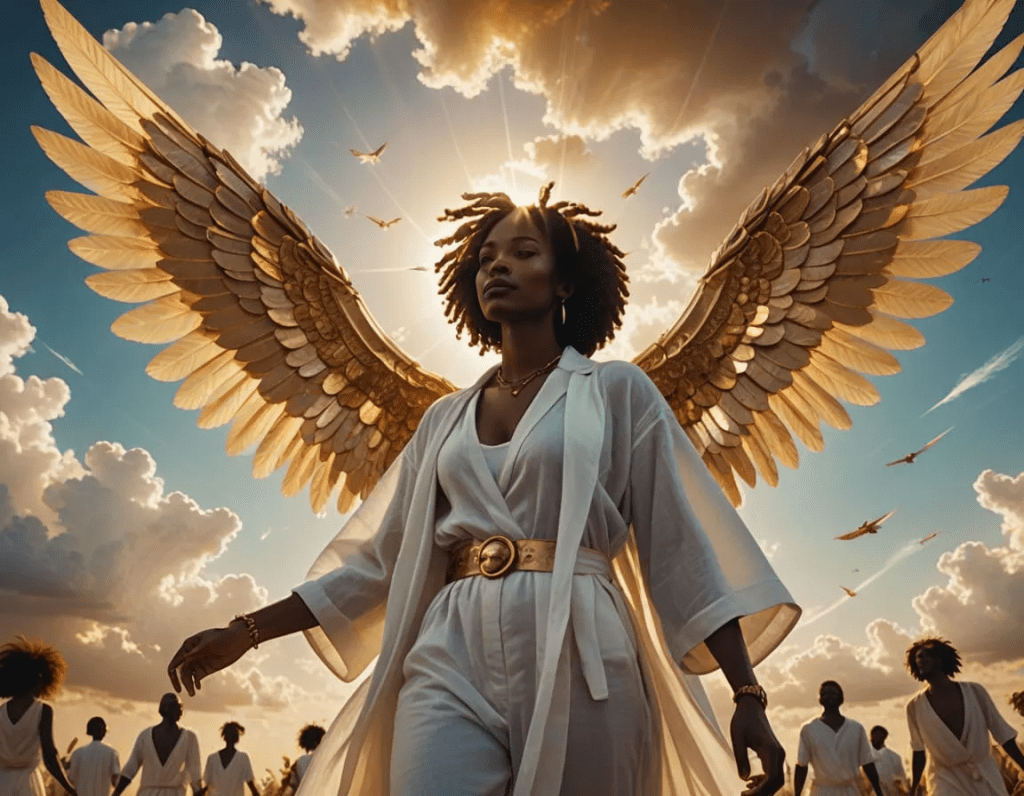
This mystery ushers us into a reality that the Messianic Scriptures define as becoming b’nai Elohim, children of Elohim. This is not just a metaphor. It is a state of being that is earned not through lineage, but through alignment.
As it’s written in John 1:12–13:
But to all who received Him, to those trusting in His Name, He gave the authority to become children of Elohim, children born not of blood, nor of the desire of flesh, nor of human will, but born of Elohim.
As the order of creation according our Creator YaH would have it, we all begin as b’nai adam, sons of man, earthy and temporal, like the dust of the ground. The prophet Yeḥezqel (Ezekiel) is constantly addressed as ben adam, highlighting his humanity. But the call of the Transfiguration Movement is to go further, to become b’nai Elohim, not by flesh, but through rebirth and transformation.
This is the message Yahoshua shared with Nakdimon (Nicodemus) in John 3:3 & 5:
Unless one is born from above, he cannot see the reign of Elohim…unless one is born of water and of the Spirit, he is unable to enter the reign of Elohim.
It’s here that the mystery of the Bread, Wine, and Oil begins to show its full purpose, not just symbolic elements of covenant, but actual elements of elevation. As such, these are the elements that stimulate the process of how b’nay Adam becomes b’nai Elohim. It is how clay becomes fire, how servant becomes son, and how the natural is clothed in the supernatural.
That is the calling for us that remains. But it requires transformation.
It requires submission to the Word, sensitivity to the Spirit, and reception of the anointing that flows from Above.
To become b’nai Elohim is not about bloodlines, it is to be reborn in alignment with the will, wisdom, and wonder of YHWH. Of this, rav Shual said at 1 Corinthians 15.50,
And this I say, brothers, that flesh and blood is unable to inherit the reign of Elohim, neither does corruption inherit incorruption.
As with all sacred mysteries in Torah, the symbols of bread, wine, and oil are layered. On one level, they represent external covenantal elements. On a deeper level, they reveal a supernal anatomical blueprint: our own bodies are the tabernacle, and within us is the sacred pattern of transformation.
The Torah speaks of the body not just as flesh, but as a vessel of service. In Exodus 29:2, the priests were commanded to eat unleavened bread, partake of drink offerings, and be anointed with oil. These three elements were not just ritual, they mirrored the spiritual nourishment, vitality, and illumination required to walk in holiness.
Yahoshua, as High Priest in the order of Melchizedek (Hebrews 7), embodied this same mystery when He declared in John 6:53-56:
“Truly, truly, I say to you, unless you eat the flesh of the Son of Man and drink His blood, you have no life in yourselves… For My flesh is true food, and My blood is true drink.”
This was not a call to carnal consumption, it was a spiritual unveiling.
The Bread is the body, the daily discipline, the embodied Torah lived out.
The Wine is the blood, the circulating covenant, the joy and life carried through the soul.
The Oil is the sacred secretion, the anointing poured out from above through the temple of the mind.
From a physiological perspective, this connects deeply to what sacred texts and modern researchers have explored about the clostrum oil, a holy secretion produced in the medulla oblongata (brainstem) that, when preserved and elevated, travels down the spine and returns upward along the kundalini path (called the Jordan River in spiritual allegory), finally anointing the pineal gland (Seat of Elohim) and the pituitary gland (Throne of Wisdom).
The powerful text God-Man: The Word Made Flesh by George Carey and Inez Perry explains:
“When the oil flows upward in the spinal canal, it reaches the optic thalamus and sets the ‘candle’ of the body aglow—the light that once illuminated the whole being.”
Carey & Perry, Chapter 10, The Immaculate Conception
This aligns with the oral tradition found in the Zohar, which teaches that the menorah (lampstand) within the Temple mirrors the spinal column, and the light upon it only burns when pure oil is flowing without interruption (Zohar, Beha’alotecha 152b).
Thus, when we preserve and elevate this inner oil, symbolized by shemen, we are literally enacting the transfiguration of the soul. The same fire that lit the Temple is meant to burn inside us.
- Bread = Body (Temple)
- Wine = Blood (Circulation of Spirit)
- Oil = Anointing (Pineal & Pituitary Secretions)
To eat the bread is to discipline the flesh.
To drink the wine is to elevate the soul.
To receive the oil is to illuminate the spirit.
To understand this mystery of the bread more fully, we must return to the place from which the Bread of Life arose: Bethlehem, or in Hebrew, Beit Lechem (בֵּית לֶחֶם), meaning “House of Bread.”
This was no coincidence. The very name of the town where Yahoshua HaMashiach was born reveals the essence of His identity and mission. Just as was mentioned earlier, when Yahoshua declared in John 6:35 that He is the Bread of Life, His birthplace prophetically and poetically in Bethlehem confirms it. He didn’t just come with bread; He was the bread—born from the House of Bread.
Beit Lechem first appears in Genesis 35:19 as the place where Rachel, the mother of Benjamin, died giving birth. This connection to both birth and loss signals the redemptive thread that runs through Bethlehem. Later, it becomes the hometown of King David, the shepherd-king and archetype of the Messiah. The prophet Samuel anointed David there, setting the precedent for a Messianic lineage rooted in humility, covenant loyalty, and divine favor.
In this sense, Bethlehem is a prophetic womb—the matrix from which both David and Yahoshua emerge. David, the first Messianic shadow, and Yahoshua, the fulfillment of the pattern, both arise from this sacred ground.
The Zohar (Vol. 1, 82a) speaks of the “Bread of the King” descending daily from the upper worlds to feed the righteous. It describes a hidden, supernal nourishment that sustains those walking in alignment with Heaven. Bethlehem, then, becomes not just a place on the map, but a metaphysical symbol of the descent of divine nourishment into the world—first through David, and finally through the Messiah, who is the full embodiment of divine Torah and truth.
“From Bethlehem, the bread of heaven descended in the form of man, to teach the world the mystery of its own transformation.”
Zohar commentary on Ruth
Yahoshua’s birth in Bethlehem signifies that the divine sustenance that once only dwelt in the Holy of Holies had now entered the world wrapped in flesh, to be tasted, digested, and made manifest in the vessels of humanity. He becomes the first of the transfigured, and the invitation extends to all who would follow Him through the process of sanctification and embodiment of Torah.
Thus, Bethlehem becomes both origin and invitation. It’s the starting point of the Messianic call, the place where the Bread of Life enters the world, and where each of us is challenged to become lechem chayyim, living bread for the world, just as He was.
As part of the Transfiguration Movement, we are not just to remember Bethlehem; we are to become Bethlehemites in spirit, those who birth the Bread through our lives, our teaching, and our transformation.
This is why Yahoshua, after rising from the dead, revealed Himself in Luke 24:30–31 by the breaking of bread:
“He took the bread, blessed it and broke it, and gave it to them. Then their eyes were opened, and they recognized Him.”
This was both physical and spiritual: the bread awakens the sight.
As it is written in Proverbs 20:27:
“The spirit of a man is the lamp of YHWH, searching all the inward parts.”
The lamp is not fueled by mere ritual, but by sacred alignment. When we integrate the physical, spiritual, and intellectual layers of Torah, bread, wine, and oil, we activate the transfiguration of the whole being.
Let us tend this inner menorah with reverence, devotion, and understanding, so that the light of the Messiah might burn brightly in us and through us.
This is the mystery revealed. This is the path of b’nai Elohim.
This is the purpose of the Transfiguration Movement.
And so, we press on in this Movement, not to perform religion, but to walk out revelation.
Not to simply remember Messiah, but to manifest Him.
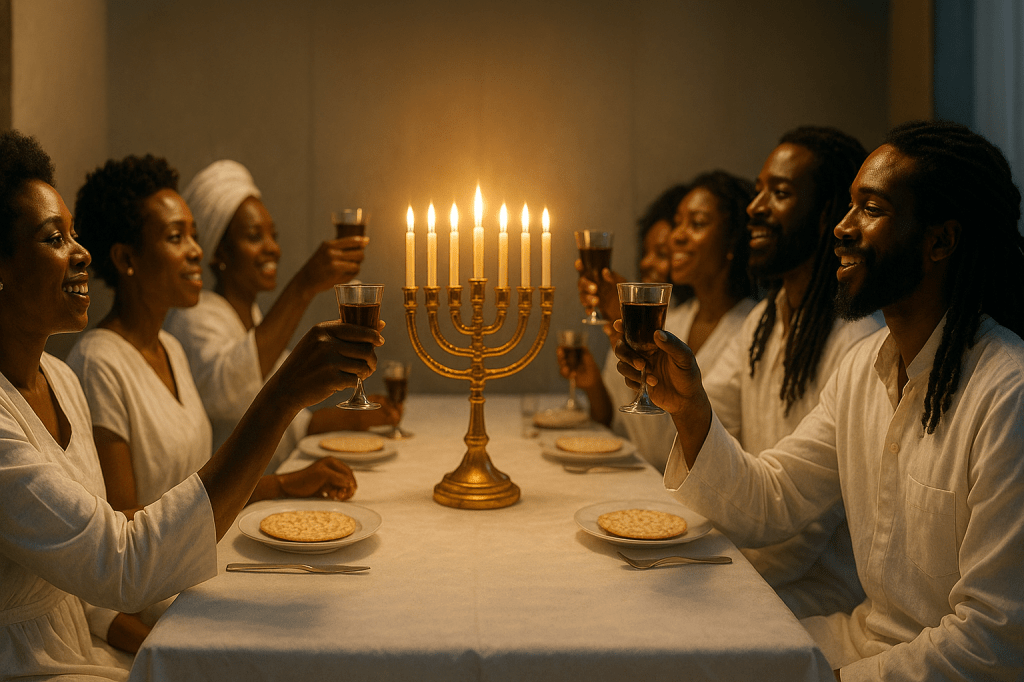
We become Messianic when we eat the Bread.
We become Messianic when we drink the Wine.
We become Messianic when we are anointed by the Oil.
Return to the study, revelation, and anointing.
Become the Light of the World. Be the salt of the Earth.
You don’t need a cape.
You don’t need a lightsaber.
You need conviction, clarity, and connection.
Let the Transfiguration Movement continue.
Let the Messiah be revealed, not just in history, but in you.
Because when we walk in the mystery of the Bread, Wine, and Oil,
we don’t just talk the Word.
We become it.
So let us become the mystery fulfilled.
Let us walk as children of light, breaking the Bread, partaking of the Wine, anointing with the Oil, and manifesting Mashiyach so that the fullness of the Transfiguration is made visible in us.
Selah…
Discover more from SHFTNG PRDGMZ
Subscribe to get the latest posts sent to your email.

