
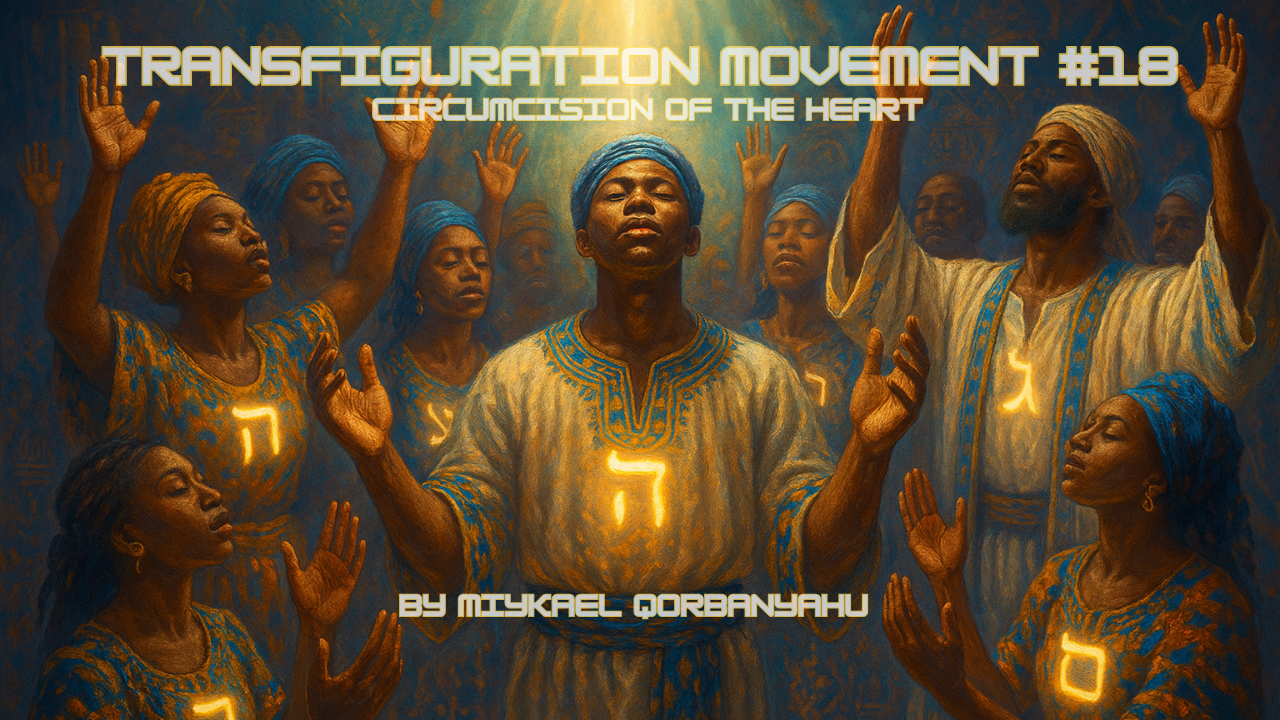
_______________________________________________________
The Targum1 renders the phrase in the portion of Nitzavim “[Elohim] will circumcise your heart,”2 to mean “the foolishness of your heart.” The Targum does so to forestall the following question: “Circumcision” applies only to the removal of the coarseness and foolishness that covers the heart, not to the heart itself.3
Nitzvaim: Two Forms of Circumcision
For he is not a Yehuḏite who is so outwardly, neither is circumcision that which is outward in the flesh. But a Yehuḏite is he who is so inwardly, and circumcision is that of the heart, in Spirit, not literally, whose praise is not from men but from Elohim.
Romans 2.28-29
_______________________________________________________
For the better part of an entire decade, between 2007 and 2017, I lived with a heart made of stone.
Not literally, but emotionally, spiritually, it was hardened, impenetrable, and cold.
I was numb.
Those ten years were like a desert of my own making, a wilderness of the soul. The joy I once had in serving, teaching, speaking, writing, building community, had dried up. After entering a verbally abusive marriage in 2004 and dealing with the trauma and pain that followed, along with my own unfaithfulness and the many relational wounds I both suffered and caused, I found myself completely shut down. Numb. Desensitized. I was a walking subconscious reaction, functioning, but not living. The rhythm of my life was out of sync, and my heart was no longer receptive to the Spirit or aligned with my purpose.
It wasn’t until I undertook the inner work I described in Transfiguration Movement #16: The Wonders of Wholeheartedness that the shell around my heart began to crack. Slowly, I began to feel again, pain, yes, but also conviction. It was like thawing out after years in a cold, hard freeze. I was coming alive. Not in an emotional sense only, but in the deeper sense of spiritual vitality. That thawing? That was the beginning of circumcision of my heart, which allowed me to love again; YaH, others and myself…in that order.
What I’ve come to learn through all of this, though yet fully to comprehend, is that at the core of our human experience, beneath all the rituals, prayers, disciplines, and even the pursuit of righteousness, is a war. Not a war of flesh and blood, but a war of inclinations, known in the wisdom of our ancestors as yetzer ha’ra (יֵצֶר הָרַע), the evil inclination, and yetzer ha’tov (יֵצֶר הַטּוֹב), the good inclination.
The yetzer ha’ra is not some external demon whispering from the shadows. It’s internal, it is the impulse for selfishness, lust, pride, laziness, excess, and rebellion. It is not inherently evil in the Western moralistic sense. In fact, the sages of Israel taught in Midrash Bereishit Rabbah 9:7 that without the yetzer ha’ra, a man would never build a home, take a wife, or start a business. It is the raw energy of desire and drive, uncircumcised and unrefined.
In contrast, yetzer ha’tov is the impulse to align with the will of Elohim, to act with compassion, righteousness, humility, and truth. It’s the inclination to keep covenant, to study Torah, to love our neighbor, to choose light even when darkness calls. It is our inner compass, written into the soul at birth and strengthened through discipline, repentance, and divine intimacy.
These two inclinations are the trees of choice inside us, and the heart is the soil where they wrestle. This is why the circumcision of the heart becomes so essential, not as a physical act, but as a spiritual one. As written in Deuteronomy 10:16:
“Circumcise the foreskin of your heart, and do not be stiff-necked any longer.”
To circumcise the heart is to peel away the layers of ego, trauma, rebellion, and resistance, allowing the yetzer ha’tov to become the dominant voice within us. It is to let the Word cut away the hardened parts of the soul until we are tender again, pliable in the hands of the Potter.
This cutting away is the beginning of transfiguration.
When the evil inclination is subdued, not destroyed, but transformed, and the good inclination is fed, watered, and nurtured through prayer, Torah, and holiness, we begin to reflect the image and likeness that was declared at our creation in Genesis 1:26.
The Apostle Paulos echoes this in Romans 12:2, when he says:
“Do not be conformed to this world, but be transformed by the renewing of your mind…”
That renewal is the circumcision of the heart.
That transformation is what prepares us for Messianic consciousness.
That inner war, if overcome, births a new humanity, one that is fit to rule with mercy and truth.
Let us therefore take inventory of our inclinations.
Let us ask: Which one do I feed? Which one is leading my life?
And let us pray for the strength to choose well.
For transfiguration does not happen in spite of the struggle between the yetzer, it happens through it. And the victory belongs to those who yield to the Ruach, who receive the Bread, the Wine, and the Oil, not as symbols alone, but as the fuel to become truly and fully new.
To comprehend what the circumcision of the heart is all about, let’s first go back to the first covenant of circumcision that began with Avraham Avinu, our father Abraham. At Genesis 17.10, we find the following words,
“This is My covenant which you shall keep between Me and you and your seed after you: every male child among you shall be circumcised.”
This act of brit milah, the cutting away of the male’s foreskin, was a sign in the flesh of covenantal identity. It marks the body as belonging to YaH, as being in alignment with the order of Torah. But this rite was never meant to be just about the body. From the beginning, the sages taught that the physical act pointed to a deeper, internal transformation. Deuteronomy 30.6 reveals the true meaning of the circumcision;
“And YHWH your Elohim will circumcise your heart and the heart of your descendants, to love YHWH your Elohim with all your heart and with all your soul, so that you may live.”
This is where the external becomes internal, where the covenant becomes personal. The foreskin of the heart, callousness, pride, stubbornness, trauma, bitterness, fear, foolisheness, must be cut away so that we can receive and reflect the love of Elohim in fullness. Without this inner work, the external sign is incomplete.
In the Oral Tradition, the Sifre on Deuteronomy 10:16 teaches:
“This refers to the evil inclination which ensnares the heart; it must be cut away like a barrier that stands between us and the Creator.”
The heart is the seat of will, desire, and spiritual perception. If it is covered, even partially, we cannot live a life of true teshuvah (repentance) or authentic connection.
Let’s look deeper into the Hebrew.
ThThe Hebrew word milah (מִילָה), most often associated with circumcision, is more than a physical commandment, it is a spiritual key. In Hebrew, milah also means word, as in a spoken, revealed utterance, a divine expression. This dual meaning is not accidental. The act of circumcision (brit milah) is a covenantal sign, but it points to a deeper reality: the cutting away of excess to reveal truth, whether in flesh or in speech, in body or in spirit.
Breaking down the letters of milah:
- Mem (מ) – Water, flow, the womb of divine wisdom; represents the unformed potential of revelation.
- Yod (י) – The smallest letter, a spark of divine light; symbolizes concentrated wisdom and the origin of thought.
- Lamed (ל) – The tallest letter, representing teaching, authority, alignment with Heaven, and the shepherd’s staff.
- Hey (ה) – The breath of life, revelation, and the presence of the Spirit.
Phrase: Milah is the flowing revelation of the Torah’s wisdom that teaches and reveals the breath of life.
This teaches us that true milah, whether of flesh or of spirit, is about opening the vessel so that the water of Torah can flow, the spark of wisdom can ignite, instruction can guide, and the breath of Spirit can indwell. It is not only a physical covenant but a metaphysical tuning of the soul to the frequency of the Word.
Now consider the Hebrew word lev (לֵב), meaning heart.
- Lamed (ל) – Teaching, direction, the upward-reaching staff of Torah guidance.
- Bet (ב) – House, dwelling place, the container of consciousness and intention.
Phrase: Lev is the inner house that receives the Torah’s instruction.
The lev is not just the seat of emotion, it is the command center of will, desire, and discernment. According to Torah, “As a man thinks in his heart, so is he” (cf. Proverbs 23:7). In Hebraic thought, the heart is cognitive, it remembers, considers, desires, and plans. But when the lev is clogged, by sin, trauma, bitterness, ego, pride, or spiritual deafness, it cannot house the milah; it cannot receive the flowing wisdom, the breath of Elohim, or the instruction of Torah.
This inner circumcision is not a one-time act. It is an ongoing spiritual surgery, necessary for transfiguration.
On our journey of inner refinement, the concept of circumcision of the heart is more than emotional sincerity or moral repentance, it is a spiritual surgery that removes what the sages of Kabbalah call the klipot (קְלִיפּוֹת), the husks or shells that enshroud the primordial light embedded within our soul.
These klipot are the hardened layers of ego, trauma, habitual sin, and false identity that surround the nefesh like spiritual calluses. They are formed through misalignment with Torah, accumulated distortion from this world’s systems, and unprocessed pain that calcifies around our inner light. As long as the klipot remain unbroken, our light is blocked, and the image of Elohim within us remains concealed, dimmed beneath spiritual debris.
But the work of teshuvah, of circumcising the heart, is also the work of birur, the Kabbalistic process of extraction and refinement. The Baal Shem Tov taught that our soul’s mission in this world is to elevate the sparks (netzotzot) of holiness that are trapped within the klipot. Every act of truth, every moment of sincere prayer, every instance of obedience cracks open those shells and releases light back into the cosmic source.
This is the secret of “Yehi Ohr”/“Let there be light” (Genesis 1:3). The Zohar teaches that this utterance was not only a historical event in the creation of the universe, but a perpetual reality, echoing through the soul of every human being. When we return to the light through repentance, through breaking open the klipot, we realign ourselves with this primordial command. The light that was hidden at creation, called the Or Ganuz, the concealed light, is revealed again through our transformation.
Rabbi Moshe Chaim Luzzatto (Ramchal) explains that the righteous serve to sweeten the judgments (hamtakat ha-dinim) by elevating the holy sparks within the husks, a process only accomplished through the soul’s circumcision, removing spiritual blockages that prevent divine flow.
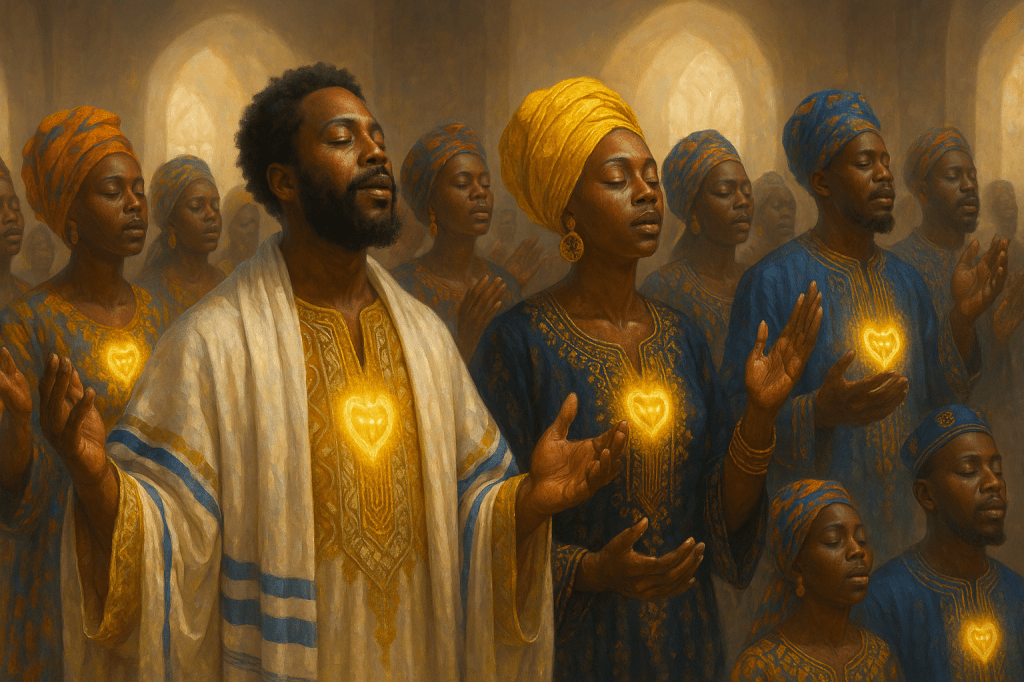
The circumcised heart is one that can feel again. It is sensitive to the Presence. It hears the still small voice and responds with love and reverence. It is not content with being outwardly religious, it craves inner communion. It does not ignore its klipot; it names them, faces them, and, by the grace of YaH and the fire of Torah, shatters them.
When we do this, we do more than purify ourselves, we heal the world. As each spark is released, the cosmic body of creation becomes more whole. The hidden light increases. The transfiguration progresses.
Let us return to the light, not just as a concept, but as a conscious experience.
Let us say, not just with our lips but with our lives:
“Yehi Ohr.”
And may the light of the Torah be within us, through us, forever.
Amein!
Considering further, in the oral tradition, the sages explain that the Torah is fire, and the heart must be soft wax, not stone, to receive its engraving (see Midrash Tanchuma on Deut. 30). The hardened heart resists the Word. The circumcised heart receives it, stores it, and lives it.
Therefore, the transfigured one is not simply someone who studies Torah, but someone whose lev has been circumcised, so that the milah, the divine utterance, can be etched upon it.
This is echoed in the prophecy of Jeremiah 31:33:
“I shall put My Torah in their inward parts, and write it on their hearts. And I shall be their Elohim, and they shall be My people.”
The transformation from b’nai adam to b’nai Elohim requires this work of the heart. The oil (inner anointing), the wine (divine revelation), and the bread (embodied Torah) all work in tandem to open the lev and inscribe the milah.
Milah + Lev = Transfiguration.
When our hearts become the dwelling place for divine instruction,
when our innermost selves are shaped by the breath of YHWH,
then we are no longer simply human beings
we are vessels of light, children of Elohim.
And this, family, is the sacred work that we must put in for the Transfiguration Movement.
To become transformed, therefore, we must engage in the conscious process of inner removal, of letting go of the parts of ourselves that resist growth and connection to Elohim.
Here’s how this looks in real life:
- Reflection and Teshuvah – Be brutally honest with yourself. What’s hardened your heart? What pain, sin, or lie has built a wall between you and YaH? Confess it.
- Cry Out – The Psalms are filled with heartfelt pleas. Make your prayer like David’s in Psalm 51:10: “Create in me a clean heart, O Elohim, and renew a right spirit within me.”
- Immersion in the Word – The more we take in Torah, the more it softens us. The water of the Word washes and prepares the heart for transformation.
- Submission to Ruach – Allow the Spirit to do what only the Spirit can: perform spiritual surgery.
- Community and Correction – Let trusted elders, morim, and those rooted in the Way speak into your life. As Proverbs 27:17 says, “Iron sharpens iron…”
- Service and Love – When we give from a place of healed intentionality, the heart becomes fertile soil for more revelation.
This entire process of circumcision is part of the Transfiguration Movement, because it prepares the vessel to carry light. Ezekiel 36.26 informs us of the following,
“A new heart also will I give you, and a new spirit will I put within you. And I will take away the stony heart out of your flesh…”
Circumcision of the heart isn’t about perfection. It’s about authenticity. It’s the restoration of sensitivity. It’s the birth of a heart that can feel again, feel conviction, love, reverence, awe, and purpose.
Like Abraham, we are called to leave behind the old life and embrace the mark of covenant. But now, that mark is not carved into flesh, it is inscribed on the soul.
So I ask you, achoti and achi, have you allowed your heart to be circumcised?
Have you invited YaH to remove the crust of pain, pride, or past disappointments?
Have you surrendered to the process that transforms the lev into a dwelling for the milah, the Word of Life?
This is your time.
The Transfiguration Movement is not for spectators. It is for those ready to be pierced, not by swords or suffering alone, but by the loving scalpel of the Most High, cutting away all that blocks the light.
Let us cry out for clean hearts, receive the milah in our lev, and step boldly into the covenant of transformation.
Because only hearts that are circumcised can carry the weight of honor in this movement of Transfiguration.
Selah…
Discover more from SHFTNG PRDGMZ
Subscribe to get the latest posts sent to your email.


1 Comment