
________________________________________________________________________
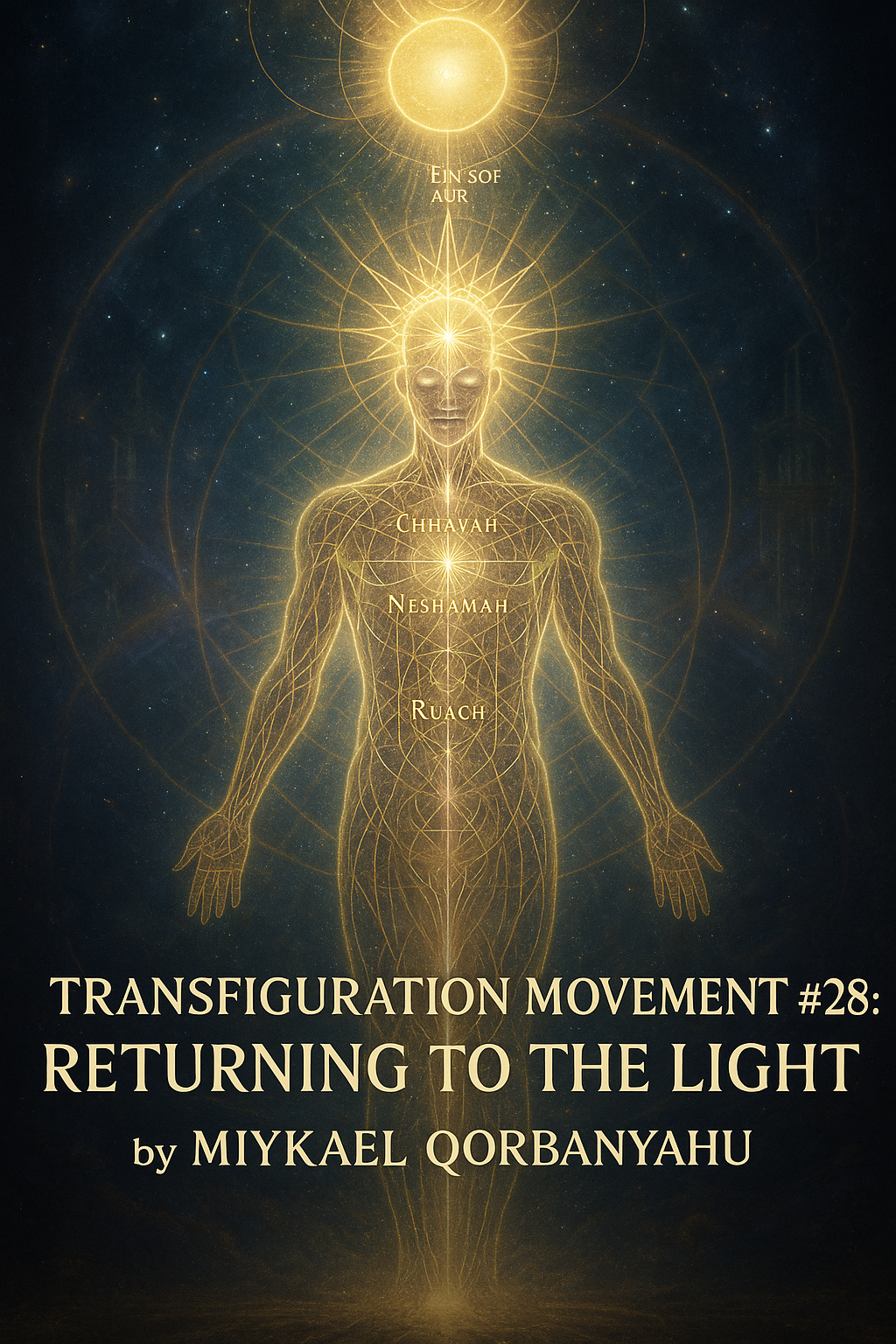
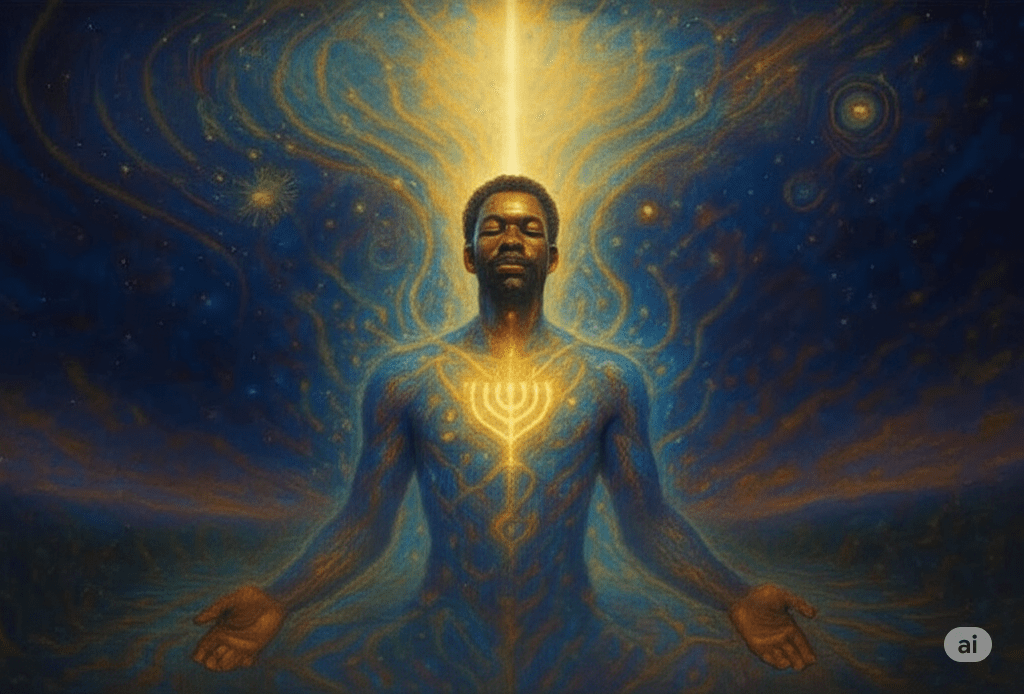
“Rabbinic insight is that the clothing of Adam and Eve was glory, or radiance (or with an aleph), a white light invisible to the human eye that was replaced with a covering of skins (or with an ayin). The white light is the same covering of the Bride of Messiah in Revelation. The Bride reflects the Lamp of the New Jerusalem, the Lamb. In terms of the menorah, there was a spiritual covering over the first couple’s earthly bodies, a covering or radiance pictured when Moses spoke with Adonai on the mountain, receiving the Torah covenant for Israel. Like the Holy One in whose image they were made, they had corresponding covers of light like garments.”
Garments of Light
And the knowledgeable will be radiant like the bright expanse of sky, and those who lead the many to righteousness will be like the stars forever and ever.
Daniel 12.3
________________________________________________________________________
So just after the time I experienced my rebirth in ‘97, I returned to college with a new mindset, new principles, and a new life. I went from being able to down two 40 oz bottles of malt liquor like water, to drinking the Living Waters of Scripture with sobriety. I went from taking two blunts to the face almost every night to inhaling the Breath of Life from the Ruach. I went from having random sexual encounters a week to abstinence and covenant consecration. And the crazy part of it? My transition happened cold turkey; no jive time, no program, no rehab, no twelve steps, just spiritual rebirth and inner desire for transformation. Undergoing a complete internal reset, what had once ruled me, my flesh, my habits, my desires, at that time, early on, had been dethroned. The hunger was still there, but it was now pointed upward. My appetite had shifted; the thirst was no longer for the bottle or bottoms, it was now for righteousness.
There was one night that I knew early in this new walk that I was about that life. I had found myself convinced to go to Geddy’s, a club that I used to frequent during my early college days. Now mind you, that night, I had no real desire to go bcuz I already knew the atmosphere, the energy, the temptations. But I reluctantly went, maybe to see if I could walk into my past and remain rooted in my present; maybe to see if the light in me would flicker or shine. And as soon as I walked through the doors, the bass thumping, lights strobing, and spirits moving, I was greeted by a familiar face, my former teammate Scott Tracey. Scott and I went back to high school days, rivals on the gridiron but brothers off the turf. He had been one of my roommates during my sophomore year, one of six of us in the suite that became a certified party hub. It was also Scott who there with me the night I had my very first cannabis induced anxiety attack; the breakdown that cracked my soul open and led me on my spiritual vision quest. So when he saw me that night in the club, something in him stirred. He looked at me and said, “Man… you glowing. What’s different about you?”
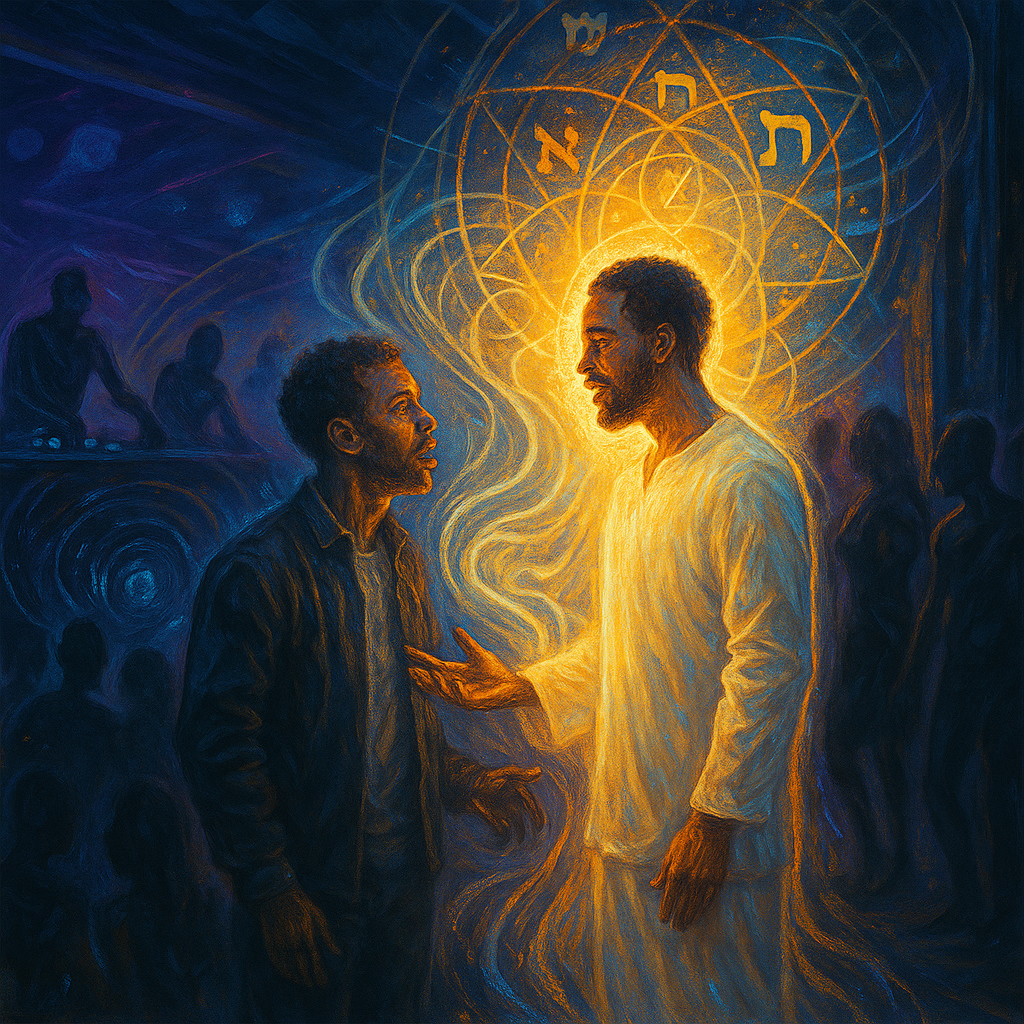
Right there, in the middle of the club, surrounded by smoke, sweat, and seduction, I shared my testimony for the first time as we found a table just at the entrance of the club to have our conversation. We sat in the chaos for 20 minutes talking about salvation, the Most High, the Scriptures, the Messiah, about the Light. I shared with him, based on my experience, what happens when your inner man gets resuscitated by something real. After we finished talking, he went about his night and I stayed near the DJ booth, not to party, not to engage, but to observe. I was seeing it all through a new lens. The club wasn’t a playground to me anymore, it was a battleground. I saw it for what it was; people lost in cycles I had just broken, spirits seeking pleasure because they had no peace.
And then she walked up. No name need be said, but she was one of them that was one of them. A girl with who I used to have episodes. She smiled, leaned in, and asked me, “What you doing after this?” I said, real quick, “Going home.” She pushed the issue some more. “You want some company?” My eyes got bigger but I managed to say quite directly, “Nah, I’m good.” Persistent like a mug, she leaned even closer this time and told me what she was wearing underneath her jeans. At that point I didn’t respond anymore, I just walked away. And as I stepped outside into the night air, I realized that I had just passed a spiritual test. And now that I look back, I realize that passing that test wasn’t by willpower alone, but by the Light that was within me. That moment was proof that I was not who I used to be. The Light had truly entered me, and I was being transfigured. Now, keeping it all the way true, I’m not at all saying that I didn’t feel like I should’ve told her to come through when I got home, but after laying down to sleep and waking up the next morning, I was more than pleased with my decision.
From the darkness of a smoke-filled room to the clarity of conviction, I stepped into the Light that night. I didn’t need validation from old flings. I didn’t need to prove anything to myself or anyone else. I had been clothed in something greater than flesh; I had been robed in light.
That moment marked a graduation of consciousness in my life. It wasn’t just about behavioral change either, it was identity change. The Light had reordered my desires, reshaped my perception, and redefined my power. And that, beloved readers, is the essence of transfiguration. It’s when your entire internal architecture is rebuilt by the revelation of who you are in the presence of YaH. And those spiritual shells encases our Light, the kliphot, the false skins that entombs your soul through sin, ignorance, and trauma, begin to crack and fall off. In the inner teachings of Israel, the term kliphot (singular: klipah) refers to “husks” or “shells,” metaphysical barriers that obscure our primordial light. These are not merely external obstacles but internal constructs formed through ignorance and sin. They manifest as negative traits, destructive behaviors, and spiritual blindness, all of which distance us from our true essence.
And we should know that these kliphot form when we live unprincipled, when we indulge without reverence, when we reject the Light. The kliphot are illusions of identity and insulation, barriers between our awareness of the physical. These husk like coverings create chasms between who we are and who we were created to be. But it is with and through teshuvah, true repentance, that shatters them. As has been presented earlier, repentance doesn’t just mean turning from sin, it also means turning toward the Source of Light, cleaving to YaH. This is because it is repentance that awakens the dormant levels of soul within us.
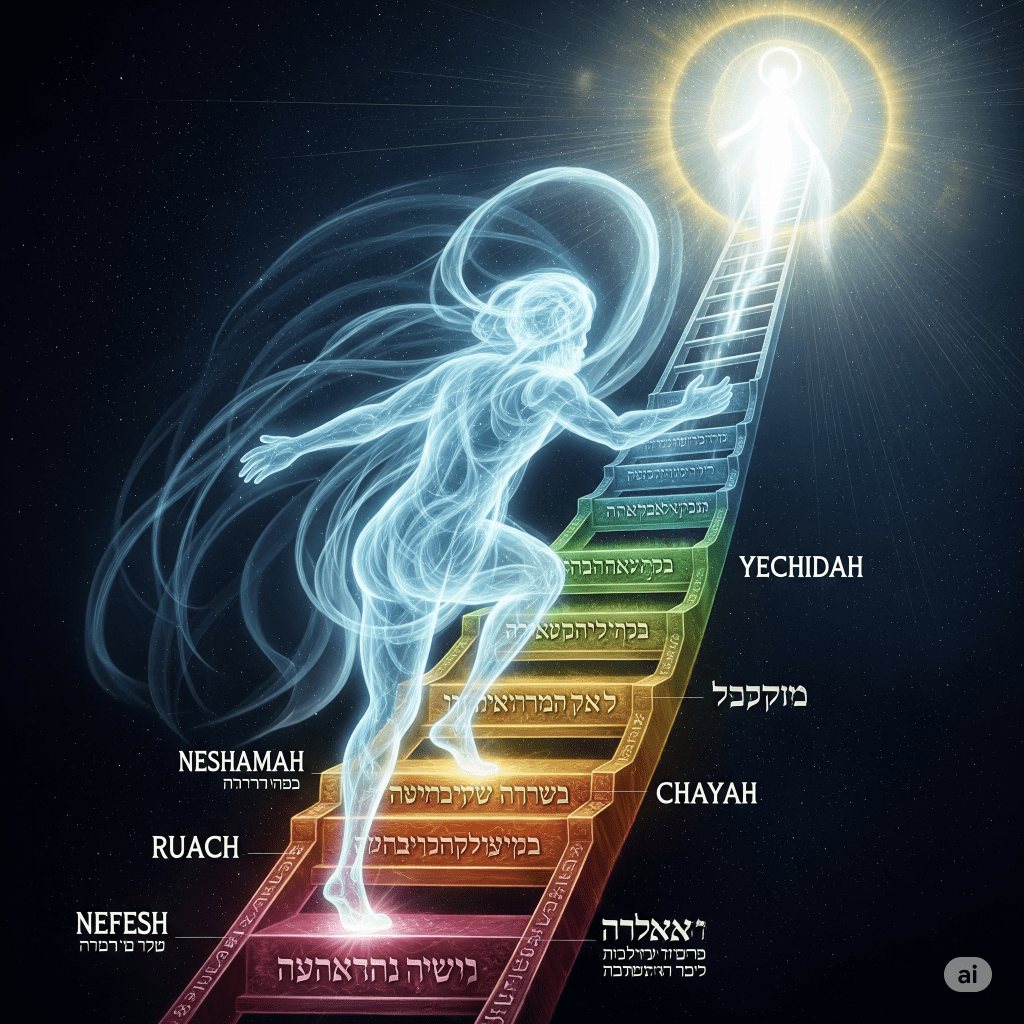
Because beneath the surface of the physical awareness that many choose to dwell on, there lies a deeper essence of our being that lead to the Light. According to an article from Chabad, there are five levels to our soul. Repentance, or teshuvah, is the key to unlocking these levels. And when we do, it’s our return to our authentic selves and a reconnection with Elohim. Through sincere repentance, we awaken the different levels of the soul, each representing a deeper connection to the Creator:

Each level signifies a step closer to spiritual enlightenment and alignment with the will of YaH. In essence, the Hebrew understanding of the human soul reveals a multi-dimensional reality that reaches from the earth to the heavens, from the base impulses of physical life to the sublime unity of the Shekinah Presence. This framework is drawn from Torah, Kabbalah, and Chazal (the sages of blessed memory) and identifies five distinct levels of the soul, each with its own characteristics and functions.
Nefesh is the first and most basic level. It’s the animating life force, the breath that gives movement and basic instinct to the body. This level is intimately tied to blood, as written in Leviticus 17:11, “For the life (nefesh) of the flesh is in the blood.” Nefesh governs action and survival; it’s our fight-or-flight, our appetite, our physical drive to exist. At this level, we are closest to the animal world, and yet it is the necessary foundation for all higher soul work. Without nefesh, there is no vessel for ascent.
Ruach rises above the nefesh. Ruach means “wind” or “spirit” and relates to the emotional and moral life of a person. It governs inner character and virtue, what kind of person we are becoming through the choices we make. It’s in the ruach that we wrestle with right and wrong, love and hatred, courage and cowardice. As Proverbs 20:27 says, “The spirit (ruach) of man is the lamp of YHWH, searching all the inward parts.” This is the seat of teshuvah, repentance, because ruach makes one aware of moral direction.
Neshamah is the breath of Elohim that gives us divine awareness and cognitive reflection. As Genesis 2:7 declares, “And He breathed into his nostrils the breath (neshamah) of life, and man became a living soul.” Neshamah allows for introspection, contemplation, and comprehension of higher truths. It’s the part of us that can study Torah not merely as law but as light. This is where the image and likeness of Elohim becomes intellectually perceived and pursued.
Chayah is less accessible in our day-to-day consciousness. It means “life-force” in a higher dimension, and it represents a transcendent awareness of reality. Chayah is experienced during moments of divine inspiration, prophetic encounter, or mystical union. It is the awareness that all things are interwoven, that nothing exists apart from the Living Elohim. As Psalm 36:9 states, “For with You is the fountain of life (chayim); in Your light we see light.” This is the level Moshe reached when he ascended the mountain and communed with YaH.
Yechidah is the deepest, most intimate core of the soul. It is the spark that remains forever unified with the Infinite—Ein Sof—even when all other levels are disoriented or in disrepair. The word “yechidah” comes from the same root as echad, meaning “oneness.” It is the soul’s indestructible bond with Elohim. This is the level Yeshua HaMashiach revealed through his complete surrender and unity with the will of the Father, saying, “I and the Father are One” (John 10:30). Yechidah is the pure flame that never goes out.
But all of these soul levels must function within the body—within what the Torah calls basar (בָּשָׂר), meaning “flesh.” This word, basar, carries a tension in Hebrew. It doesn’t just mean meat or skin—it can also mean “to bring tidings” or “to reveal.” In fact, the Hebrew root b-s-r is found in Isaiah 52:7, “How beautiful on the mountains are the feet of him who brings good news (mevaser)…”
This duality is important.
I submit that it is imperative for us to understand that the flesh isn’t inherently evil. It is the vehicle through which spirit manifests. However, when the basar is unrestrained, when it dictates the life rather than serving the higher purpose of soul revelation, it becomes the site of spiritual disintegration. As Romans 8:13 echoes, “For if you live after the flesh (basar), you shall die: but if through the Spirit you put to death the deeds of the body, you shall live.”
Before Adam and Chawah sinned, our sages say they were clothed in light (ohr – אוֹר), not skin (aur – עוֹר). This tradition comes from Bereishit Rabbah 20:12, which says, “Before the sin, they were clothed with garments of light; after the sin, garments of skin.” The difference between aleph (א) and ayin (ע) is subtle in sound but cosmic in meaning. Aleph represents the Divine breath and unity, ayin represents the eye, the perspective of sight and separation.
When we fell from light to flesh, we didn’t just lose our garments, we lost awareness of our highest identity. But YHWH, in mercy, gave us basar as a temporary garment, a protective sheath through which the soul would one day return to light. This is why Moshe’s face shone with light (Exodus 34:29-30) and why Yeshua transfigured in radiance on the mountain (Matthew 17:2) because they accessed and embodied higher soul levels in alignment with their divine purpose.
To return to the Light is not about escaping the body, it’s about transforming it into a vessel for revelation. The basar, once tamed by Torah and filled with Ruach, becomes the carrier of light.
And in that process, we don’t just find ourselves, we become who we were always meant to be. Beings of light, channels of the Infinite, walking testimonies of the Word made flesh.
When Moses descended from Mount Sinai, his face radiated light after speaking with the Divine, a testament to the transformative power of divine encounter. Similarly, Yeshua’s transfiguration on the mountain, where His face shone like the sun, exemplifies the pinnacle of spiritual elevation and unity with Elohim as He was bathed in light.
The Hebrew word for light, ohr (אוֹר), comprises the letters Aleph (א), Vav (ו), and Resh (ר):
- Aleph (א): Symbolizes the oneness of Elohim.
- Vav (ו): Represents connection and transformation.
- Resh (ר): Denotes the head or beginning.
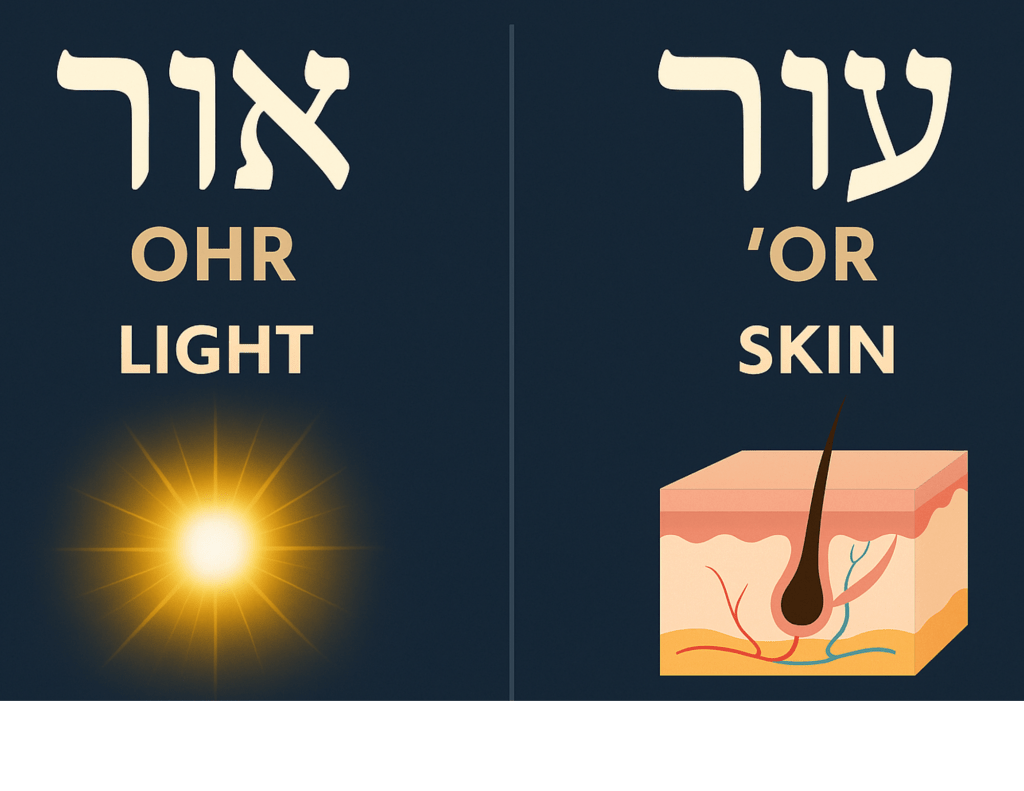
Together, they encapsulate the journey from supernal unity through transformation to a new beginning. In contrast, the word for skin, or (עוֹר), uses the letter Ayin (ע) instead of Aleph, signifying a shift from primordial light to physical covering, a metaphor for the loss of spiritual awareness.
But, there’s a secret that often gets overlooked in conversations about “light,” a reality deeper than illumination and brighter than vision. Light is not just a metaphor; it is a frequency. It is the original vibration, the first utterance, the primal pulse of creation. When Elohim said, “Yehi Ohr” Let there be light, He wasn’t flipping on a switch. He was initiating the very flow of divine intelligence that sustains reality. To return to the light, then, is to attune ourselves to that original, uncorrupted frequency, to harmonize our being with the sacred code that brought the universe into order.
In returning to the light, we don’t just become morally “good” or spiritually “aware.” We become aligned. We become functional again, like instruments freshly tuned. Many of us are walking around dissonant, broken in sound and sight. We think we’re whole, but we’re fractured frequencies, playing songs out of key with heaven. The light of Torah, however, recalibrates us.
And here’s the mystery: the light isn’t always soft or pleasant. Sometimes the light confronts. Sometimes it exposes. Sometimes it sears and refines. This is why so many avoid it. But real transformation, real teshuvah, or returning, requires the courage to stand in that light and not flinch. Just like Moshe’s face radiated with divine brilliance after communion with YaH on Mount Sinai (Exodus 34:29), we too must reflect the light we’ve been exposed to.
Light doesn’t only reveal the good; it reveals the lie, and it forces a choice. Will we adjust ourselves to truth, or will we run back into the shadows of comfort and culture?
Returning to the light also demands that we confront and cast down our idols of perception, the constructs we cling to for identity, validation, and security. Whether it’s the idol of image, the idol of being “woke,” the idol of being accepted, or even the idol of our past “truth,” these are all shadows that block the flow of divine radiance. The longer we remain attached to them, the further we drift from the source.
In a post-truth world, light doesn’t just illuminate; it wars. The light of Torah, the light of Messiah, the light of prophetic consciousness, it’s disruptive. It demolishes illusions. And it always beckons us higher.
But let’s be clear: returning to the Light requires a leaving behind. We must leave behind ego, pride, victimhood, self-idolatry, rebellion, and comfort zones. We must forsake familiar cages for unfamiliar clarity. And this is where the real fight begins, not with demons out there, but the darkness within us we’ve come to defend.
And yet, the invitation remains. The Light has not gone anywhere. It’s we who have turned our back, cast shadows on ourselves, and wondered why we couldn’t see. But the good news is return is possible. Teshuvah is real. And the soul knows the way.
But just how do we get there?
Here are five scripturally-grounded steps that can lead us back into the Light.
1. Acknowledge the Darkness
Scripture: “For you were once darkness, but now you are light in the Master. Walk as children of light” (Ephesians 5:8).
You cannot heal what you will not admit. We must discern where the klipot, those layers of pride, fear, lust, or ego, have encased our essence. As David prayed, “Search me, O Elohim, and know my heart; test me and know my anxious thoughts” (Psalm 139:23). Awareness is the first door to our deliverance.
2. Engage in Teshuvah (Repentance)
Scripture: “Repent therefore and turn back, that your sins may be blotted out, so that times of refreshing may come from the presence of YHWH” (Acts 3:19-20).
Article #15 previously revealed how teshuvah is more than just feeling sorry, it’s turning from the illusion and running toward the Source; realignment. When we repent with sincerity, we pierce the husks and reconnect to the root, as it is written, “Let the wicked forsake his way… and return to YHWH, and He will have compassion” (Isaiah 55:7).
3. Study the Torah
Scripture: “Your word is a lamp to my feet and a light to my path” (Psalm 119:105).
The Torah is not just law, it is light encoded in sacred language. It restores your vision, corrects your direction, and reconfigures your inner world. The sages teach that the soul is nourished by Torah just as the body is nourished by bread. As it is also said, “The commandment of YHWH is pure, enlightening the eyes” (Psalm 19:8).
4. Cultivate Spiritual Practices
Scripture: “Pray without ceasing… do not quench the Spirit” (1 Thessalonians 5:17-19).
Spiritual disciplines like prayer, meditation on the Covenant of Name of Elohim, fasting, and acts of kindness aren’t religious tasks, they are tools of transfiguration. They awaken the soul’s latent potential and pierce through the kliphot like light breaking through fog. “It shall be healing to your flesh and refreshment to your bones” (Proverbs 3:8).
5. Seek Divine Encounters
Scripture: “Draw near to Elohim and He will draw near to you” (James 4:8).
True transformation isn’t just behavioral, it’s relational. The soul must encounter the light of the Shekinah Presence to be restored. As Moshe’s face shone after meeting with YaH (Exodus 34:29), so will yours when you encounter the light of truth and love. Create space in your life to be visited by the Most High, through worship, silence, and surrender.
This path isn’t always instant, but it is inevitable for the one who truly seeks. As it is written, “You will seek Me and find Me, when you search for Me with all your heart” (Jeremiah 29:13). Let these steps guide your return. Let them light your way back to the radiance you were always meant to carry.
As we journey through the Transfiguration Movement, let us strive to shed the layers of darkness and step into the radiant light of our true selves. Embrace the process of becoming light, life, and love. Let us be vessels of divine illumination, reflecting the splendor of the Creator in every aspect of our lives.
Travel further on this journey. Spread the movement. Become the light. Transfigure your soul. Transform the world.
Selah…
Discover more from SHFTNG PRDGMZ
Subscribe to get the latest posts sent to your email.


2 Comments