
_____________________________________________________
The soul of all flesh is the form which it was given by [Elohim]. The extra dimension which is found in the soul of man is the form of man who is perfect in his knowledge. Concerning this form, the Torah states [Genesis 1:26]: “Let us make man in our image and in our likeness” – i.e., granting man a form which knows and comprehends ideas that are not material, like the angels, who are form without body, until he can resemble them.[This statement] does not refer to the form of the body perceived by the eye – i.e., the mouth, the nose, the cheeks, and the remainder of the structure of the body. This is referred to as to’ar (appearance). It is not the soul found in all living flesh which allows it to eat, drink, reproduce, feel, and think. Rather, knowledge is the form of this [dimension of] soul and it is concerning this form of the soul, that the verse states: “in our image and in our likeness.” Frequently, this form is referred to as nefesh or ruach. Therefore, one must be careful regarding these names, lest another person err regarding them. Each name reveals its characteristics.
Mishneh Torah: Foundations of the Torah 4.8
…the natural man does not receive the matters of the Spirit of Elohim, for they are foolishness to him, and he is unable to know them, because they are spiritually discerned. But he who is spiritual discerns indeed all matters, but he himself is discerned by no one. For “Who has known the mind of יהוה? Who shall instruct Him?” But we have the mind of Messiah.
1 Corinthians 2.14-16
_____________________________________________________
Before I experienced my rebirth, my idea of self was hazzy, surface, myopic and distorted. I grew up with passion and potential, but no real framework to understand who I truly was. I knew how to work hard, how to dream big, how to push through pain, but I didn’t know where I came from. I didn’t know what my ancestors endured, what they accomplished, or even what they believed. I didn’t have a clear map of where I belonged in the story of humanity. Without that ancestral, cultural, or historical consciousness, my identity was shallow, a collection of moments and emotions, unrooted and uncertain.
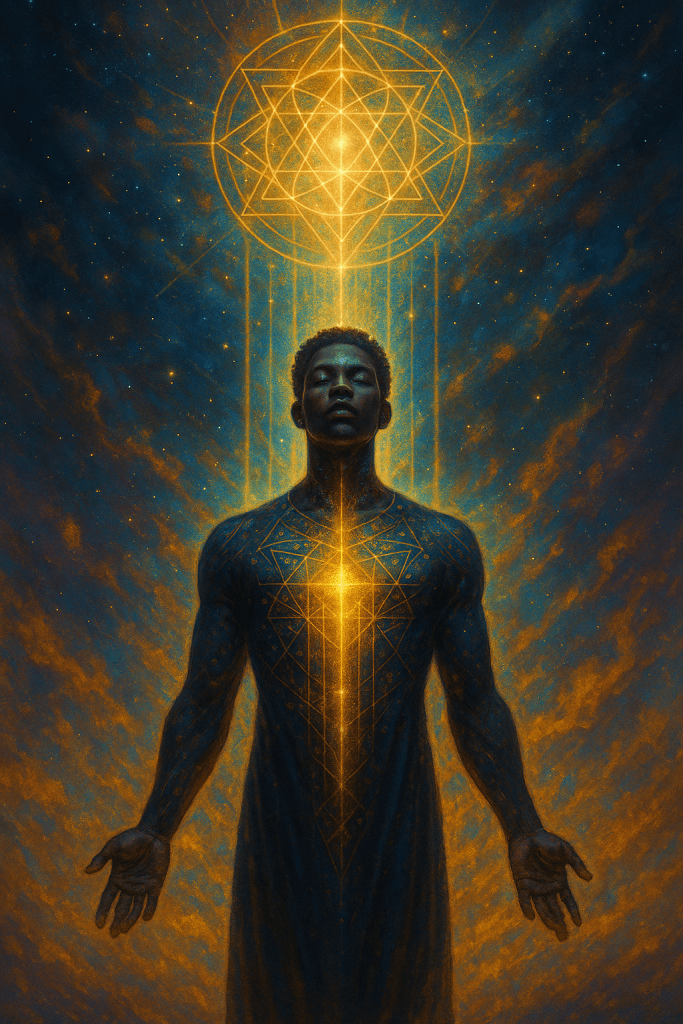
But then, I began to wake up. Not just to religion or spirituality, but to reality. I discovered that I wasn’t a random soul floating through time. I was part of a lineage, a priestly, prophetic, royal heritage; an Israelite. As I encountered Torah, and later, the voice of Mashiyach (Messiah), I began to reclaim the truth of who I am and who we are as a people. With that awakening came a flood of new ideas; ideas about my worth, my role, and my destiny.
As I began to absorb the ideas embedded in Scripture, my entire worldview underwent a quiet but radical transformation. What once seemed ordinary, compartmentalized, or even profane, began to reveal layers of holy purpose. The Torah didn’t just instruct me in religion, it reshaped how I saw everything. From how I viewed sex, not just as indulgence, but as covenantal power; to how I approached business, not as a hustle or a mere means to make money, but as a sacred stewardship of resources and influence. Slowly, I realized that there was no such thing as a “secular” space in life. Every act, every decision, every relationship became an opportunity to manifest holiness. The more I meditated on supernal ideas, the more I saw that life itself is a sanctuary, and I was either honoring or violating that sacred space by the way I thought and lived. The Word began to sanctify my mind, and through that, it sanctified my life and renewed my ideas.
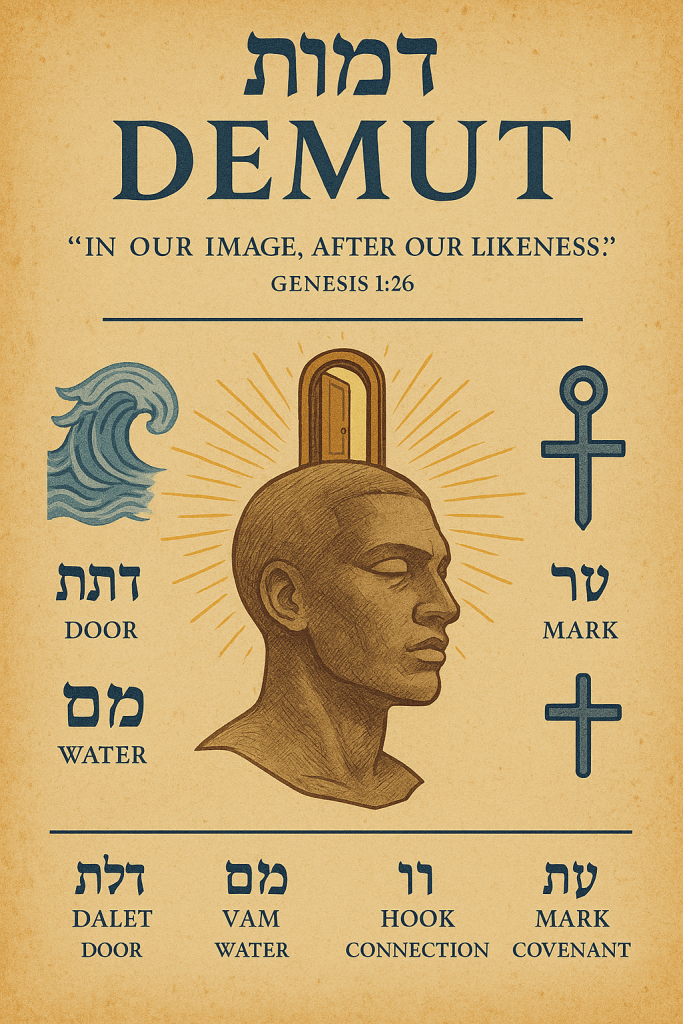
In Hebrew, one of the words associated with the concept of “idea” is demut (דָּמָה), from the root damah, which means “to resemble,” “to imagine,” or “to consider.” It’s not just a thought; it is the perception of likeness. The first time this concept appears is in Genesis 1:26, when Elohim says, “Let Us make man in Our image, after Our likeness (demut).” This is not merely about physical similarity—it’s about mental, spiritual, and moral capacity. Humanity was formed as a reflection of Divine Thought, a living idea shaped to manifest the will of Heaven on Earth.
Breaking down the word demut, we see that it is composed of dalet (door), mem (water or flow), vav (hook or connection), and tav (mark or covenant). This paints the picture of an idea as a doorway that flows from the mind of the Most High, connects us to Him, and marks us with purpose. Ideas are not just thoughts; they are the channels through which divine intention enters the physical world.
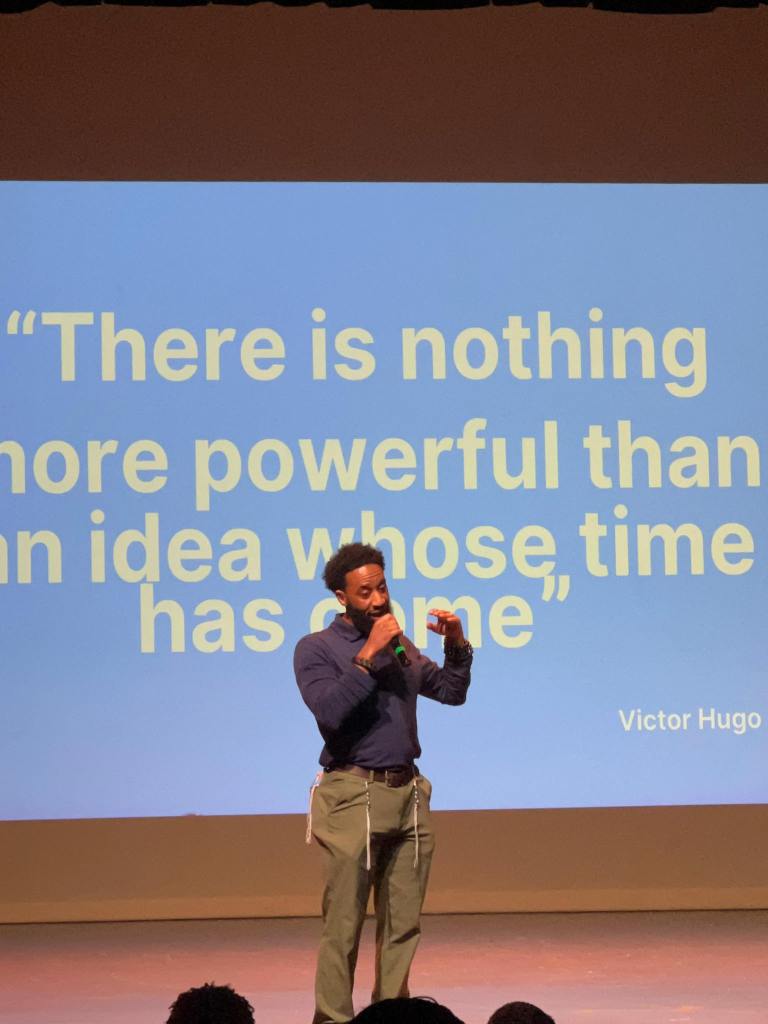
Victor Hugo once said, “Nothing is more powerful than an idea whose time has come.” When I first heard that, it hit me differently. I began to understand why tyrants fear truth, why systems seek to control narratives, and why the enemy attacks thought before anything else. An idea is a seed that can grow into revolution. It can liberate or enslave, it can build worlds or burn them down.
And that’s why ideologies matter. They are not just philosophies floating in the ether; they are the foundations upon which civilizations rise or fall. Every movement, every nation, every people who have ever left a mark on history were first possessed by a compelling idea; an idea about justice, divinity, freedom, or identity. The Torah is full of ideas meant to shape our existence, ideas about love, holiness, covenant, righteousness, equity and order.
If you win the hearts and minds of people, you reshape their world. The thoughts we entertain in our hearts become the beliefs we live by, and those beliefs become the reality we create. This is why Scripture says, “As a man thinks in his heart, so is he” (Proverbs 23:7).
War, at its deepest level, is not simply about land, resources, or politics; it is a clash of ideas. Every empire, uprising, and revolution has been fueled by a dominant ideology seeking to displace another. The battlefield may be physical, but the objective is mental: to establish whose idea will govern the hearts, minds, and future of a people. The victors don’t merely win territory, they shape culture, rewrite history, and impose meaning. This is why, throughout history, those who conquer also seek to reeducate, rename, and redefine the conquered. Ideas, not armies, ultimately determine the outcome of civilizations. As members of the Kingdom of Heaven, we must awaken to this truth: the war we face is spiritual, ideological, and eternal. It is a war of worldviews, and only YaH’s truth can liberate the soul from falsehood. Our weapons are not carnal but mighty and rooted in the Word, inspired by the Ruach (Spirit), and aimed at establishing the mind of Mashiyach in every domain of life.
This is what Rav Shaul well knew when he wrote in 1 Corinthians 2:14-16,
But the natural man does not receive the things of the Spirit of Elohim, for they are foolishness to him; nor can he know them, because they are spiritually discerned. But he who is spiritual discerns indeed all matters, but he himself is discerned by no one. For “Who has known the mind of יהוה? Who shall instruct Him?” But we have the mind of Messiah.
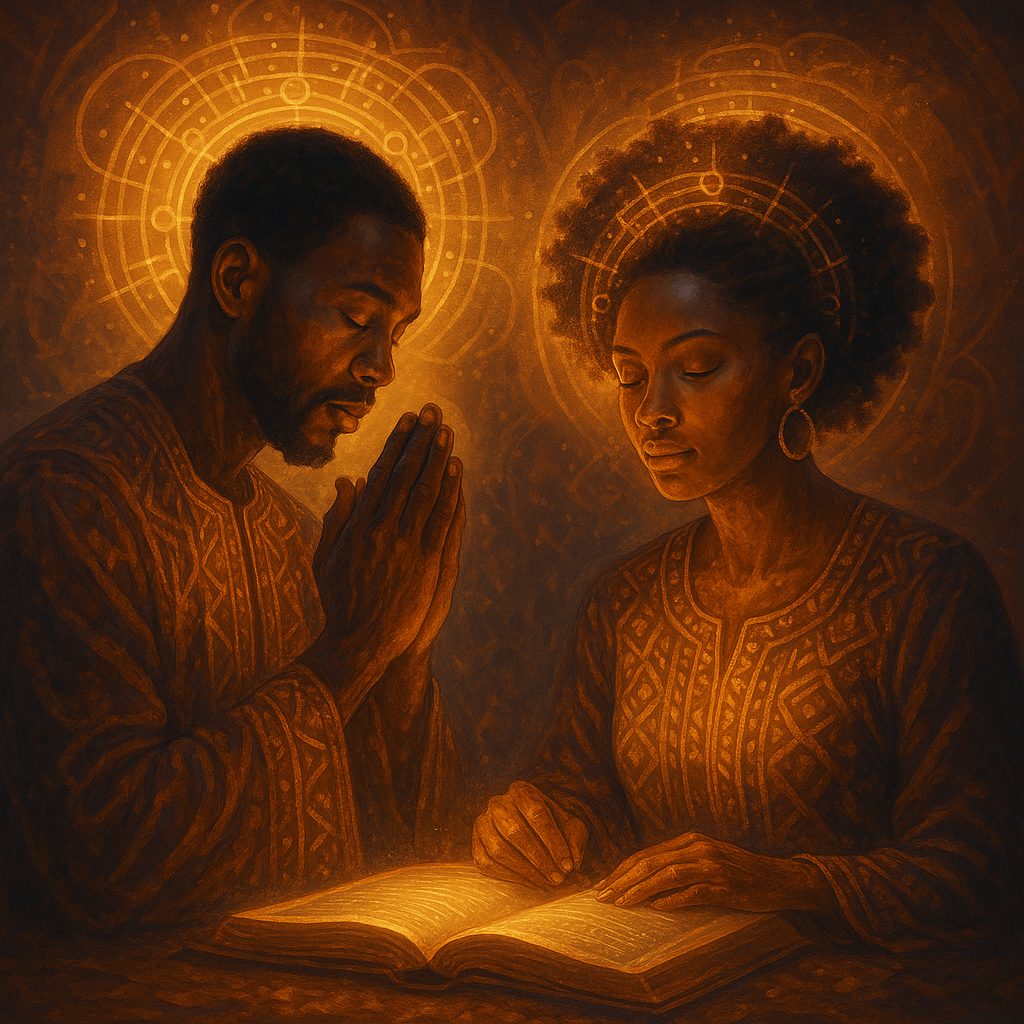
This Scripture is crucial when we talk about ideas because it reveals that some ideas are hidden to those who only operate in the natural, unrenewed state of mind. The mind of Messiah is not just intellectual; it’s, prophetic and revelational. To have the Mind of Messiah is to think holy thoughts, to perceive heavenly strategies, and to understand spiritual truths that govern real transformation. Without this mind, the most powerful ideas remain veiled and misunderstood.
As this article comes to a close, allow me to refer back to the beginning. The opening quote from the Mishnah provides profound insight into the soul and offers a crucial key to understanding the mystery of human transformation and our resemblance with Elohim. When it states that “the soul of all flesh is the form which it was given by Elohim,” it reveals that life itself, our animation, our ability to move and think, contrary to popular opinion, is not random or purely biological. Our very form was endowed unto us by our Creator, infused with heavenly intention for earth’s transformation. The Mishnah takes it further by distinguishing the human soul as having an extra dimension, a form of man who is perfect in his knowledge. This is not referring to surface traits or bodily features (in Hebrew what is called to’ar), but to the soul’s capacity to comprehend ideas beyond the material realm.
This insight aligns directly with the concept of transfiguration. Genesis 1:26 states “Let Us make man in Our image and likeness.” This truth, as was earlier distingushed, is not a statement about appearance, but about essence. The demut, or likeness, that we were created in is our potential to reflect the nature of Elohim through thought, will, and moral responsibility. We were designed to grasp immaterial truths, just as the angels do. That “extra dimension” is the faculty of supernal perception, referring again to what Rav Shaul calls “the mind of Messiah” in 1 Corinthians 2:16. When activated, it is this mind that elevates us above the instincts of the flesh and allows us to walk in heavenly wisdom, becoming living expressions of Elohim’s light on Earth.
This knowledge is the form of the soul that transcends mere sentience. It is the spiritual architecture that makes us not just creatures, but co-rulers with Elohim in creation. It’s why the Mishnah warns us not to confuse the names nefesh, ruach, and neshamah, for they each reveal different dimensions of our being. As I addressed in Returning to the Light, the nefesh animates us, the ruach governs emotion and intention, and the neshamah is the highest spark, where holy knowledge and eternal truth reside.
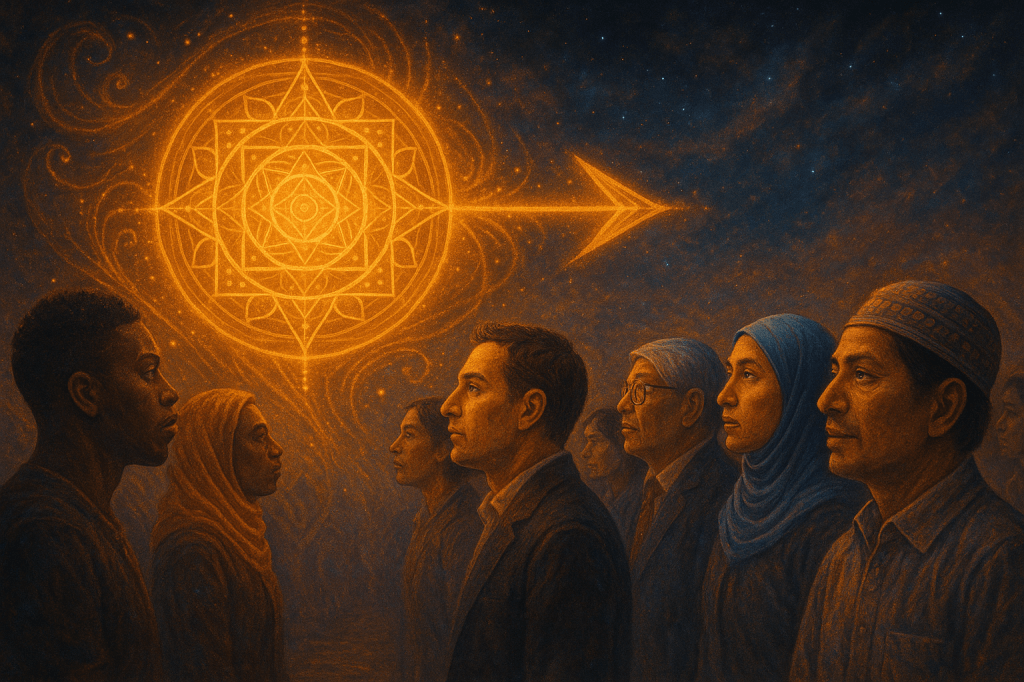
To live this truth, we must cultivate that part of the soul which reflects Heaven, our holy intellect. This means committing to Torah study, meditating on the Word, seeking truth beyond surface understanding, and disciplining our emotions and appetites. It means awakening to the reality that the real “image” we carry is not one of skin or structure, but of soul, made to mirror the will, wisdom, and wonder of our Creator. This is the path of transfiguration: not changing what we are, but returning to who we truly are.
The challenge, then, is this: for us to follow the right idea, because not every idea is of the Truth, nor is every ideology just. This informs us that not every thought deserves to be entertained. And as Kingdom citizens, we are called to align our thinking with truth, not trends; with revelation, not rebellion; with Torah, not tradition. We must become a people who are willing to challenge the narratives we’ve inherited, who seek out factual history and spiritual integrity. In this light, it becomes more than clear to see that it’s time to upgrade our ideas and transfigure our minds. it is time that we become, in thought and deed, the image of Elohim we were always meant to reflect. To do this, we must know that the next movement doesn’t start with action, it starts with the idea; and now, that idea has come, the Mind of Messiah is within you as it is written in Philippians 2.5,
let this mind be in you which was also in Messiah יהושע,
For us to attain the Mind of Messiah, we must engage in an intentional process of spiritual realignment. It does not happen by default, it is cultivated through pursuit, practice, and purification. Below are key steps to begin walking in this elevated consciousness:
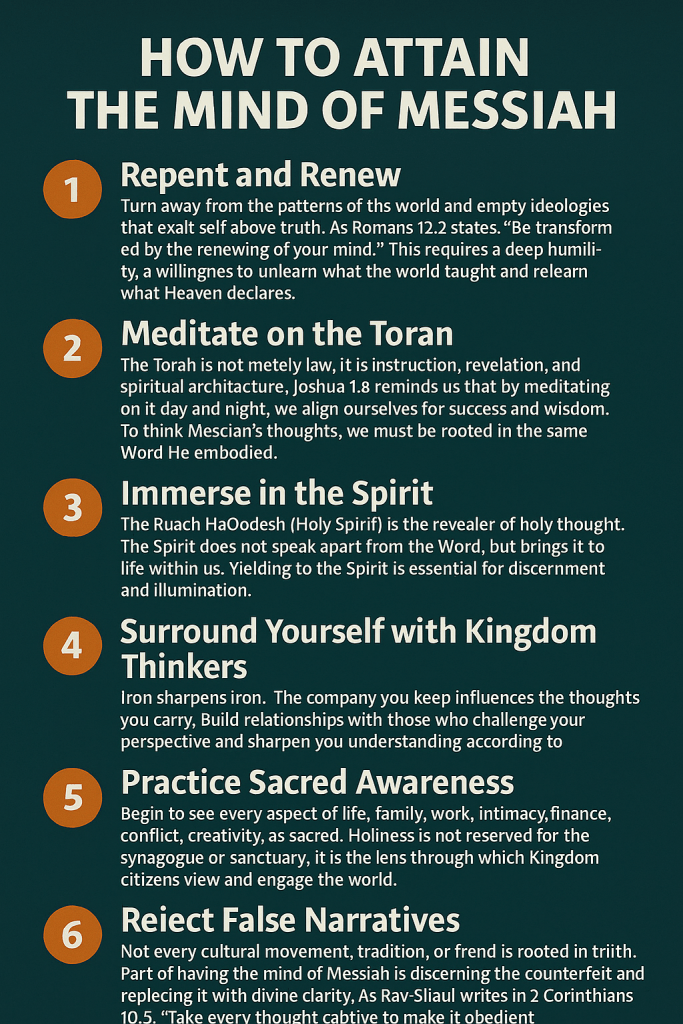
- Repent and Renew
Turn away from the patterns of this world and empty ideologies that exalt self above truth. As Romans 12:2 states, “Be transformed by the renewing of your mind.” This requires a deep humility, a willingness to unlearn what the world taught and relearn what Heaven declares. - Meditate on the Torah
The Torah is not merely law, it is instruction, revelation, and spiritual architecture. Joshua 1:8 reminds us that by meditating on it day and night, we align ourselves for success and wisdom. To think Messiah’s thoughts, we must be rooted in the same Word He embodied. - Immerse in the Spirit
The Ruach HaQodesh (Holy Spirit) is the revealer of holy thought. The Spirit does not speak apart from the Word, but brings it to life within us. Yielding to the Spirit is essential for discernment and illumination. - Surround Yourself with Kingdom Thinkers
Iron sharpens iron. The company you keep influences the thoughts you carry. Build relationships with those who challenge your perspective and sharpen your understanding according to righteousness and truth. - Practice Sacred Awareness
Begin to see every aspect of life, family, work, intimacy, finance, conflict, creativity, as sacred. Holiness is not reserved for the synagogue or sanctuary; it is the lens through which Kingdom citizens view and engage the world. - Reject False Narratives
Not every cultural movement, tradition, or trend is rooted in truth. Part of having the mind of Messiah is discerning the counterfeit and replacing it with divine clarity. As Rav Shaul writes in 2 Corinthians 10:5, “Take every thought captive to make it obedient to Messiah.” - Live What You Learn
Wisdom is proven by action. Knowledge that does not manifest in conduct is dead. The mind of Messiah is not simply something to believe in, it is a way to live. Every righteous thought must translate into righteous behavior.
The call to follow the idea is a call to radical reorientation. It is a summons to abandon the superficial and embrace the spiritual. As image-bearers of Elohim, we were never designed to be passive consumers of culture, but active agents of transformation. The mind of Messiah is our inheritance, and in it lies the key to divine dominion, creative power, and sacred purpose.
So now, choose the idea. Follow it through the fire. Let it remake you. Let it refine you. Let it resurrect you. For the next movement isn’t born from noise or numbers, it is born from minds renewed by truth, hearts anchored in eternity, and lives fully aligned with the will of the Most High.
May you allow the ideas of Torah and the Mind of Messiah lead you into the fullness of your Transfiguration.
Selah.
Discover more from SHFTNG PRDGMZ
Subscribe to get the latest posts sent to your email.


1 Comment