
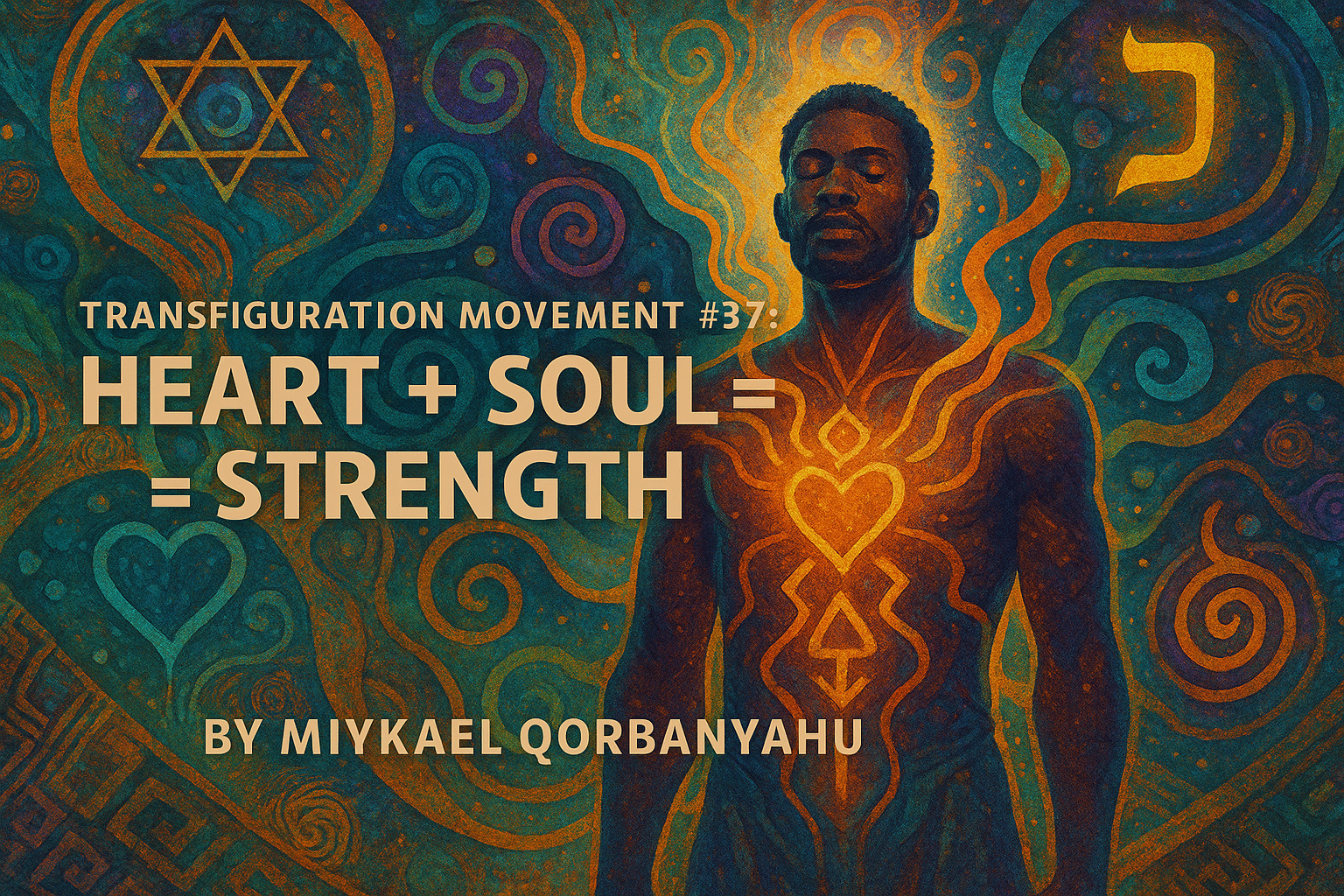
____________________________________________________________
WITH ALL THY HEART. In the opinion of the Midrash the heart mentioned here is the power of desire, similar to the expressions: Thou hast given him his heart’s desire; lust not after her beauty in thy heart. If so, with all thy soul denotes the intellectual [capacity rather than the sensual capacity of the] soul. Similarly, yet the soul of my lord shall be bound in the bundle of life [refers to the rational soul which is immortal]. And according to our Rabbis, who in the Talmud derived from this [phrase] that one must submit to death and not violate [the Law, the expanded expression] “with all thy soul” is supplementary, for since he said with ‘all’ thy heart … and with ‘all’ thy might [where the intent is to exclude the serving of [Elohim] with only part of the heart’s capacity, or with only part of one’s might or belongings], he also said with ‘all’ thy soul [meaning “your very life,” despite the obvious fact that the command to give “all” rather than “part” of his life is incongruous]. The meaning thereof is that you love Him as your very life, giving up your life with love [for His sake whenever the Law requires you to do so]. Or [another explanation of the word all may be] that suffering or [the loss of body] organs are referred to as “part of the soul,” while martyrdom [death] is termed with ‘all’ thy soul. And Rabbi Abraham ibn Ezra commented: “thy soul means the desire, like: enough ‘k’nafshecha’ (at thine own) pleasure;the full soul loatheth a honey-comb;deliver me not over ‘b’nefesh’ (unto the desire of) mine adversaries. With all thy heart refers to knowledge, this being a surname for the rational spirit since [the heart] is its first resting place, and similarly it is stated, The wise in heart will receive commandments. ” Rabbi Abraham ibn Ezra’s interpretation of the expression with all thy heart appears likely from that which he stated, And these words, which I command thee this day, shall be upon thy heart.
Rav Moshe ben Nachman (h’Ramban) on Deuteronomy 6:5:1
____________________________________________________________
Question?
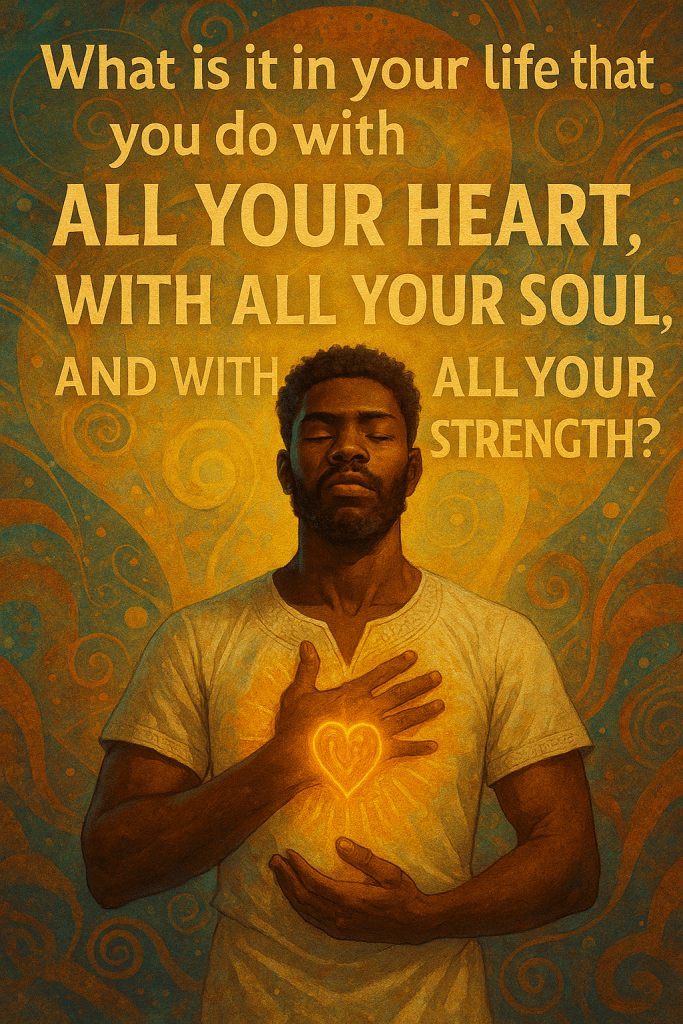
What is it in your life that you do with all your heart, with all your soul and with all your strength?
Don’t just answer it, give yourself a selah moment…
Ruminate on the question, chew on it like a cow does its fodder, and then ask yourself, what IS worthy of my full devotion?
What has commanded that level of my being?
And more personally, what did it take to get me there; the price I paid, the transformation I endured, the outcome I experienced?
And then, lastly, ask yourself, was it worth it?
For me, giving my entire heart (lev), soul (nefesh), and strength (me’od) to the work of inner transformation has been entirely worth it. It has required, however, a deep breaking and reprioritization and reorientation in regard to my desires in subordination to the Will of the Most High. And personally, with the goal that I have before me, the results have been fruitful! But before the fruit was bore, I had to choose to stop straddling between passive belief and active obedience. But when I finally did, something powerful happened: I didn’t just start winning, I was transfigured and my thoughts, words and deeds shifted even more towards the Light.
My mind, in response, has become more singular in its focus. By singular, I simply mean that all of my steps, intentions and thoughts are geared towards accomplishing the outcome which I desire to achieve. This is an entirely different mindset for me, as in times prior, I was used to being more double-minded and unstable in my ways as a result of not having this single-eyed focus. Now, every thought, every emotion, and every action is being aligned under one governing intention: to love Elohim with all my heart, all my soul, and all my strength. This integration of heart and soul, which are found in my deepest desires and my life force, has produced a strength that is no longer scattered, but purposeful, potent, and directed toward the Kingdom. It is in this wholeness that I am finding my true power.
But, in my experiences, what had often prevented this shift from happening was that I either underestimated or miscalculated my commitment to the cause. Not only this, I have to also say that distractions and adding more commitments to myself before finishing the directive first also contributed to the noncompletion of plans. To find the remedy for those dynamics had been especially challenging for me, being that this culture rewards convenience and multitasking, something that has alluring power to draw us away from our focus. It is in this setting, however, that wholehearted devotion looks foolish, yet Torah declares it foundational to experiencing fulfillment:
Love יהוה your Elohim with kol levăvḵāh/all your heart, with kol nefeshkha/all your soul, and with kol me’ōḏkha/all your strength.
Deuteronomy 6:5
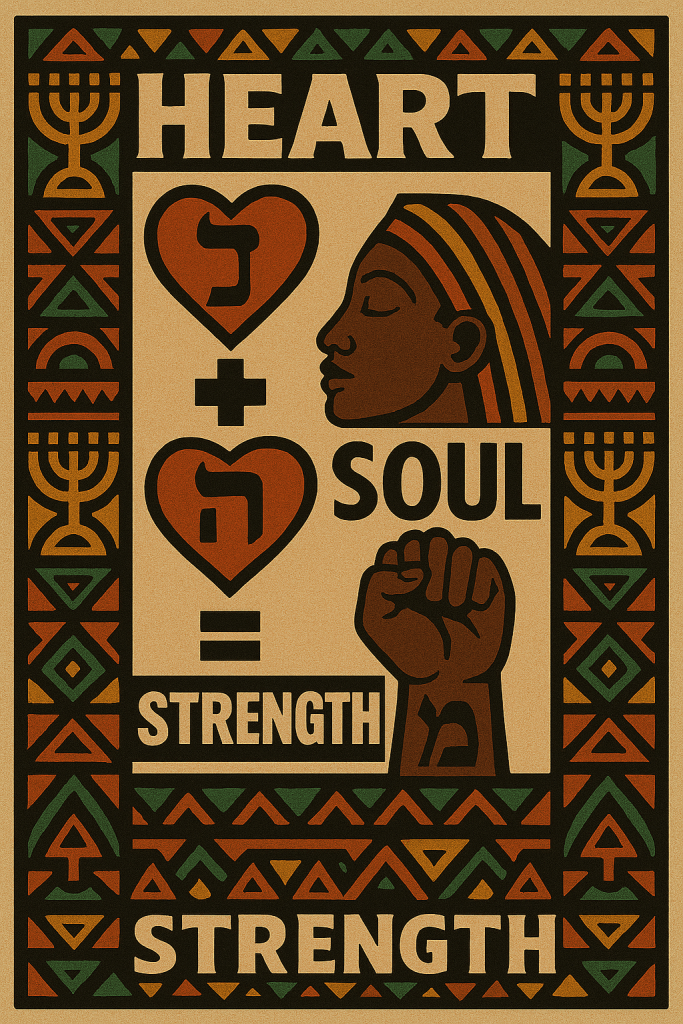
Here in Deuteronomy 6:5, we are commanded to love HaShem “with all your heart (לְבָבְךָ – levavkha), with all your soul (נַפְשְׁךָ – nefeshkha), and with all your strength (מְאֹדֶךָ – me’odekha).” These three words: lev, nefesh, and me’od, carry prophetic significance, not only in their surface meanings but also in their inner, spiritual dimensions when we break down their Hebrew letters.
The word lev (לב), meaning “heart,” is conceived as the center of thought, emotion, and will in Hebraic understanding. And as we stated just a moment ago, in Deuteronomy 6:5, it is written as levavkha (לְבָבְךָ), with two vavs (ב), which, according to rabbinic tradition, represent the two inclinations present in every person: the yetzer ha-tov (good inclination) and the yetzer ha-ra (evil inclination). This spelling is intentional and contains a secret that acknowledges the tension within the heart; the dual pull of righteousness and rebellion, light and darkness, love and hate. This insight is rooted in teachings such as those found in Tanya, Book 1, Chapter 9, which explores the battleground of the heart between the supernal soul and the animal soul, describing how the heart can be divided, and the righteous person works to make the supernal soul dominate. The letters in lev, lamed (ל) and bet (ב), reveal deeper truths: lamed signifies teaching or learning and reaching upward, while bet represents a house, which is a place of dwelling. Together, lev speaks to the heart being the home of learning and the place where inclinations are brought into alignment with supernal wisdom.
Nefesh (נפש), translated as “soul,” refers to the animating life force; the essence that breathes and drives our being. In Hebrew thought, nefesh encompasses desire, appetite and the personal identity that binds the physical and the spiritual. Breaking down the letters: nun (נ) represents faithfulness and the falling and rising nature of the soul; peh (פ) symbolizes speech and expression, as the mouth; and shin (ש) stands for fire or transformation. When combined, these letters depict the soul as a force that rises through faith, expresses itself through action and word, and is refined through fire unto transformation. The nefesh is not just merely the seat of desire but it serves as the very interface through which we relate to the mystery and manifest purpose of Life.
Finally, me’od (מאד), commonly translated as “strength” or “might,” is very unique. It literally means “very” or “muchness,” suggesting an intensification or overflow. It calls us to love HaShem not just with fixed capacities but with everything beyond; our resources, efforts, creativity, and capacity for devotion. The letters in me’od are mem (מ), symbolizing water or hidden wisdom; alef (א), the oneness of Elohim and silent power; and dalet (ד), meaning door or humility. When joined, these letters portray me’od as the channel through which hidden potential becomes manifest power, the doorway through which supernal strength flows through humble vessels. It is our maximum output, our all-in-all, poured forth in devotion.
Bringing all these together, lev, nefesh, and me’od form a complete picture of our inner being; our thoughts and feelings (lev), our life force and will (nefesh), and our fullest effort and potential (me’od). These three align to bring forth the total devotion required in the Shema. This layered understanding elevates the commandments from simple behavioral codes to metaphysical roadmaps of transformation. When we love YHWH with all our heart, soul, and strength, we bring all aspects of our being into alignment with the Holy Will and activate the transfiguration movement within us, becoming vessels of light and wisdom in the world.
Not only are we called to give ourselves entirely to the Most High, we are also commanded to:
You shall love your neighbour as yourself.’ On these two commands hang all the Torah and the Prophets
Matthew 22.39-40
Together, these two form the bedrock of transfiguration, fully aligned love in thought, emotion, word and deed. But this alignment is not merely for personal enlightenment, because it’s a sacred investment, one with guaranteed return. The one who commits to faithfulness, who clings to HaShem through obedience to Torah and guardianship of His covenant, will not labor in vain. Commitment to the Most High is never barren; rather, it yields, multiplies, and returns in due season.
Yeshua illustrated this in the Parable of the Talents (Matthew 25:14–30). In this parable there were servants who invested what was entrusted to them and received a multiplied return and were told, “Well done, good and faithful servant… enter into the joy of your master.” But the one who buried his trust out of fear and inaction was rebuked and left with nothing. The message here is clear: faithfulness requires action. And action, when aligned with heaven, brings increase. I don’t know about you, but this is something that I know I need to read, and hear, and know and take into account.
This parable challenges us to examine what we have been given, our gifts, our opportunities, and our time, and to ask whether we are investing them or hiding them away. Are we showing up in life with vigorous attachment and wholehearted intention? Faithfulness is not passive. It is an active partnership with the Divine. When we move in trust and obedience, even in small steps, we open the door to divine increase. It is in that posture of movement, risk, and devotion that we attract the attention of Heaven.
For the eyes of HaShem run to and fro throughout the whole earth, to give strong support to those whose heart is blameless toward Him
2 Chronicles 16:9
From this we learn that when we pour out yur full selves in love and obedience, Hashem responds with favor, protection and increase.
No good thing does He withhold from those who walk uprightly
Psalm 84:11
See, Torah observance isn’t just ritual, it’s the architecture of reward.
This is your wisdom and your understanding in the sight of the nations
Deuteronomy 4:6
And it is also written,
You shall therefore keep My statutes and My rules; if a person does them, he shall live by them
Leviticus 18:5
This is life, abundantly and prosperously, not merely material, but spiritual and eternal.
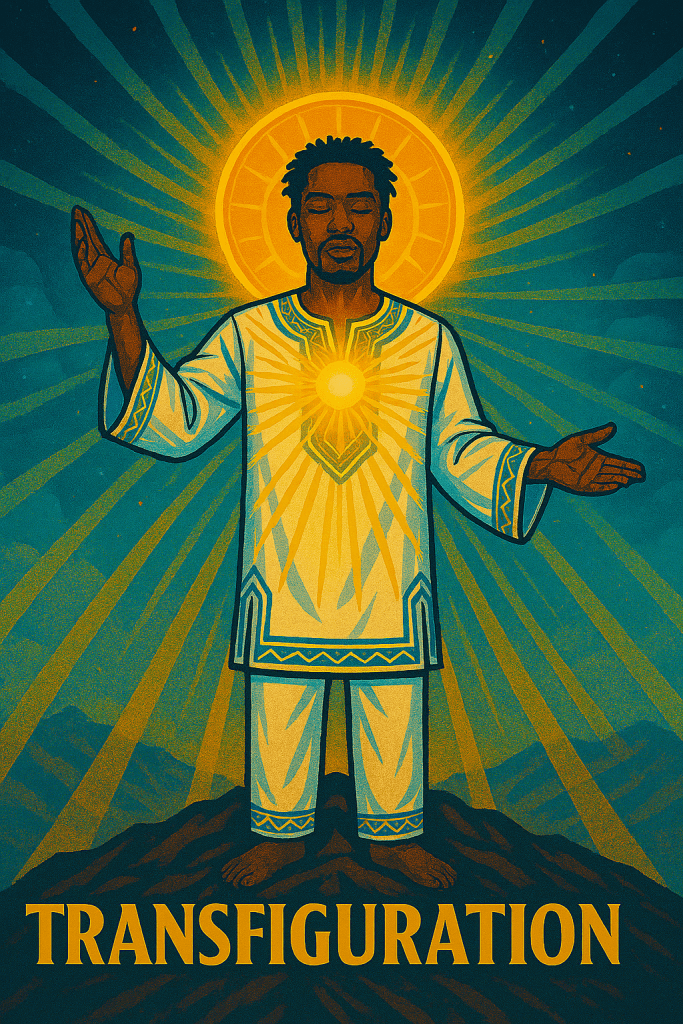
Making this matter crystal clear, transfiguration is the spiritual yield of that investment. Just as Messiah was transfigured on the mountain, His face shining like the sun and garments radiant like light (Matthew 17:2), so too are we called to transformation through faithful obedience.
Do not be conformed to this world, but be transformed by the renewing of your mind…Romans 12:2
This transformation, however, isn’t spontaneous. On the other hand, it is a return on wholehearted devotion; it is the light revealed in the vessel, the fruit borne of disciplined love. And so it is written,
Be not deceived: Elohim is not mocked, for whatever one sows, that will he also reap Galatians 6:7
Knowing this, it’s essential for us to, therefore…
Sow Torah.
Sow truth.
Sow love.
Sow obedience.
Sow life.
For the harvest is assured, and we will certainly reap what we sow.
The prophet Isaiah declared:
If you are willing and obedient, you shall eat the good of the land
Isaiah 1:19
And Yeshua confirmed this economy for the Kingdom of Heaven:
Seek first the Kingdom of Elohim and His righteousness, and all these things will be added to you
Matthew 6:33
This is because the Kingdom is not just something to believe in, it’s something we build, something we reflect and something we become. Through our commitment to Torah and the covenant of love, we don’t just survive, you shine instead; we don’t just follow; we transfigure.
In this flow, we discover that there is a sacred energy that awakens when we begin to live with a unified heart and soul. As our intentions align and our inner world synchronizes with our higher purpose, something profound begins to stir within us, a deeper resilience, a grounded passion, a holy persistence. This is what can be understood as vigorous attachment, a relentless, wholehearted clinging to Elohim and the divine vision for our lives, no matter the cost or opposition.
In her book Sanctuary of the Divine Presence, Zohara Hieronimus speaks of this powerful connection through the lens of the sefirah Netzach, which represents endurance, victory, and the feeling of being tethered to the Eternal. She writes,
Netzach…is the sensation of being attached to Elohim, to eternity, and to the vastness of the divine light in an effort to serve the perfect created world in which we have existence.
pgs 200-201
This is not a passive clinging, but an active immersion in life’s trials and triumphs with the conviction that the path is righteous, and the journey worth the sacrifice. It is a confident attachment: vigorous, tenacious, and enduring.
So, to love Elohim with kol levavkha, kol nefeshka, and kol me’odkha, with all of our heart, soul, and strength, is to embody this Netzach-driven principle. It means consecrating not only our best moments but even our struggles, our doubts, our weariness, and our discipline. The strength that results from this sacred equation is not a brute force, but the supernatural energy that flows from unwavering commitment. It’s the power of staying when others flee, of rising when you fall, of obeying even when you do not understand. It is what allows us to press on and become victorious over our own yetzer hara—our ungodly inclinations.
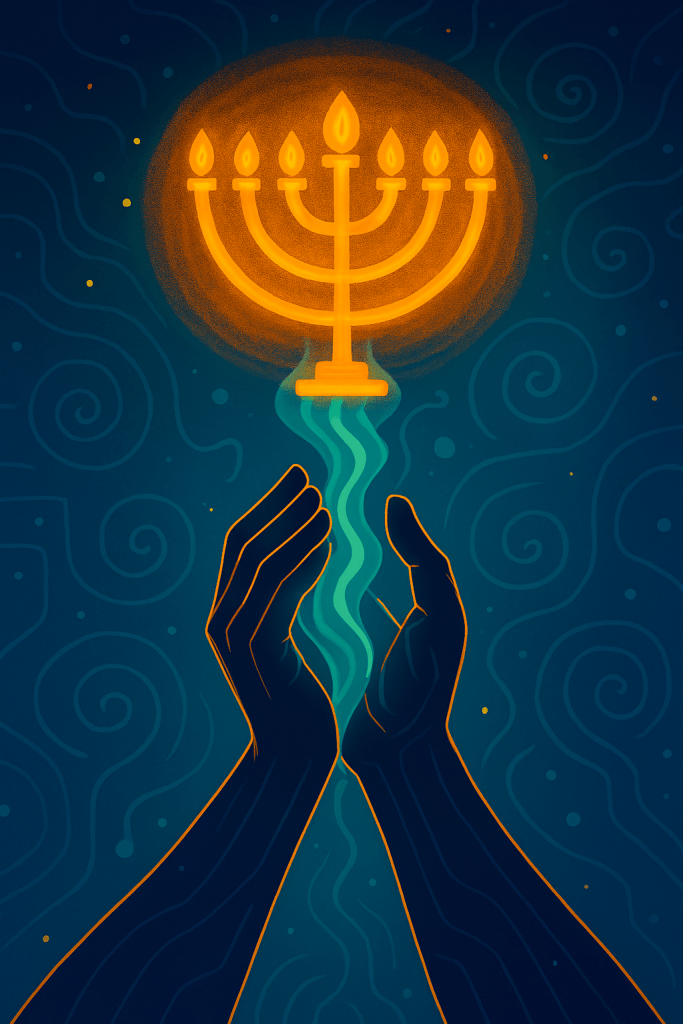
Vigorous attachment calls us to cling to Elohim like Ya’aqov clung to the messenger at Peniel; not letting go until the blessing is released. It is this kind of heart-and-soul-powered endurance that produces the strength to walk in covenant identity and purpose. When heart and soul become one in the service of love and devotion, strength is no longer a quality we summon; it becomes who we are.
So what does commitment look like on a daily basis? How do we move from abstract belief to embodied transformation, where our faith is no longer compartmentalized, but total? Where every part of our being, heart, soul, and strength, is actively aligned with HaShem’s Will?
This is not merely about religious duty; it is about personal and collective, covenant-based transfiguration. True devotion to Elohim transforms not only how we worship, but how we live, breathe, speak, and spend. Torah teaches us that love is not just an emotion, it’s a command, a discipline, and a path of mastery. And the reward for that mastery is not only found in the World to Come but in the fruitfulness, peace, and wisdom that we are called to cultivate here and now.
When we really understand that to love Elohim with kol levavkha (all your heart), kol nefeshka (all your soul), and kol me’odkha (all your strength/muchness) is to engage in a lifelong journey of returning, refining, and realigning, our path will be much clearer. But this path requires us to prioritize the supernal soul over the animal soul, to let reason, Torah, and Ruach HaKodesh govern our impulses, emotions, and appetites that often seek to dominate us. As 4 Maccabees wisely states,
The mind that is governed by the Torah rules over the emotions
4 Maccabees 1:32
This inner mastery is what distinguishes those who merely observe from those who transform. To become that kind of person requires intention, strategy, and a pattern of devotion that brings heaven into our habits. So with that before, here are five suggested foundational steps to begin this journey. These are practical disciplines designed to align your inner world with higher purpose, and to activate the heart, soul, and strength in faithful love of Elohim:
- Clarify Your Levăvḵāh – Daily examine your heart’s inclinations. Choose actions that align with your higher purpose.
- Cultivate Spirit Awareness – Breathe with intention. Anchor your mind and emotions in breath-powered faith.
- Appoint Your Overflow – Design your time, money, influence, toward sacred causes. Make your “muchness” meaningful.
- Maintain Self-Control – Strengthen the mind-body connection with discipline, fasting, sleep, and Sabbath rhythm.
- Invest with “Heart, Soul, Strength” – Let love lead your work, worship, relationships. Anchor all actions in unified devotion.
Beloved ones, know that transfiguration is not flash, it is faithful positioning. Because when we love with our entire heart, soul, and strength, we activate a righteous overlay of faith + energy + transformation. That alignment doesn’t just change our lives, it shapes communities, nations, kingdoms and destinies.
So I ask again: What is it in your life that you do with all your heart, with all your soul and with all your strength? Because YaH is calling for a generation that’s not just religious, but one that is radically devoted, that doesn’t just believe, but becomes; that doesn’t just function, but transfigures:
One that moves from surviving to shining.
One that commits with all its heart, all its soul, all its strength.
Transfiguration isn’t waiting, it’s engaging
So stay faithful.
Stay fierce.
Rise higher.
Continue to transfigure.
Selah…
Discover more from SHFTNG PRDGMZ
Subscribe to get the latest posts sent to your email.


Keep me in mind if you know anyone hiring felons. Having trouble landing a gig.
LikeLiked by 1 person
You know it…we have some hiring fairs coming up, so come down and get registered for them.
LikeLike