
____________________________________________________________
Samuel had not yet known HaShem (the Name), and the word of HaShem had not yet been revealed to him, and therefore at this stage he was unable to discern the difference between the voice of Elohim and that of Eli, or even from where the voice was coming. Furthermore, as this occurred while Samuel was attempting to sleep, it no doubt made the matter more confusing, as he may not have been fully alert. Moreover, as mentioned in the commentary in verse 1, at that time people did not usually entertain the possibility that they might receive a prophecy.
Steinsaltz commentary of 1 Samuel 3.7
My sheep hear my voice, and I know them, and they follow me
John 10.27
_______________________________________________________________

If you’ve been with me on this journey, they you know about the time I was in the library working on a paper for one of my college classes when out of nowhere, a firm hand grasped my shoulder. Of course, no one was there when I turned around and got up to go see who actually touched me. So when it happened the second time, probably like 10 minutes after the first time, I gathered all my things, got up and left for my dorm room; WITH NO HESI!
And just recently, as I shared in chronicle 15, Repentance is Transformative, everything clicked and made sense in its connection regarding this entire experience on my journey. I’ve come to realize that the night I heard the words I CAME thunder in my soul while I was asleep was connected to the two times I felt a firm grasp of a hand on my shoulder. The whole time, it was Abba YaH calling me and letting me know It was there all along. In all truth, when I think back, that particular instance was the pivotal moment for me, on top of all the other ones that happened leading me to Source, but that one was the watershed moment; the one that confirmed my journey and solidified my commitment to sure up my steps on my pursuit of undertaking the process to come to intimately know the Word of Torah and to hear the Voice of El Elyon, the Most High.
What I can also honestly say is that that encounter awakened something ancient and eternal in me; the realization that to rightly discern the Voice of Elohim, I had to immerse myself in Its Word. Because the alternative, simply stated, is that without knowing the Torah, the Word of Elohim, the instruction of the Most High, how could I know if the voice I heard was Abba YaH’s?
That’s why it’s vital to understand what the Torah actually is. The first four books of the Hebrew Scriptures: Bereshit (Genesis), Shemot (Exodus), Wayikra (Leviticus), and Bamidbar (Numbers), are not just sacred stories or ancient laws; as the eighth and ninth of the thirteen principles of faith articulated by Rambam, the Torah is understood to be the direct revelation of Elohim given to Mosheh in heavenly speech. As it is written, “Moses would speak, and Elohim would answer him with a voice” (Exodus 19:19). According to our tradition, these words are not just Mosheh’s thoughts about Elohim; they are the actual Voice of Heaven inscribed in human language. The sages teach that every word of Torah is infused with supernal light, and the Midrash even declares that “Torah preceded the world by two thousand years” (Genesis Rabbah 8:2), making it the eternal foundation of all creation.
The fifth of the five books, Deuteronomy (Devarim), on the other hand, while still Torah, presents a prophetic unfolding of that revelation. Introducing all readers to the Oral Torah, torah sheba’al peh (תּוֹרָה שֶׁבְּעַל פֶּה), in Deuteronomy 1:5, it says Mosheh “undertook to expound this Torah, be’er et haTorah hazot (בֵּאֵ֛ר אֶת־הַתּוֹרָ֥ה הַזֹּ֖את). Rashi explains that this means Moshe clarified and interpreted the already-revealed Torah for the new generation about to enter the land. By undertaking to expound this Torah, what Mosheh did was indicative of the reality that beyond the written revelation, there is an interpretive dimension necessary to understand and apply it. This act of explanation lays the foundation for the Oral Torah, emphasizing that holy instruction must be both *received* and transmitted through guided understanding, to produce what we know as halacha, or how we walk in the Torah (*note*: Hebrew word for receive is kabal, the root word of Kabbalah, oh just you wait for that chronicle).
The words of Moshe in Deuteronomy, nevertheless, are still inspired from Heaven, but they represent Mosheh’s prophetic voice expounding on the supernatural encounter of Sinai. Ramban notes that this is why Deuteronomy is sometimes called Mishneh Torah, the “repetition” or “second giving” of the Torah, not because it is less authoritative, but because it functions as a prophetic review and covenantal reinforcement. And Moshe was able to receive this level of knowing based on his intimate and vigorous attachment to being in the Presence of Elohim, whether in prayer, meditation, faithful devotion or studying.

In fact, in Hebrew culture, the study of Torah is considered the highest form of worship, because it’s what brings the mind, heart and actions into direct alignment with the will of Elohim. The Talmud (Shabbat 127a) declares that “the study of Torah is equal to them all,” meaning it surpasses all other mitzvot because it leads to their proper fulfillment. This is the point I made in chronicle #32 relative to righteous orthodoxy leading to righteous orthopraxy.
Pirkei Avot 6:1 teaches, “Whoever engages in Torah for its own sake merits many things… and it clothes him with humility and reverence, and equips him to be righteous, pious, and faithful.” Hebrew culture doesn’t view study as an intellectual exercise alone, but as an act of drawing near to the Giver of the Word, instructing the soul how to become an intimate participant in the covenant.
From this perspective, it should be clear to see that immersing oneself in Torah is not optional for those who wish to know the Voice of Elohim, as it is the very essence of worship. The Zohar likens Torah study to standing again at Sinai, hearing the Voice that thundered in the wilderness. Each word learned in sincerity reawakens that moment, refining the soul and attuning it to the eternal frequency of Heaven. To study Torah, then, is to worship with the entirety of one’s being, inclinations, emotions, thoughts, words, deeds, so that when the Voice speaks, the heart instantly recognizes its sound and responds with profound agreement. That, beloved ones, is the Spirit of Oneness, which is nothing less than alignment with Torah.
Now, what we call “Torah” isn’t merely law, it’s more so revelation. It’s the very Word that created the universe (Zohar II:161a), the same Word that became flesh and dwelt among us (John 1:14), the same Word which we, too, must incarnate. Because to know that Word is to come into contact with the Voice itself.
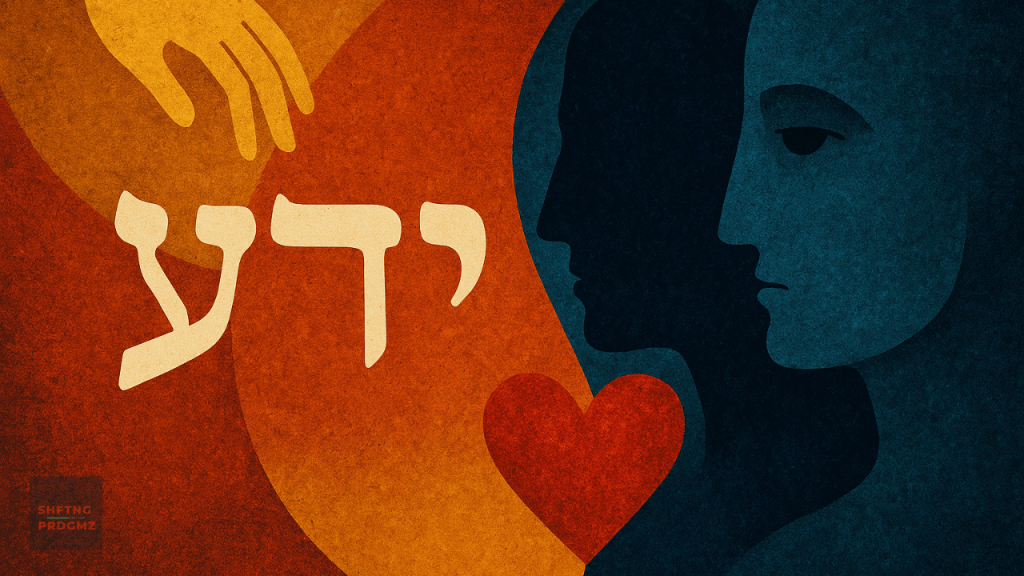
Shifting gears and getting to the mechanics of Knowing the Word to Hear the Voice, let’s now consider the Hebrew word for “know,” which is yada’ (יָדַע). Idiomatically, this isn’t merely relative to intellectual familiarity. It is, rather, intimate, experiential, covenantal knowledge. Interestingly, it’s the same word used for Adam knowing his wife, Chawah and bearing the fruit of Cain, Abel and Seth. To elucidate this principle of intmacy, let’s break this word down even further, examining each Hebrew letter that composes it: yod, dalet and ayin which gives us the following insight:
- Yod (י) – The hand of action, the spark of creation, the beginning point of intentional movement.
- Dalet (ד) – The door, the pathway into a realm or dimension.
- Ayin (ע) – The eye, symbolic of insight, perception, and spiritual vision, something that, before, we have called Hebrew Vision.
To yada, therefore, is to extend the hand toward the door of revelation in order to see beyond the veil. Knowing the Word isn’t just about study, it’s about communion. And to commune, one must first enter the door. And then, when one enters, one must conduct oneself accordingly.
Selah.
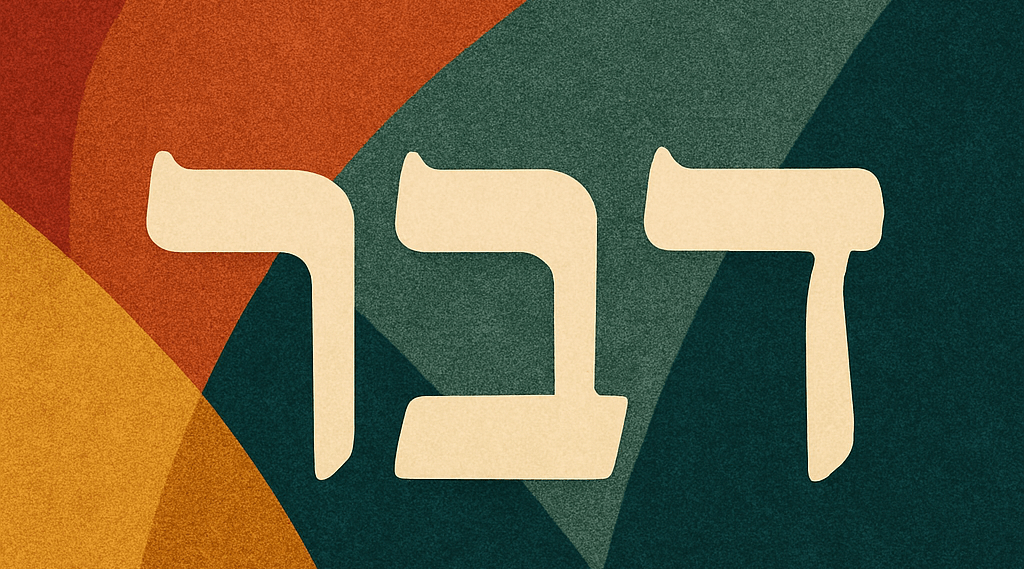
Next, the Hebrew word for “word” is davar (דָּבָר). Simply defined it means word, matter or thing. In Hebrew thought, words are not just representations; they are realities. Considering the letters dalet, bet and resh, we find the following:
- Dalet (ד) – Door: Access, entry, transition.
- Bet (ב) – House: Family, dwelling, internal order.
- Resh (ר) – Head: Authority, beginning, source.
So “davar” can be seen as the authority (resh) of the house (bet) made accessible through the door (dalet). The Word is the entry point to the supernal dwelling and authority of Elohim.
Side note: those in the spoken word world know me as Davar. When the word “Davar” came to me as a stage name, it wasn’t a gimmick, misnomer or pseudonym; it was a mission, a celestial charge. I knew I was to be more than a poet; I was to be a mouthpiece, a vessel, an embodiment of the Word of Elohim in sound, speech, and stature. Each time I stepped to the mic, I wasn’t there to entertain, I was there to reveal. I took that to heart, and though I was challenged to always live up to the standard, I did deliver the Word with precision and passion.
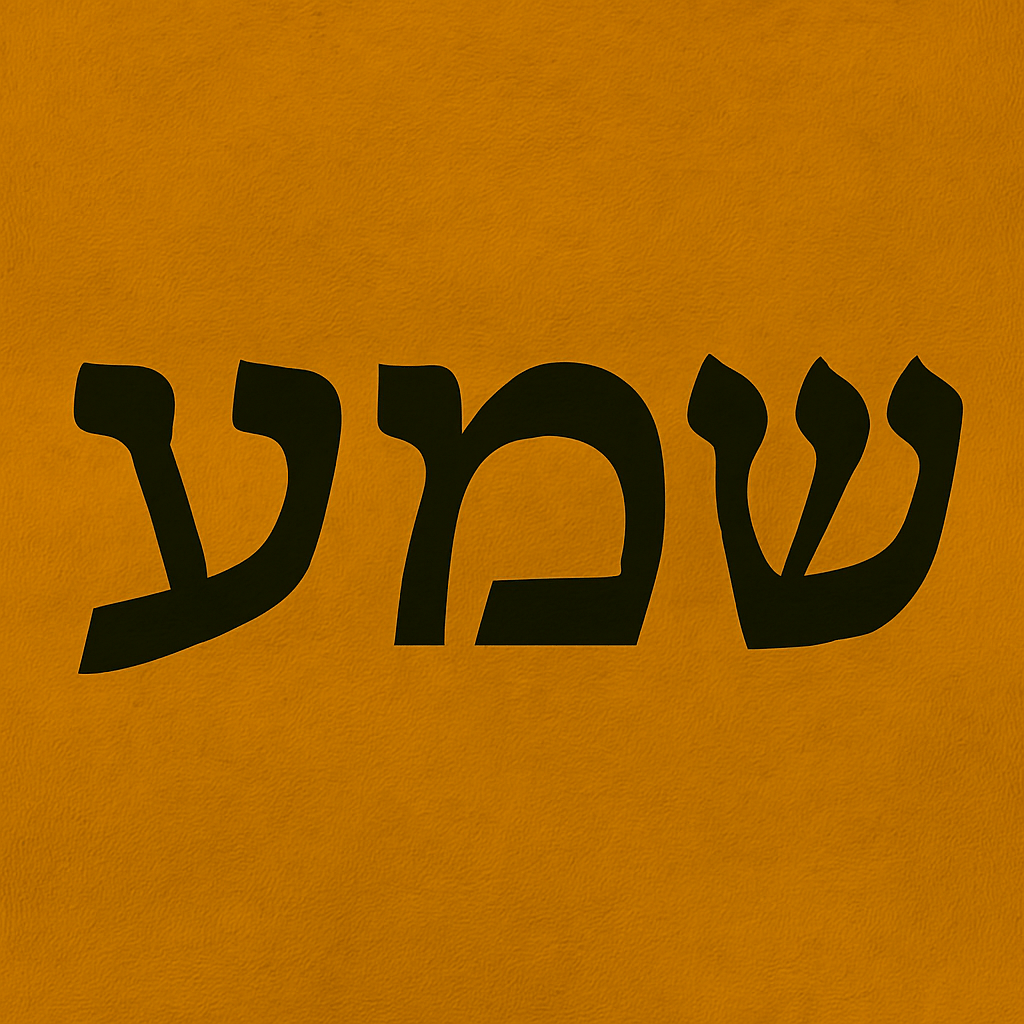
Returning back to the path, next we have the Hebrew word for hear: shema (שמע). In Hebraic understanding, hearing is not just about sound, it’s about response. To shema means to listen attentively, understand deeply and obey willingly. This is why the Torah uses shema where Western languages might use “obey.” You haven’t truly heard unless you act. So when we say, “Shema Yisrael,” we are declaring more than attention—we are entering covenantal alignment with the Voice of Elohim through His Word.
The deeper meaning of shema is revealed in its Hebrew letters: ש (Shin) symbolizes fire or divine power, מ (Mem) represents water or flowing wisdom, and ע (Ayin) stands for the eye, spiritual perception. Together, they express a profound truth: to truly hear is to be refined by divine fire, nourished by flowing revelation, and awakened in inner sight. This layered meaning affirms our core truth—you must know the Word to rightly hear the Voice, for the Voice always speaks in agreement with the flame, flow, and vision of Torah.
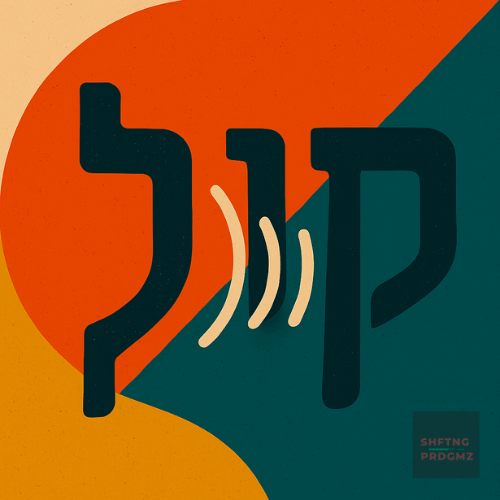
Lastly, we have the Hebrew word for voice, which is qol (קוֹל). It means sound, voice, or proclamation. Composed of the letters qof, vav and lamed, we arrive at a deeper insight of this word when examining each letter.
- Qof (ק) – The back of the head or the sacred circle; it also represents that which is hidden or set apart.
- Vav (ו) – Hook or connector: Linking realms, uniting heaven and earth.
- Lamed (ל) – Staff or goad: Teaching, leadership, direction.
The qol is the hidden sacred sound that connects the heavenly instruction to earthly direction. It is not noise, it is navigation.
So when we bring yada’, davar, and qol together, we discover a powerful truth: You cannot discern the sacred voice unless you intimately know the sacred word. Without the Torah as the lens, the voice becomes subject to our own imagination or worse, deception.
Consider Samuel as a child in 1 Samuel 3. He heard the voice of Elohim, but he didn’t recognize it until Eli instructed him. Why? Because Samuel was not yet trained in the Word. More on Samuel shortly.
But for now, contrast hist experience this with the false prophets of Jeremiah 23. They prophesied visions of their own minds, not from the mouth of Elohim. The Most High declares in Jeremiah 23.21,
They ran, but I did not send them. They prophesied, but I did not speak to them.
Why? Because they didn’t stand in His council; they didn’t sit at His feet; and therefore, they didn’t know the Word, so they could not discern the Voice. Simple mathematics!
Furthermore, to know the voice of Elohim is to be able to discern it from every other voice, including the seductive voice of a false prophet.
Deuteronomy 13 begins with a chilling warning:
“If a prophet or a dreamer of dreams arises among you and gives you a sign or a wonder, and the sign or wonder that he tells you comes to pass, and he says, ‘Let us go after other gods’ (which you have not known), and let us serve them, you shall not listen to the words of that prophet or that dreamer of dreams. For YHWH your Elohim is testing you, to know whether you love YHWH your Elohim with all your heart and with all your soul.” Deuteronomy 13:1–3
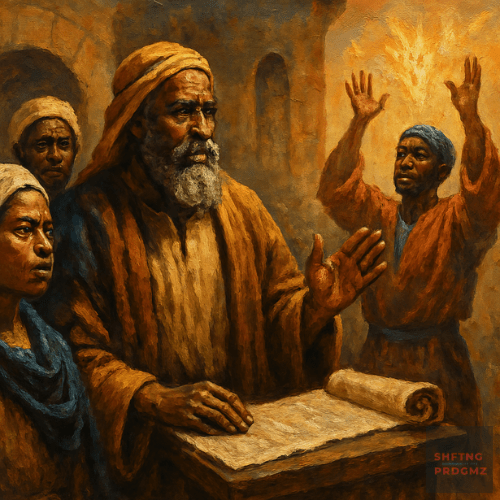
Here we learn something profound: even when a “prophet’s” sign or miracle comes true, it does not validate their voice if it contradicts the Torah. This passage directly confronts the modern obsession with signs, wonders, charisma, and visions, reminding us that the true test of a prophet is not in what happens, but in what is spoken, and whether it aligns with the eternal Word.
The Hebrew text says ki menasseh YHWH Eloheikhem etkhem: for HaShem your Elohim is testing you. The test is not in the sign, because the test is in our heart: to see if we know the Word well enough to detect when a voice is leading us away from HaShem, even subtly?
This is the essence of knowing the Word to know the Voice, beloved ones. If the Torah has not been internalized, if the commandments are not engraved on the heart, the soul can be easily swayed by spectacle, emotion, and manipulative eloquence. As it is written in Isaiah 8:20:
To the Torah and to the testimony: if they speak not according to this word, it is because there is no light in them.
Midrash Tanchuma comments on this verse, stating that even if someone performs miracles, raises the dead, or calls down fire from heaven, if they seek to abolish or reinterpret the mitzvot contrary to Torah, they are a false prophet. The test is whether they affirm or undermine the covenant.
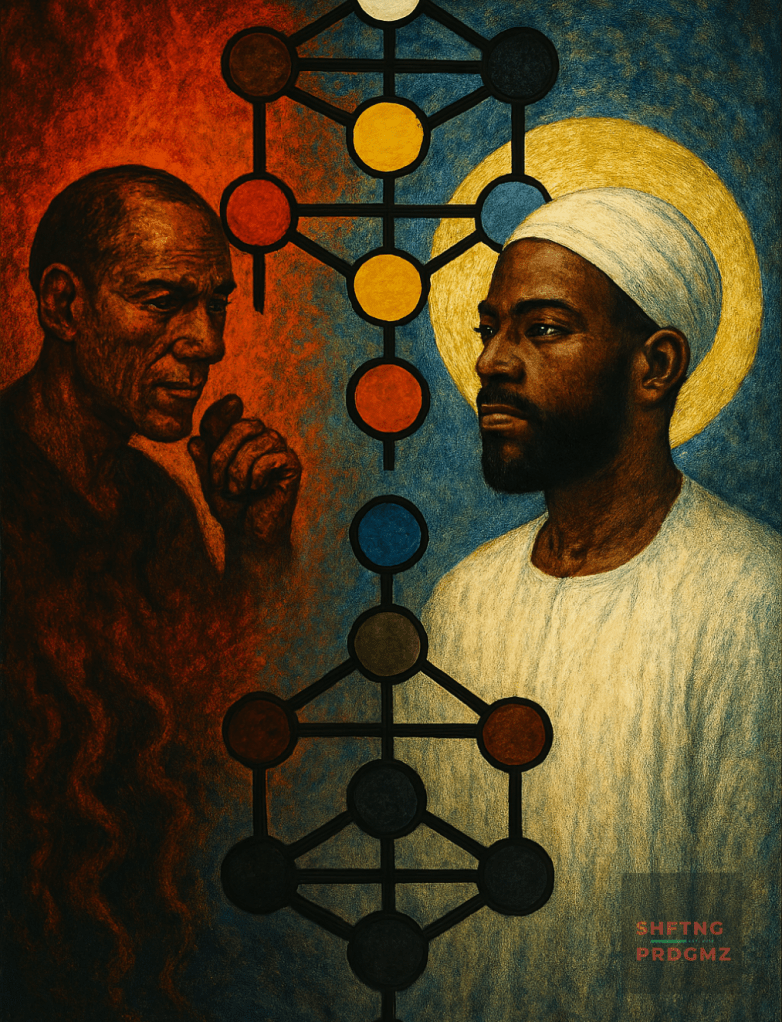
From a Kabbalistic perspective, the voice of a false prophet arises from the sitra achra, or the “other side,” the realm of impurity. It can even masquerade as light, as we are told that our Adversary does in 2 Corinthians 11.14,
And no wonder, for even satan masquerades as an angel of light.
Of this deception, the Zohar teaches that impurity imitates holiness to deceive those who are not rooted in da’at, the knowledge that connects wisdom (chochmah) and understanding (binah) into discernment. All of this is predicated on one’s connection to and with the Torah.
So, again, to know the Voice we must first be grounded in the Torah. This is because the Torah is the filter, the shield, the plumb line. Without it, we are vulnerable to being seduced by spiritual rhetoric that feels good but leads to separation from the One true Elohim.
Let this be a sobering reminder to us all: not every spiritual-sounding voice is holy. Elohim will allow lying spirits to speak through false prophets to test our love, our loyalty, our readiness. The Voice we follow is the master we serve. If it leads us away from Torah, even in subtle ways, it is not the Voice of HaShem.
As disciples of Mashiach, who said at Matthew 5.17-18,
Do not think I came to abolish the Torah or the Prophets! I did not come to abolish, but to fulfill. Amen, I tell you, until heaven and earth pass away, not the smallest letter or serif shall ever pass away from the Torah until all things come to pass.
Matthew 5:17–18
This declaration is often misunderstood. When Yeshua said He came to “fulfill,” the Greek word used: plēroō, does not mean to finish so that it ends, but to fill to fullness; to bring to its truest expression and application. Yeshua came to embody the Torah, to reveal its heart, and to show us how to live it in Spirit and in Truth.
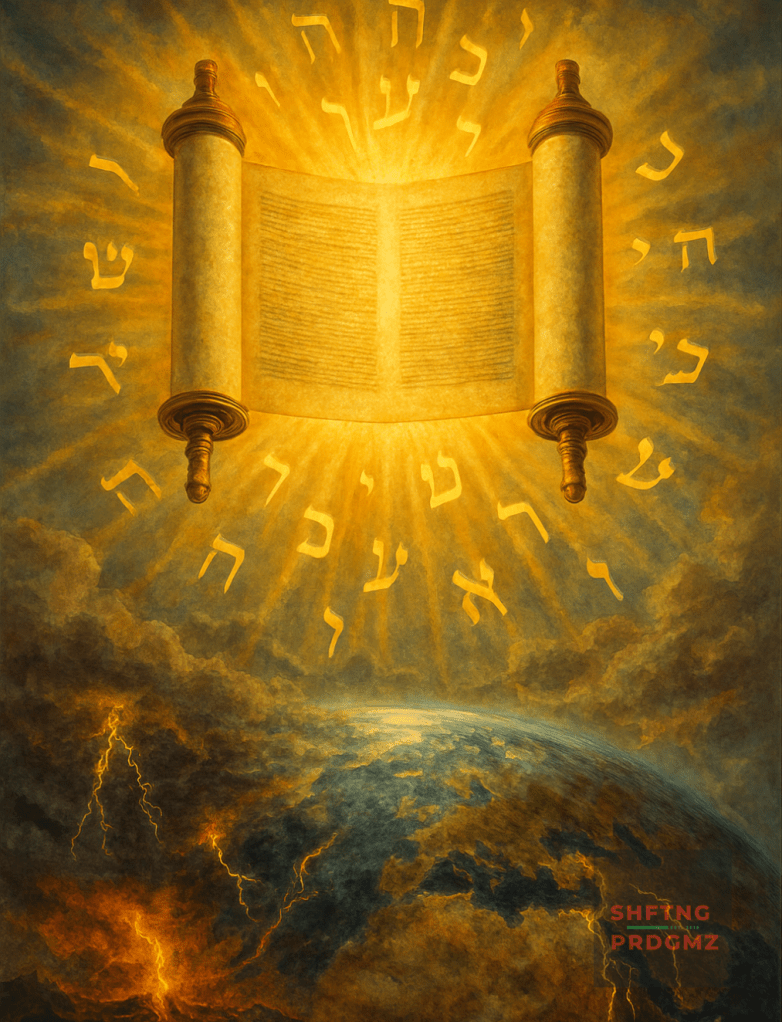
So, when He says that not even the smallest letter (yod) or serif (kotz) shall pass away, He is referencing the tiniest markings in Hebrew script, emphasizing the eternal precision and holy integrity of the Torah. The phrase “until heaven and earth pass away” is a cosmic timeline: as long as creation stands, so does the Torah.
Therefore, every voice, whether prophetic, political, pastoral, or personal, must be weighed against the unchanging measure of Torah. If heaven and earth have not passed away, neither has the standard. To hear the Voice of Elohim rightly is to do so through the lens of the Word He Himself established and fulfilled.
This is why the Messiah didn’t contradict Torah, but clarified it. He also didn’t cancel the Prophets, but confirmed them. And He most certainly didn’t diminish our responsibility, He deepened it. To follow the Messiah, in Spirit and Truth, then, is to walk in and as the Word made flesh, and to know the Voice that speaks in perfect harmony with it.
So then, let us pursue with vigorous attachment to know the Word, and to know it so deeply, so intimately, that the counterfeit voice cannot deceive you. Let the Torah be the lamp unto our feet, the barometer of truth, and the test of every prophecy you hear.

Because to truly know the voice of Elohim, one must be intimately attuned to the Word of Elohim, which is, in Truth, the Torah. This truth is personified in the life and ministry of Eliyahu haNavi (Elijah the Prophet), whose zeal for Elohim was forged in the furnace of holy discipline and Torah devotion. Elijah was not merely a fiery prophet who called down fire from heaven, he was also a student and defender of Torah, a man of disciplined study and spiritual rigor.
Midrashic tradition (Pirkei DeRabbi Eliezer, ch. 29) teaches that Elijah descended either from the tribe of Gad or Manasseh, a tribe known for its warriors, yet he carried the soul of a Levi, serving as a bridge between the priestly function of preserving the Word and the prophetic role of declaring it. In Zohar (Vol. 2, 197a), it is taught that Elijah ascended alive into the heavenly realm because his soul was already so purified by Torah and mitzvot that death could not hold him. His internal flame had become one with the heavenly fire.
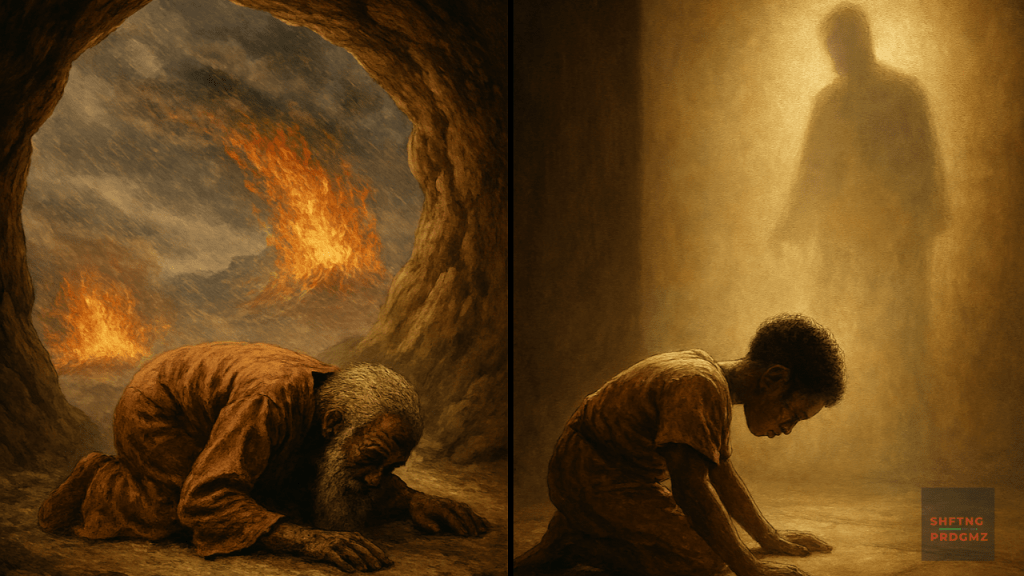
Elijah’s encounter with the “still, small voice” (kol demamah dakkah) on Mount Horeb (1 Kings 19:12) is often read as an emotional turning point, but it is also a revelation of higher cognitive attunement. The voice of Elohim was not found in the wind, the earthquake, or the fire, but in silence imbued with Word of Torah. Kabbalistic tradition (see Sha’ar HaGilgulim, Gate 31) reveals that Elijah’s soul was connected to Pinchas, who was zealous for the covenant and possessed a deep understanding of divine justice and mercy. This connection emphasizes that his ability to hear the refined voice was born from his inner Torah knowledge and balanced judgment.
Elijah is said to visit every circumcision ceremony (brit milah) because he bears witness to covenantal continuity, the very heart of Torah observance. As one who “stands before YHWH” (1 Kings 17:1), Elijah’s standing implies permanence and preparedness, one who stays ready so that they don’t have to get ready to carry the Word and to hear the Voice. His deep connection to Torah is why the sages say Elijah will return to resolve halakhic, or practical, disputes in the days of Mashiach, for he holds both the written and hidden dimensions of Torah within him.

Likewise, as was mentioned earlier, the prophet Samuel (Shmu’el haNavi), though raised in the house of Eli the priest, was weaned not only on milk but on Torah. The Midrash (Midrash Shmuel) tells us that Hannah, his mother, taught him Torah from a young age, and he is described as a “na’ar,” a youth already ministering before Elohim (1 Samuel 2:11). Samuel is known in Tikkunei Zohar as a “master of hearing” because the first holy message came to him in the night, and though he didn’t recognize the voice at first, his heart was pure and prepared to receive it. The Midrash notes that when the Voice finally called a third time, it penetrated Samuel’s soul because his vessel was formed through study, humility, and obedience.
Both Elijah and Samuel are prototypes of what it means to know the Voice because they knew the Word. Their prophetic clarity didn’t come from mere inspiration, but from meditation and alignment with Torah. They became conduits because they had first become containers, able to hold, carry, and transmit the Torah’s truth.
In our time, as in theirs, the call is the same: Know the Word so that when the Voice calls, you will recognize it. As it is written,
Blessed is the man who meditates on the Torah day and night…he shall be like a tree planted by streams of water
Psalm 1:2–3
Elijah and Samuel were such trees, rooted in Torah, and thereby fluent in the whisper of Elohim.
The sages say,
Make for yourself a teacher and acquire for yourself a friend
Pirkei Avot 1:6
Why? Because Torah is transmitted through relationship and accountability. Rabbi Akiva taught that the entire Torah rests on the foundation of loving our neighbor as ourselves, because the Word is relational. And the voice of Elohim will never contradict His written Word.
This relational transmission is not a passive download of information, but an active cultivation of covenantal consciousness. To hear the voice of Elohim is not merely to receive a sound, but to be recognized by the Voice. As Yeshua taught and I quoted at the introduction to this chronicle,
My sheep hear My voice, and I know them, and they follow Me
John 10:27
That recognition is forged through fidelity to Torah, love, obedience, humility and reverence. As a declaration of covenant intimacy, we as Messiah’s sheep are those whose hearts are trained to discern His voice amidst the noise of the world because our ears have been circumcised, like the servant committing to his master, through continual attentiveness and surrender. That recognition is forged by faithfully following His instructions which shapes our character; through love, and binds us in unity with His heart; through obedience, which proves the authenticity of our faith; through humility, which keeps us low enough to be led; and through reverence, which preserves the awe that keeps us from straying. In this way, the Shepherd’s knowing of His sheep is not casual acquaintance but deep relational knowledge; a mutual abiding in which His voice directs our steps, His law writes itself upon our hearts, and our lives become a living testimony of the Kingdom.
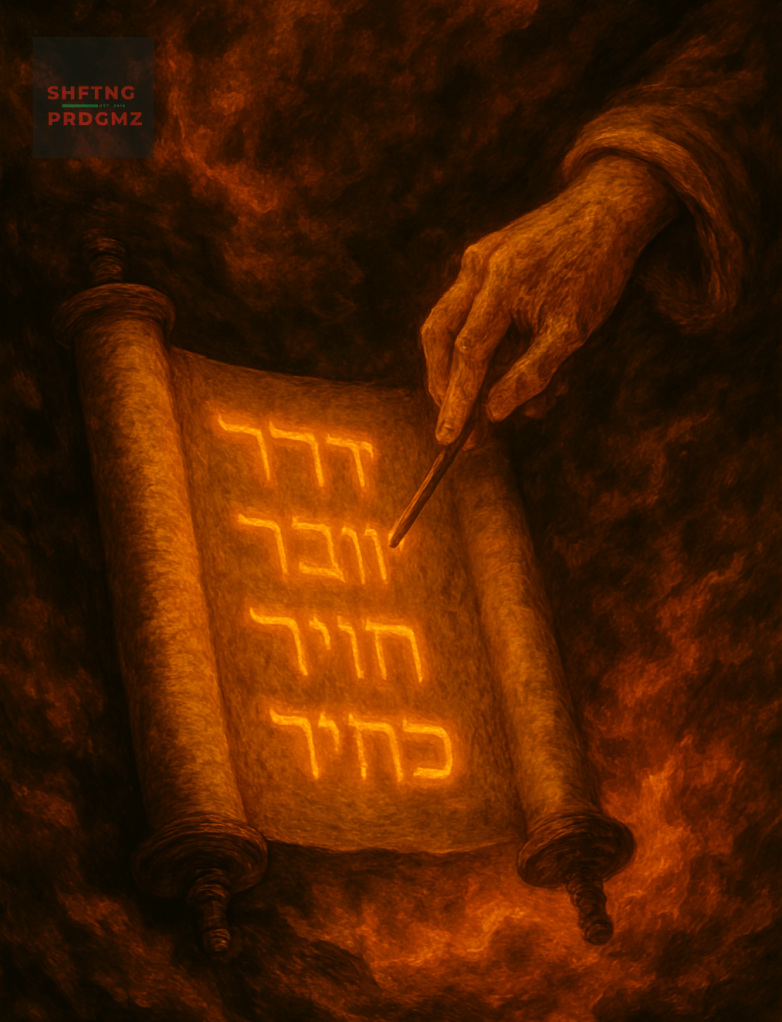
The sages say the Torah was not only given in fire but must be received in awe. And Kabbalah teaches that the voice of Elohim descends continually, but only a purified vessel, a heart formed by Torah, can perceive it. As Elijah heard in the cave, the Heavenly Voice is not always loud or dramatic, but encoded in silence, nuance, and subtlety; one must be trained to discern it. And that is where faith enters and our training begins as we seek to discover the evidence of what is unseen and the substance of what is hoped for.
So how does one become this kind of vessel? How do we prepare ourselves to not only know the Word intellectually, but embody it to such a degree that we can recognize the Voice?
Here are five essential steps to begin the sacred journey of Knowing the Word to Know the Voice:
- Immerse in the Torah Daily – This book of the Torah shall not depart from your mouth… then you will make your way prosperous (Joshua 1:8).
- Practice the Commandments – If any man will do His will, he shall know of the doctrine (John 7:17).
- Pray with Kavanah (Intention) – Call to Me and I will answer you and tell you great and unsearchable things you do not know (Jeremiah 33:3).
- Listen in Silence – Elijah heard the still small voice, not in the fire or the wind (1 Kings 19:12).
- Join the Community of the Word – Do not forsake the assembling of yourselves together… (Hebrews 10:25).
This is a Voice we all are to know, not merely a call to study or recite, but to intimately bond with the Word of Elohim until our hearts beat in rhythm with His voice. Transfiguration isn’t just a moment, it’s a movement; it’s the unveiling of the hidden part of ourselves, revealed by the manifest Word and resonating Voice of the Most High.
To hear I came is to be awakened, and to respond is to be transformed.
So I encourage you, children of the Most High, cling to the Torah like Ya’aqov, listen to the Voice like Samuel, respond to the command like Elijah, stand in the covenant like Jeremiah, speak prophetically like Moshe, live faithfully like Yeshua.
Tread deeper.
Climb higher.
Let us go further into the fire of the Word, until our voice is no longer ours, but the echo of the Torah itself in the earth.
So…
Know the Word.
Hear the Voice.
Become the Message.
Be transfigured and lead others into the transfiguration!
Selah…
Discover more from SHFTNG PRDGMZ
Subscribe to get the latest posts sent to your email.

