

____________________________________________________________________________________
The concept of love and fear of Elohim is deeply rooted in Jewish tradition and is understood as a complementing relationship. Love is seen as the heart and soul of one’s relationship with [Elohim], while fear is a reverential awe that comes from recognizing [Elohim’s] holiness and the consequences of disobedience. The biblical text emphasizes the importance of both love and fear, urging believers to love [Elohim] with all their heart, soul, and might, and to fear Him with reverence and awe. This balance is crucial for a healthy and fulfilling relationship with [Elohim], as it fosters a sense of awe and respect for [Its] greatness, while also instilling a sense of responsibility and fear of the consequences of not living in accordance with [Its] commandments.
My Jewish Learning
And now, O Israel, what does your [Elohim] יהוה demand of you? Only this: to revere your [Elohim] יהוה, to walk only in celestial paths, to love and to serve your [Elohim] יהוה with all your heart and soul, keeping יהוה’s commandments and laws, which I enjoin upon you today, for your good.
Deuteronomy 10.12-13
____________________________________________________________________________________

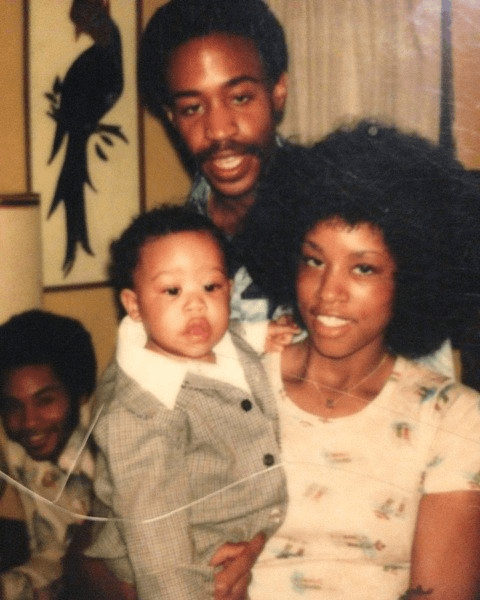
When I think about love and fear, I don’t start with a religious premise or treatise. I start with my ima. The reason for this is simply because my ima is my first reference point for what love and fear are all about. It only makes sense, therefore, to make sure the point of this article starts out with a solid, relatable foundation we can all identify with in some way, shape, form or fashion. Growing up, my love for my ima wasn’t just about my feelings for her; it was in what I did in relationship to and with her that truly demonstrated my love for her. If she told me to do something, I listened and did it, even if I didn’t feel like it. I did it, not because I thought she was perfect, but because I respected her place in my life as my mother. And my fear of her? It wasn’t about being scared she’d hurt me, it was more about not wanting to see disappointment, sadness or anger in her eyes. That was a fear that kept me in check. It kept me from doing things I knew would sadden her spirit or break the trust between us.
That same dynamic, love expressed through obedience, and fear, expressed through self-restraint, is exactly how Torah frames our relationship with HaShem. It’s the essence of Ahavah (love) and Yirah (fear).
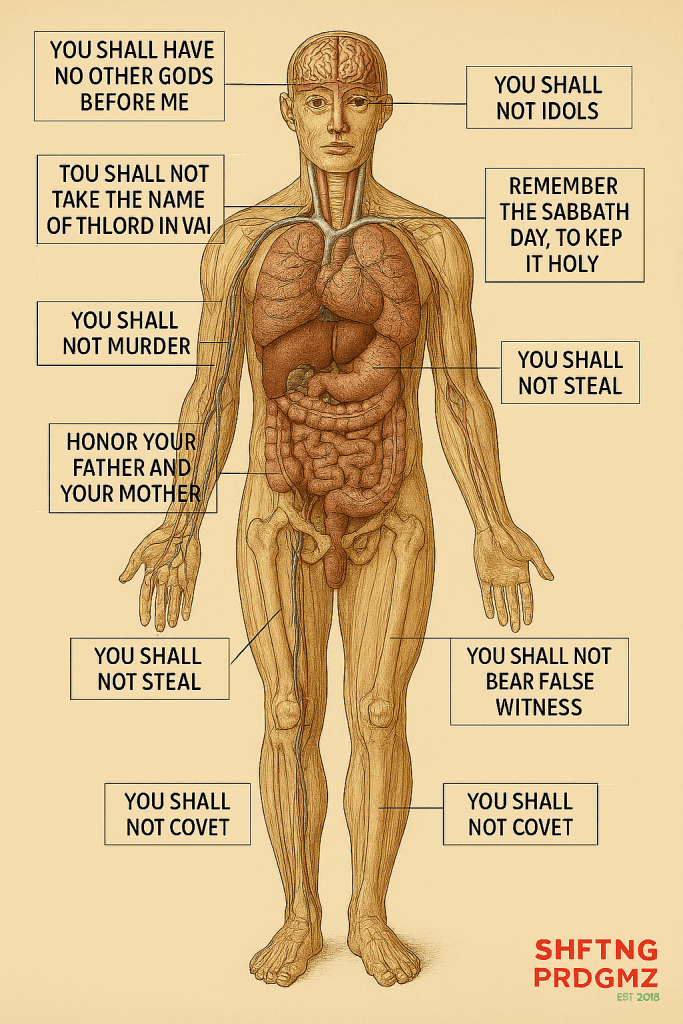
In our Hebrew tradition, the Torah gives us 613 commandments, broken down into 248 positive commandments, things we are commanded to do, and 365 negative commandments, things we are commanded to avoid. The Sages teach that these numbers are not random; rather they align perfectly with our physical being:
- 248 corresponds to the number of limbs and major organs in the human body.
- 365 corresponds to the tendons, nerves, and sinews linking our frame together.
To capture the fullness of this idea, an article entitled Whole-Hearted from Chabad’s website gives us the following insight:
“The 248 parts of Zeir Anpin are the 248 active commandments and its 365 nerves and sinews are the 365 passive commandments. Every component of the human soul and every component of the human body correlates to one of the 613 components of the spiritual ‘body’ of Zeir Anpin.”
Zeir Anpin is what is considered the “Small Face” of Elohim. It is a spiritual configuration that expresses the emotional attributes of the Eternal such as love, strength, beauty, compassion, and truth. It is the channel through which HaShem’s light flows into the world in a way that humanity can receive. When the Sages say that the 613 commandments correspond to the body of Zeir Anpin, they are teaching us that every mitzvah is not only an action in time but also a connection to a heavenly attribute.
Furthermore, according to this science, Zeir Anpin is not only the channel of the heavenly attributes into creation but also the spiritual archetype that points us toward the Son, the Mashiyach. Just as Zeir Anpin reveals the hidden light of the Infinite in a form that the world can receive, so too Messiah is the embodiment of that revelation in flesh and blood as spoken of in Hebrews 1.3. He is the living expression of the Father’s love and discipline, the One who perfectly fulfills the 248 positive and 365 negative commandments, thereby becoming the complete and transfigured image of Torah itself.
So, it is as such that when we perform a positive commandment, we activate one of the 248 “limbs” of this spiritual body, drawing light into our own limbs and organs. Additionally, when we hold back from violating a negative commandment, we strengthen one of the 365 “sinews” of this spiritual body, which in turn edifies the nerves and sinews of our own being. In this way, the mitzvot are not just rules to follow. They are the blueprint for aligning our body and soul with the very structure of celestial flow.
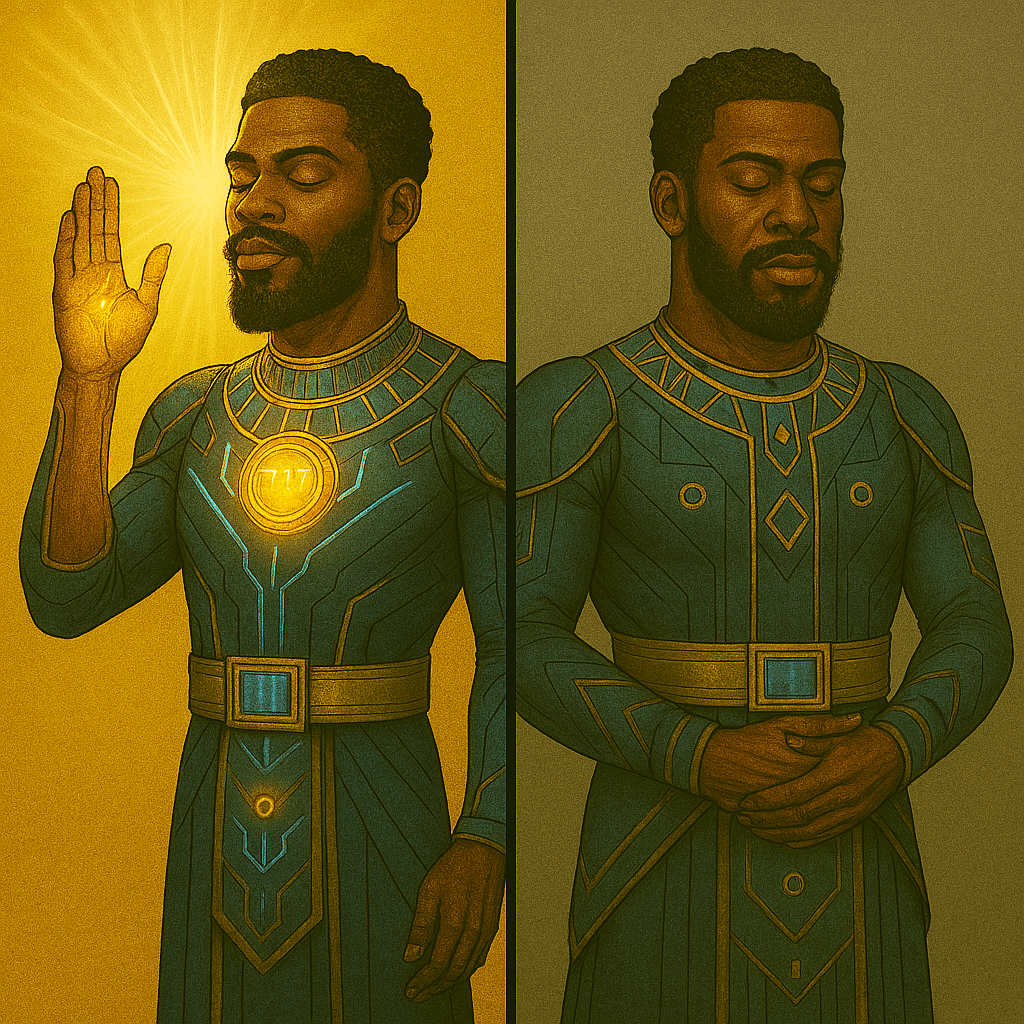
When we fulfill the positive commandments, it’s as if each limb of our body becomes a channel for supernal light. Every act of love toward HaShem, whether it be the keeping of Shabbatot (Sabbath Day and Appointed Times in Leviticus 23), giving tzedakah (charity), or speaking truth, illuminates the very structure of who we are.
Conversely, when we guard ourselves from violating the negative commandments, it’s as if we strengthen and sanctify the sinews and tendons holding our being together. This is because restraint builds integrity; it’s the “no” that protects the “yes.” It’s our true spiritual fitness center that builds up our resilience to temptation and trial.
The Oral Torah frames it like this: love drives us to do; fear keeps us from undoing. Both are necessary for elevation. Love builds; fear preserves. Together, they create a vessel strong enough to hold the Presence of the Most High.
In The Omnipotence of Love, I wrote that love is not an emotion you visit when it’s convenient, it’s an eternal place you live from. In Heart + Soul = Strength, I showed that love demands the whole person, lev (heart), nefesh (soul), and me’od (might).
Of this, the Psalmist says:
O you who love YHWH, hate evil!
Psalm 97:10
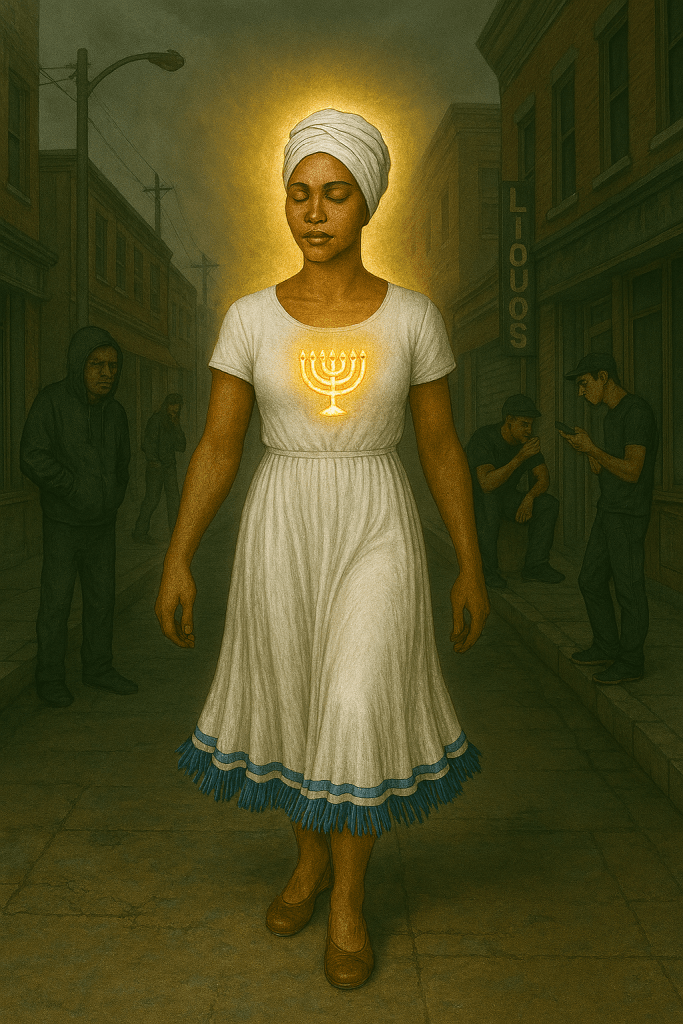
In its purest essence, love is both decisive and discriminatory. Love is decisive because it requires action, choosing to obey HaShem’s commandments with intention and consistency, not wavering between self-will and Elohim’s will. Love is also discriminatory because it draws a line, rejecting what is false, harmful, or profane, in order to cling only to what is holy, righteous, and true. From here, we should be able to see that true love is the alignment of heart, soul, and strength with Elohim, which gives us the overflow to be able to honor and uplift our neighbor while also valuing ourselves as vessels created to reflect the image of the Eternal One.
So, if I love HaShem, therefore, I can’t stay neutral toward what It says is wrong. And if I do what is wrong, there are consequences that result from my decision that is meant to correct my error so that my behavior will reflect the character of the house from which I come.
Proverbs 13.24 teaches:
He who spares the rod hates his son, but he who loves him disciplines him promptly.”
When it is absolute, love carries discipline, both toward others and ourselves. But without discipline, love becomes hollow sentiment, shallow commitment, absent of accountability and restraint.
It is in this light that we can perceive the reality of loving HaShem and how it requires our keeping of the commandments not out of fear of punishment, but out of joy in pleasing HaShem, like our earthly father and mother. And when we love, we show up fully, with all of our heart, soul and strength.
Now, as relates to fear, the Hebrew word is Yirah (יִרְאָה). It is a word that is often misunderstood. Idiomatically, this word not a cringing terror. It’s awe, reverence, and a holy caution that keeps us from stepping outside the covenant.
Let’s break it down by letter by letter:
- Yod (י) – The smallest letter, in this sense symbolizing humility before the Infinite.
- Resh (ר) – Head or beginning, pointing to authority and leadership.
- Aleph (א) – The oneness of Elohim, the source of all.
- Hey (ה) – Prophetic revelation, breath, and the presence of HaShem in the world.
These letters combined provides us with the perspective that yirah is the mindset of humility in recognition of HaShem as the Beginning and One Source of all, as we walk in Its revealed presence. In other words, the fear of Elohim is an awareness that every choice we make happens before Its face.
Selah.
To expand this notion, in the Tanya, a text by Shneur Zalman, founder of Chabad, it teaches that within each of us are two souls, the nefesh Elokit (celestial soul) and the nefesh Behamit (animal soul). These correspond to our two inclinations; yetzer ha’tov, the good inclination, and yetzer ha’ra, the evil inclination. To simplify ideas, the celestial soul naturally loves and fears HaShem, while the animal soul naturally loves comfort and fears discomfort. This is what Rav Shaul, aka the apostle Paul explained when he said in Romans 8.5-6,
For those who live according to the flesh set their minds on the things of the flesh, but those who live according to the Ruach set their minds on the things of the Ruach. For the mindset of the flesh is death, but the mindset of the Ruach is life and shalom.
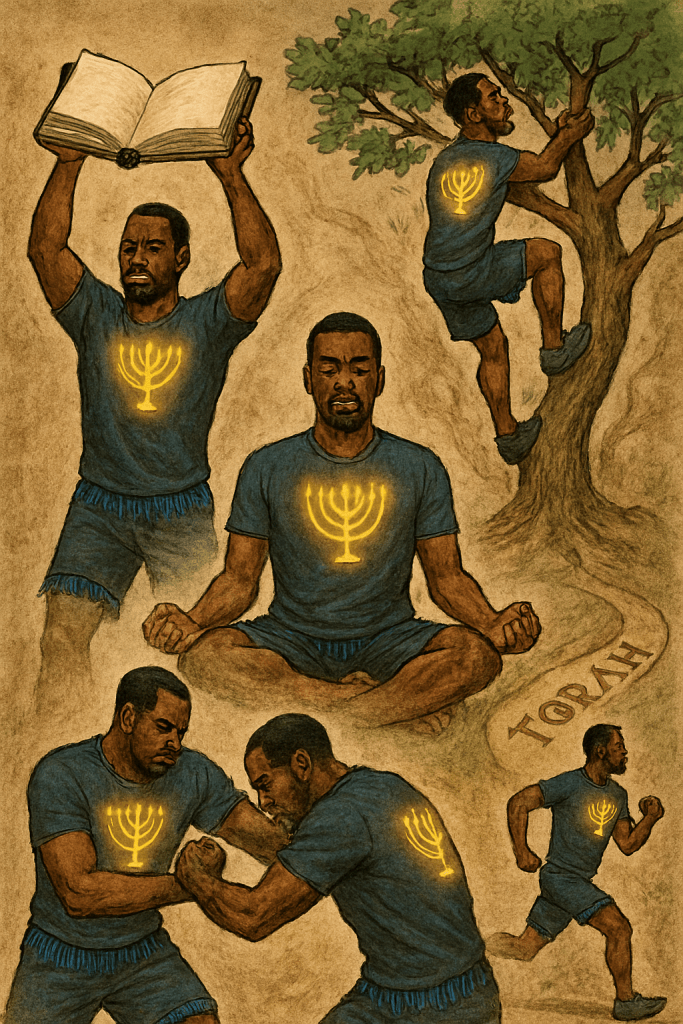
And this is what the contest of life is all about, our willingness to train the animal soul to serve the celestial soul. We do this by loving HaShem more than we love the fleeting pleasures of the moment, and by fearing disconnection from Him more than we fear missing out on worldly gain.
This contest, of course, is overcome with an instant victory, rather it results from a sustained front and rear, inner and outer front that is tested with each daily match. But with every choice aligned to Torah, the celestial soul gains strength, the animal soul learns its place, and the light that was planted within each of us when Elohim said yehi ohr, or let there be light, begins to emerge from the darkness of the soul.
As with all things that we are to established in the Kingdom by the will of Elohim, we must come to know both the mechanics and purpose of our service to Elohim and our neighbors. To love Elohim, let us receive our instruction from Scripture which informs us of the following:
- Know Him through His Word – You can’t love someone you don’t know. Study Torah daily.
This Book of the Torah shall not depart from your mouth, but you shall meditate on it day and night, so that you may be careful to do according to all that is written in it (Joshua 1:8). - Do what pleases Him – Let your mitzvot be love letters written in action.
If you love Me, keep My commandments (John 14:15), and Love YHWH your Elohim and keep His requirements, His decrees, His laws and His commands always (Deuteronomy 11:1). - Give generously – Time, resources, patience—love is always a giver.
You shall surely open your hand to your brother, to your poor, and to your needy in your land (Deuteronomy 15:11). - Celebrate His presence – Pray, sing, and keep Shabbat as joy-filled encounters.
It is a good thing to give thanks unto YHWH, and to sing praises unto Your Name, O Most High (Psalm 92:1–2).
Correspondingly, we find that fear of Elohim is typified by the following characteristics,
- Recognize His greatness – Meditate on His creation and His sovereignty.
When I consider Your heavens, the work of Your fingers, the moon and the stars, which You have ordained, what is man that You are mindful of him, and the son of man that You visit him? (Psalm 8:3–4) - Remember the consequences – Not as threats, but as reality checks.
Do not be deceived: Elohim is not mocked, for whatever a man sows, that he will also reap.” (Galatians 6:7), and He who sows injustice will reap calamity (Proverbs 22:8). - Guard your steps – Avoid situations that invite compromise.
Ponder the path of your feet, and let all your ways be established. Do not turn to the right or the left; remove your foot from evil (Proverbs 4:26–27). - Keep awe alive – Never let holiness become casual in your eyes.
Serve YHWH with fear, and rejoice with trembling (Psalm 2:11).
With our beautiful heritage, our Sages handed us a timeless tool for cultivating tirah, reverent fear, through a principle taught by Akavya ben Mahalalel in Pirkei Avot 3:1:
Consider three things and you will not come to sin: know from where you came, where you are going, and before whom you will give an account and reckoning.
To fully illuminate the wisdom of the Torah, he goes on to say:
Know from where you came: from a putrid drop. Know to where you are going: to a place of dust, worms and maggots. Know before whom you will give an account and reckoning: before the King of Kings, the Holy One, Blessed be He.
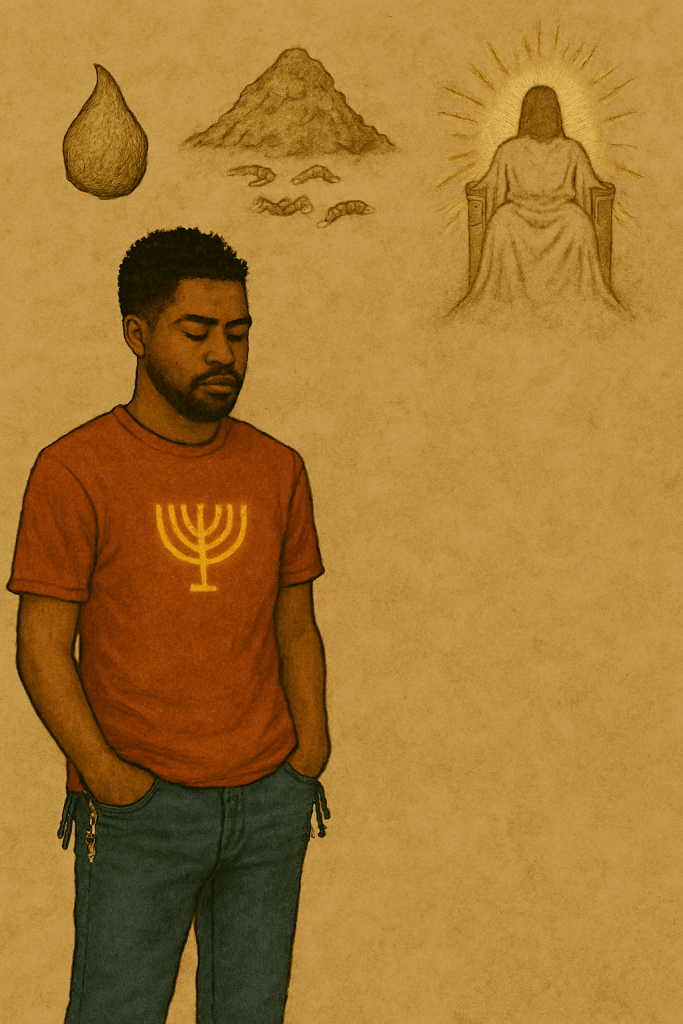
These words aren’t meant to shame us, rather they were said because they were meant to wake us up to know what the fear of Elohim is for. When I reflect on the understanding of what it means to know that I came from nothing, and I’m returning to dust, and everything I’ve thought, said and have done in between will be brought before the Most High, that awareness disciplines my steps. And that b’nai Elohim, that’s yirah; that’s fearing Elohim with the kind of respect that births integrity and holiness.
See saints, we’re not called to choose between love and fear. We are called to hold both in our hearts; for love fuels the doing; fear refines the not-doing. Without love, fear turns into cold religion, and without fear, love becomes careless disobedience.
As Deuteronomy 10:12-13 says:
“And now, Israel, what does YHWH your Elohim ask of you but to fear YHWH your Elohim, to walk in obedience to Him, to love Him, to serve YHWH your Elohim with all your heart and with all your soul keeping יהוה’s commandments and laws, which I enjoin upon you today, for your good…”
And this is why we both love and fear Elohim, because it is our alignment with the Will of Elohim that promises, and assures, the state of SHALOM! And this shalom which are able to enter is what emanates from Elohim because of the love that it has for us as Its children. And as Its children, we are provided with an ethical will, the Torah, to inherit those promises, which we received, are indicative of the blessings that reign from Heaven when we fulfill the Will of Heaven and love HaShem with all our heart, soul and strength, and our neighbor as ourselves. In this reveals the true nature of our being, that which has been reborn of the celestial world, and no longer controlled and led by the beastly nature.
And to do this, even if we start small, we will grow strong. So let us begin with one act of love, with the fulfillment of one positive commandment, and one act of fear, one avoided sin. From here, we build, and with every step we take, our soul is reshaped, because Torah, that by which we truly live by faith, is not just a book, it’s a transfiguration blueprint.
And when the day goes in, I’m sure that we can all agree that when we love and fear rightly, we don’t just become better people, we become living temples, fit for the indwelling of the Shekhinah Presence of El Elyon, the Most High. And that is the purpose of every movement in these chronicles of Transfiguration; to keep ascending until the Messiah’s image is fully formed in us.
So let’s keep moving in Torah.
Know that the world is watching, but more importantly, Heaven is.
So, bnai Elohim, keep transfiguring.
Selah…
Discover more from SHFTNG PRDGMZ
Subscribe to get the latest posts sent to your email.


This article is so enlightening! It opens up pathways to my understanding that our demonstration of love & fear for our Creator is intimately intertwined! …These two duties are not on opposing sides of the spectrum. Their purpose is to bring us into oneness with His Image & likeness.
Todah for this Elevation ❗️🙏🏾
LikeLike
HalleluYaH! Todah for the feedback ima…always and forever love!!!!
LikeLike