
____________________________________________________________
Rabbi Tafduyei said in the name of Rabbi Aḥa: The supernal beings were created in the [heavenly] image and likeness, but do not procreate, while the earthly beings [that have been created up to now] procreate, but were not created in the [heavnely] image and likeness. The Holy One blessed be He said: ‘I will create him [Adam] in the [heavnely] image and likeness, [a trait] from the supernal realm, but he will procreate, [a trait] from the earthly realm.’ Rabbi Tafduyei said in the name of Rabbi Aḥa: The Holy One blessed be He said: ‘If I create him from the supernal realm, he will live and never die; if from the earthly realm, he will die and will not live. Rather, I will create him from [both] these [the supernal] and those [the earthly]. If he sins, he will die; if he does not, he will live.’
Breshith Rabbah 14.3
…who, being the brightness of the esteem and the exact representation of His substance, and sustaining all by the word of His power, having made a cleansing of our sins through Himself, sat down at the right hand of the Greatness on high…
Hebrews 1.3
____________________________________________________________

I remember the years when my reflection was the hardest thing for me to encounter. That was during my college days which were supposed to be a season of discovery, but for me, it was a spell of intoxication and promiscuity disguised as freedom. Full of ego, I drowned my doubts and insecurities in bottles and blunts; I numbed my pain in defiled beds with defiled bodies, thinking I was living. But every night the weight of guilt pressed down heavier, and every morning the shame grew darker. The distortion of my image was real, I could no longer look at myself in the mirror. Eventually, my own eyes condemned me, and my soul rejected what I had become.
I knew deep within that something had to change, I just didn’t know how it would at that time. I knew I was made for more than cycles of regret and shadows of false pleasure. From my inner depths, I began to feel the voice of the Eternal calling me to return, to shed the masks and remember the face He had formed for me to bear. That return began with repentance, teshuvah, and it was there that the process of transfiguration for me truly began in 1997. As I’ve shared before, that was the year that my chaos was reordered, my shame was covered by mercy, and I started to rediscover what it means to be made in the image and likeness of Elohim.
In hindsight, little did I know I was born into chaos. My life from birth until 1997 was nothing but tohu wa-bohu, or formlessness and void. I lived an existence drifting without heritage, without anchor, without the light of consciousness to illuminate my path. My identity had no foundational heritage from which to draw in order to be established. I was given what my family could provide based on their knowledge base, skill set, and experience. And while they guided me with the love that they knew, they themselves were estranged from the knowledge of the revelation of the image and likeness of Elohim in which they were created.
Yes, there were traditions, fragments of faith, bits of wisdom passed down like bread crumbs on a broken trail. But these were relative truths, temporal answers, shaped by the limits of my families perspectives and indoctrination. But, the generational transmission of legacy that the Torah commands to take place had been fractured; the wellspring of Wisdom had been dammed by disconnection. My roots were clipped, and the fruits I bore were thin, bitter, and often times rotten. The results were evident: confusion, instability, rebellion, and a wandering spirit that couldn’t locate home. Of this, the prophet Yeshayahu (Isaiah) says in chapter 1 verses 2 and 3,
Hear, O heavens, and give ear, O earth, for [Elohim] has spoken: I reared children and brought them up—and they have rebelled against Me! An ox knows its owner, a donkey its master’s crib: Israel does not know, My people takes no thought.”
But then came repentance, teshuvah; the moment when the Most High turned His face toward me and called me back into the covenant. Like Moshe ascending the mountain, like Yeshayahu beholding the throne, I experienced transformation and transfiguration. My void became virtue and my chaos became cosmos. The Torah restored order and opened the gates to my eternal identity.
It was in Torah that I finally discovered what it means to be made in the image and likeness of Elohim.
The Rambam, in the opening chapter of Moreh Nevukhim (Guide for the Perplexed), makes it clear: when the Torah says that humanity was created b’tzelem Elohim, in the image of Elohim, it does not mean with a physical form. Elohim is not bound by limbs or shape. Rather, the tzelem refers to our intellectual and spiritual faculties; the capacity to reason, to choose, to know truth, and to commune with the Eternal.
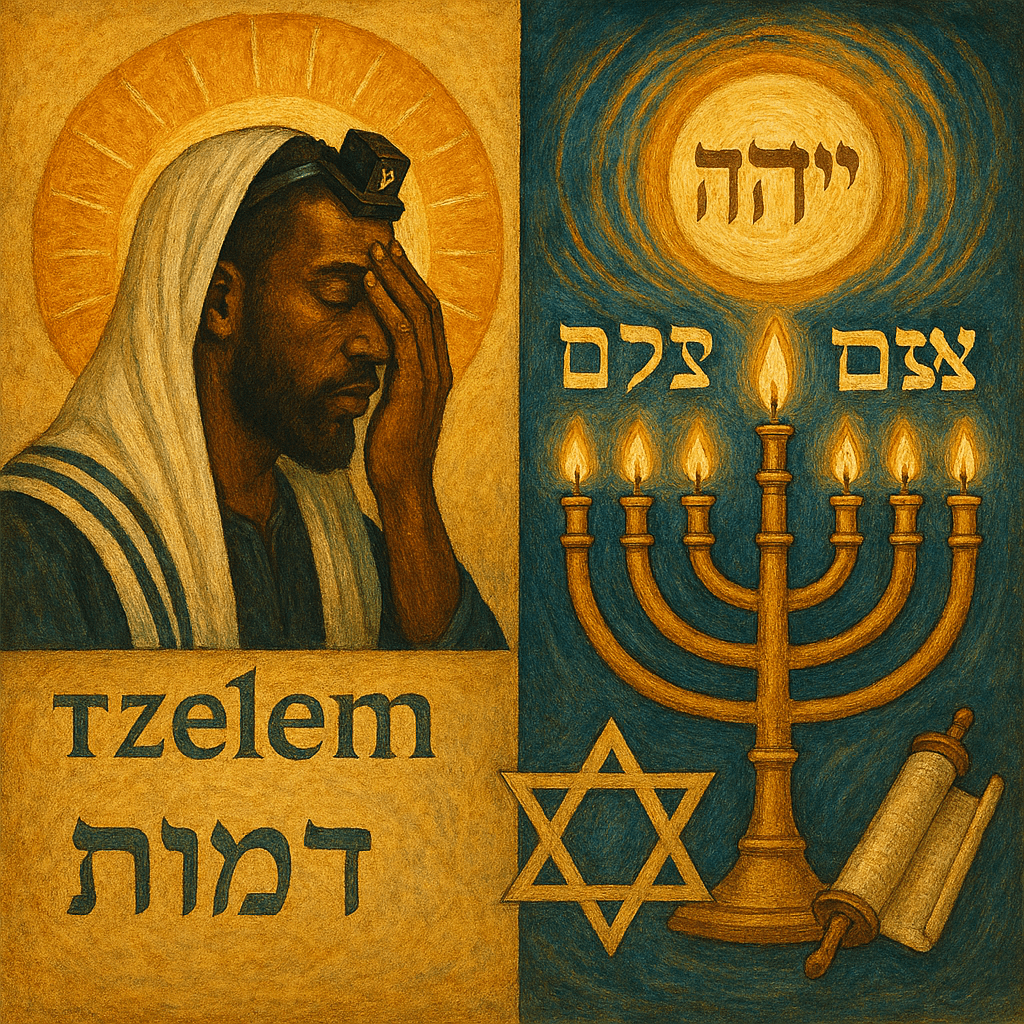
“Image” (tzelem) is the internalized expression of Supernal consciousness, the imprint of heavenly wisdom upon the mind and soul. “Likeness” (demut) is the potential to actualize that imprint through moral behavior, covenantal living, and faithful observance. One is essence; the other is action. One is the potential; the other is the performance. Together they constitute the calling of Israel: to embody the Presence of Elohim in creation.
For Israel, the image and likeness are not abstract philosophy. They are grounded in mitzvot. To observe Torah is to activate the image; to live Torah is to manifest the likeness. “You shall be holy, for I, YHWH your Elohim, am holy” (Vayikra 19:2).
Observance and adherence to Torah is not about personal piety alone—it is about forming a Messianic people. Not one superstar redeemer, but a community transfigured into Mashiyach. The Messiah, as Rafael Patai records in The Messiah Texts, is both an individual and an archetype. He is the culmination of Israel’s calling—the embodiment of the people’s destiny to bear the light of redemption into the world. Mashiyach is the seed and the people are the soil. Without the soil, the seed cannot flourish. Without the seed, the soil remains barren.
Thus, Israel is not waiting for Messiah as if waiting for a bus at the station; Israel is called to become Messiah—image + likeness transfigured into covenantal action.
צֶלֶם (Tzelem) — “Image”
- צ (Tzadi): Righteousness, the one who bends in humility before Elohim.
- ל (Lamed): Instruction, the goad that directs and teaches.
- ם (Mem): Hidden waters, the womb of formation.
These words together reveal righteous instructions emerging from the hidden waters of supernal wisdom.
דְּמוּת (Demut) — “Likeness”
- ד (Dalet): Doorway, humility, access point.
- מ (Mem): Hidden waters, flow of formation.
- ו (Vav): Connection, hook, union of heaven and earth.
- ת (Tav): Mark, covenant, completion.
Together these words point to the doorway into supernal flow, connecting heaven and earth through covenantal completion.
מָשִׁיחַ (Mashiyach) — “Anointed One”
- מ (Mem): Water, womb, mercy.
- ש (Shin): Fire, refinement, transformation.
- י (Yod): Seed, heavenly spark, point of wisdom.
- ח (Chet): Gate, life, transcendence beyond nature.
These words together share the idea of the process by which mercy and judgment are reconciled, wisdom implanted, and the gate to eternal life opened.
When we combine these three words, we see the entire blueprint of transfiguration unfolding like the Tree of Life itself.
The image (tzelem) is not merely an abstract concept but the very imprint of Elohim upon the human soul. It is the spark of supernal consciousness that makes us capable of wisdom, discernment, and creativity. Tzelem is what allows us to mirror heaven in thought, to carry within ourselves the silent echo of “Let Us make man in Our image” (B’reshith 1:26). Without the image, we are like vessels without oil—formed but empty. The image is our potential, the heavenly stamp upon our being that says we belong not only to the dust of the ground but also to the realm above.
The likeness (demut) is where that potential becomes visible in the world. It is not enough to have supernal consciousness impressed upon us; it must be actualized through covenantal behavior. Demut is alignment, the process of embodying heaven’s wisdom in the choices we make, the mitzvot we guard, the justice we enact, and the compassion we extend. Rambam reminds us that likeness is not about form but about moral imitation—walking in the ways of the Creator. “Just as He is merciful, so too you must be merciful; just as He is gracious, so too you must be gracious” (Sotah 14a). Likeness is the ethical and spiritual discipline that tunes the soul into heaven’s frequency.
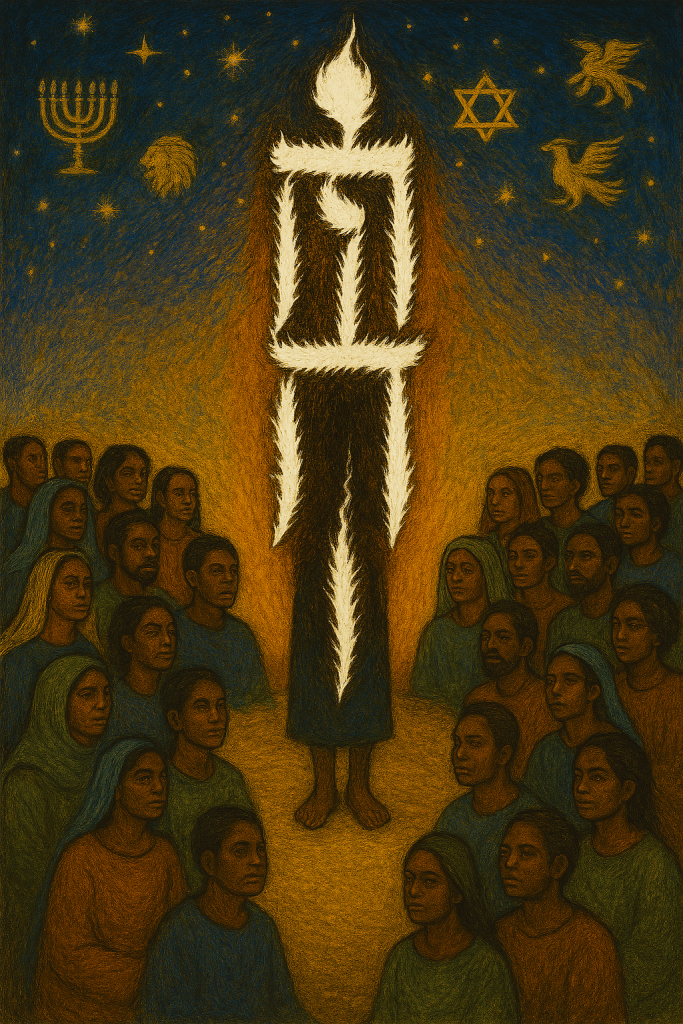
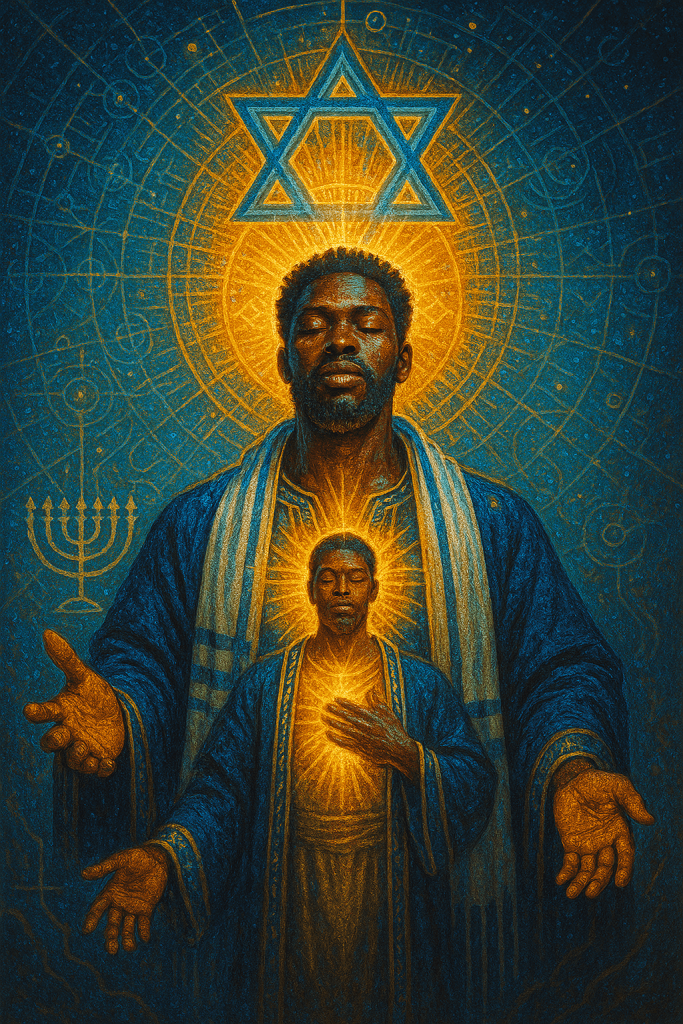
The Mashiyach is the living synthesis of these two. It is not only a single figure but a people—an anointed community—who embody the harmony of image and likeness. Mashiyach is the transfigured state in which the supernal consciousness of tzelem and the covenantal obedience of demut are fused together, producing a humanity that reflects Elohim both in essence and in action. This is why Patai records in The Messiah Texts that the Messiah is both archetype and collective destiny: Israel herself is called to be Mashiyach, the light to the nations, the vessel through which redemption is not just anticipated but manifested.
Taken together, tzelem, demut, and mashiyach form the path of restoration: the image as identity, the likeness as practice, and the Messiah as fulfillment. This is the movement from potential to actuality, from chaos to cosmos, from exile to redemption. To embrace this blueprint is to participate in the transfiguration of creation itself—becoming a living testimony that the kingdom of Elohim is both within us and among us.
It was Yahoshua ben Yoseph bar Miryam that came to bear the image and likeness of Elohim, not by claiming divinity for Himself, but by perfectly embodying Torah; the living Word that was with Elohim from the beginning and through which creation came forth. For it is as such that he came to bear the image (tzelem) which is to reveal the consciousness of Elohim in thought, wisdom, and intention; to bear the likeness (demut) is to translate that consciousness into covenantal action. Yahoshua fulfilled both: He lived in total alignment with the will of the Father, manifesting heavenly compassion, justice, and truth, thereby becoming the perfect reflection of Elohim on earth.
The Zohar affirms that this calling was never meant for one man alone, but for Israel as a people. In Zohar I, 20a, it says:
The image of Elohim is upon Israel, and whoever sees them says: These are truly the children of the King.
Here the sages teach that Israel collectively wears the garment of the heavenly image, that we might walk in the world as a visible reflection of the invisible One.
Further, in Zohar II, 222a, we read:
When Israel fulfills the will of their Master, they are called truly Adam, for they are in the likeness above and below.
This means that when Israel lives in Torah obedience, they become the very expression of humanity as it was intended in B’reshith: a fusion of the supernal and the earthly, embodying heaven’s likeness in the realm of earth.
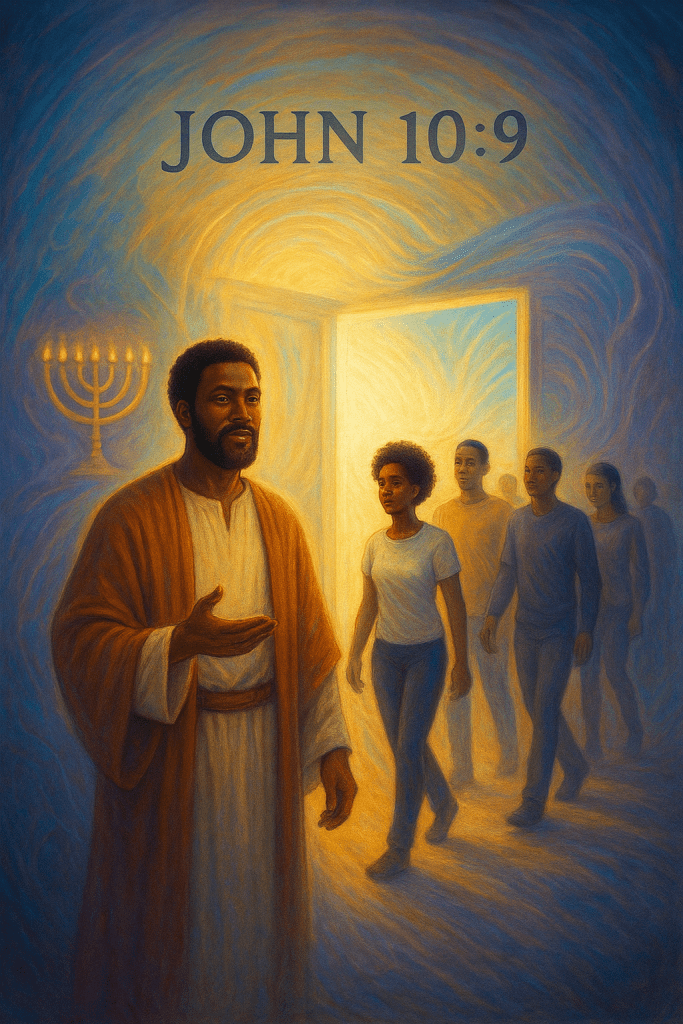
What Yahoshua accomplished was to open the path of return for us, teshuvah on a cosmic scale, so that the gates of the image and likeness might once again be entered. By His obedience, even unto death, He repaired the breach and lifted the veil. Now, through Him, Israel and those grafted into Israel are called to step into that same reflection, to be clothed in the light of Elohim, and to manifest the Messianic reality in every generation.
Thus, Yahoshua is not only the bearer of image and likeness, He is the door by which we also may enter into that identity. The Zohar reminds us that Israel’s destiny is to be “a people clothed in radiance” (Zohar III, 132b), which is nothing less than the radiance of the heavenly image restored. The Messianic movement, then, is not about waiting passively for redemption but about walking actively in the image and likeness of Elohim, revealed in Yahoshua and now implanted within us.
This journey is exactly what the pattern of tzelem, demut, and mashiyach reveals. My return to Torah was not simply about learning laws or adopting rituals, it was about recovering the heavenly image that sin had distorted, reshaping my likeness through covenantal obedience, and stepping into the Messianic calling that Elohim has placed upon His people. In the same way that Israel as a whole is called to embody redemption, my own transfiguration was a personal echo of that collective destiny: the restoration of image, the alignment of likeness, and the awakening of Messianic consciousness within.
My testimony is not just my own; it is a mirror of Israel’s. From chaos to cosmos, from exile to exaltation in covenant, from void to victory in image and likeness. The call of this generation is the same as it was spoken in the wilderness:
Choose life, that you and your seed may live, loving YHWH your Elohim, obeying His voice, and cleaving unto Him
Devarim 30:19–20
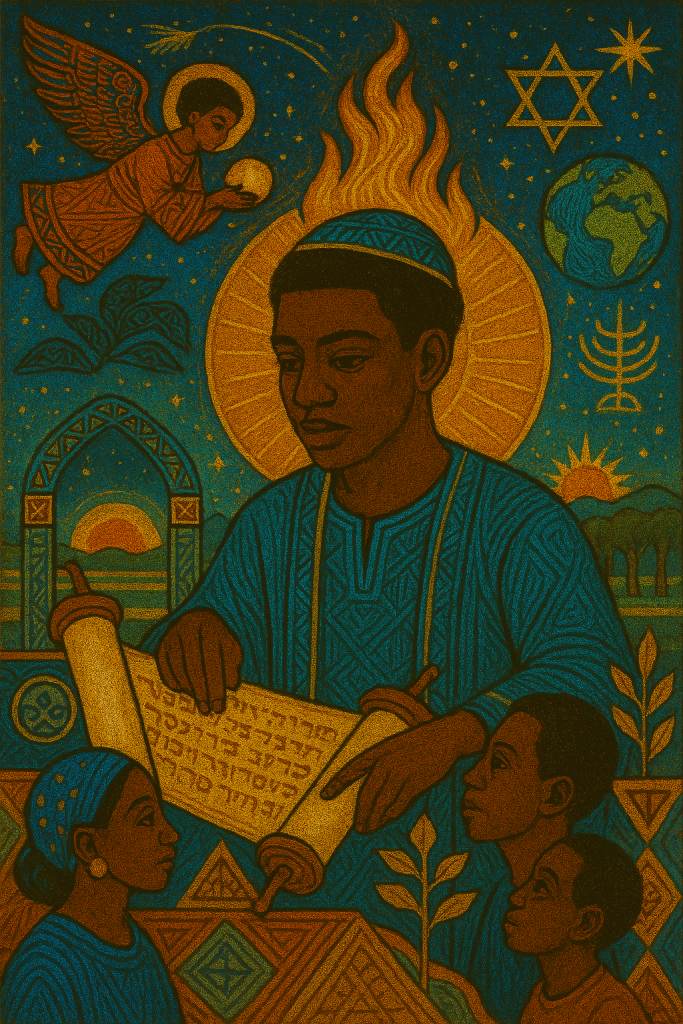
Over the years of my study, experimentation and application, I’ve come to realize that our sages preserved for us a mystery of identity and destiny. In fact, it is the wisdom of our sages, such as the quote cited at the introduction to this chronicle, that reminds us that humanity was fashioned as a fusion of the supernal and the earthly. Unlike the angels, however, we carry the power to procreate; unlike the beasts, so as determined by our nature, we were endowed with the image and likeness of Elohim. This dual nature defines both our esteem and our vulnerability. If we distort the image through sin, we incline toward death. If we preserve and elevate it through Torah, most powerfully, we incline toward life.
This midrash goes right to the core of what it means to be made in the image and likeness of Elohim. With this insight, we are able to comprehend that humanity is not merely of heaven nor merely of earth, we are a fusion of both. Our likeness to the supernal realms is our ability to reflect Elohim’s wisdom, righteousness, and eternity. Our likeness to the earthly realm is our ability to multiply, to build, to cultivate life within creation. Together, these elements form the full scope of our calling.
The distortion of image through sin: through intoxication, promiscuity, rebellion, or disobedience, pulls us down toward death. Yet the restoration of image through Torah and teshuvah lifts us back toward life. In that tension, Mashiyach emerges, not only as a singular redeemer but as the embodied purpose of Israel: a people both of heaven and of earth, called to manifest eternity in time.
Thus, the transfiguration movement is not an abstract idea, it is the lived reality of returning to our true nature. To become Mashiyach is to reconcile the supernal and the earthly within ourselves, to walk in Torah so that image and likeness unite, and to live so that life itself testifies to the covenant.
Ultimately, the transfiguration movement is not about self-help, pop spirituality, or shallow motivation; it’s rather about returning to Torah consciousness, reclaiming the image and likeness of Elohim, and stepping into the mantle of Mashiyach.
So, b’nai Elohim, I urge you, initiate or continue your journey of transfiguration.
Return to the Torah.
Rebuild the shattered legacy.
Embody the image.
Walk in the likeness.
Become Mashiyach, for the world groans and waits not for one man, but for a people:
For the earnest expectation of creation eagerly awaits the revealing of the sons of Elohim. Romans 8:19
So my ahkim and ahkiot, rise.
Press onward, for the kingdom is within you, and the likeness of Elohim is calling you to manifest it.
Repent.
Renew.
Ressurect.
Transfigure.
Selah…
Discover more from SHFTNG PRDGMZ
Subscribe to get the latest posts sent to your email.


1 Comment