
______________________________________________________________________
The Apocrypha and Pseudepigrapha contain a few passages in which the title “son of Elohim” is given to the Messiah (see Enoch, cv. 2; IV Esdras vii. 28-29; xiii. 32, 37, 52; xiv. 9); but the title belongs also to any one whose piety has placed him in a filial relation to God (see Wisdom ii. 13, 16, 18; v. 5, where “the sons of Elohim” are identical with “the saints”; comp. Ecclus. [Sirach] iv. 10). It is through such personal relations that the individual becomes conscious of Elohim’s fatherhood, and gradually in Hellenistic and rabbinical literature “sonship to Elohim” was ascribed first to every Israelite and then to every member of the human race (Abot iii. 15, v. 20; Ber. v. 1; see Abba). The Elohim-childship of man has been especially accentuated in modern Jewish theology, in sharp contradistinction to the Christian Elohim-sonship of Jesus. The application of the term “son of Elohim” to the Messiah rests chiefly on Ps. ii. 7, and the other Messianic passages quoted above.
Son of Elohim – Jewish Encyclopedia
I, I said, “You are elohim, And all of you are sons of the Most High.
Psalm 82.6
______________________________________________________________________
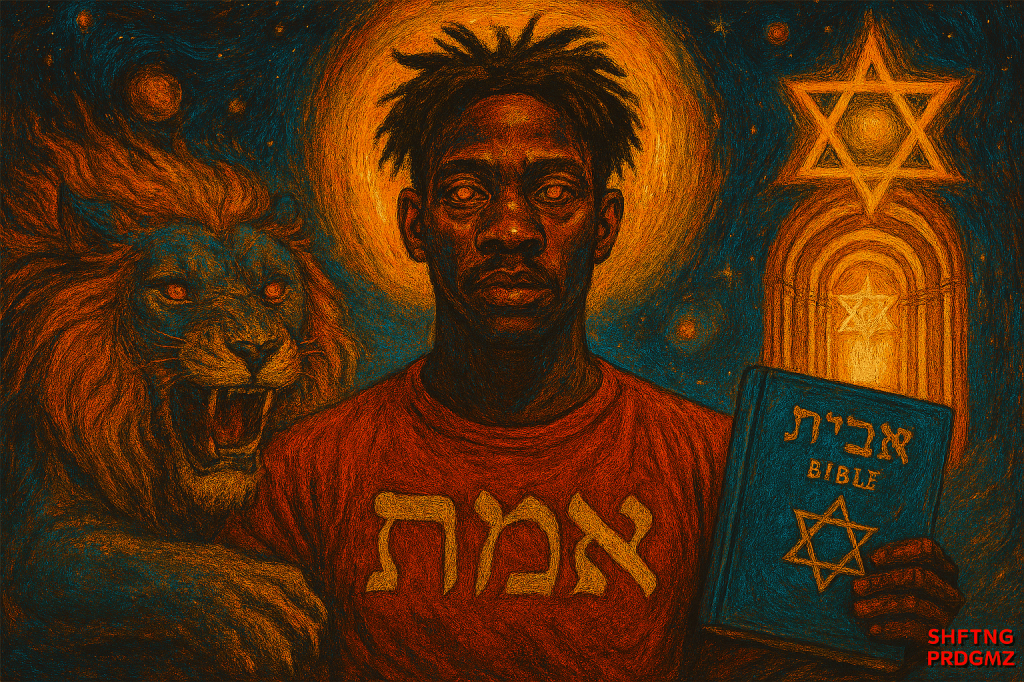
I remember my low season like it was yesterday; I was all flesh, instinct first, appetite leading, the animal within steering my nights of the hunt for flesh and bargaining for my mornings of peace. In college I moved with a predator’s economy: take what feeds me, numb what aches, run from any mirror that asked questions. Then, in my fourth year, something shifted: my mind began to wake. Not a flashy salvation moment so much as an intellectual revolution; Bible study scratched the itch that booze, lust, and quick approval could not. The work of thinking became the discipline that unclipped me from instinct; the life of the mind became a corridor into spirit which my Philosophy classes helped midwife into being. That corridor eventually widened into a path, and what began as surviving became formation, formation became restoration, and restoration began to look like becoming a son of Elohim.
That arc, animal → human → Elohim is not merely parabolic, it’s the developmental map that I set out in The Pattern of Adam Revealed, where I distinguish the prototype Adam of Genesis 1 from the actual Adam of Genesis 2: one is the conceptual pattern, like the Tabernacle shown to Moshe before his construction of it (Genesis 1); the other is the actual lived, embodied human being (Genesis 2). Personally, my story, like all of ours, is the proof text and promise of both: the archetype is present in our origin, and the work of transformation is practical, moral, communal and continual.
We see this captured in principle in 1st Corinthians 15, where Rav Shaul names the movement with cultural clarity: the first Adam was “a living being,” the last Adam, or the second Adam, is a life-giving spirit. In other words, the prototype is heavenly form; the fulfillment is the ascendancy from fleshly to spiritual vivification. The second Adam, the one who inaugurates the possibility of our transfiguration, is the hinge that allows earthly mortality to be re-fashioned into heavenly likeness as He has returned to the bear the image and likeness of Elohim.
That hinge is not just mere doctrine, it’s the doorway Yeshua opened, and obedience is what repairs the breach, love is what lifts the veil, providing us an entrance into the pattern by which the image and likeness of Elohim can be re-entered. What Yeshua did was not merely model the ideal, he catalyzed our capacity to become that ideal; a restoration of the image in us and the activation of likeness through covenantal life.
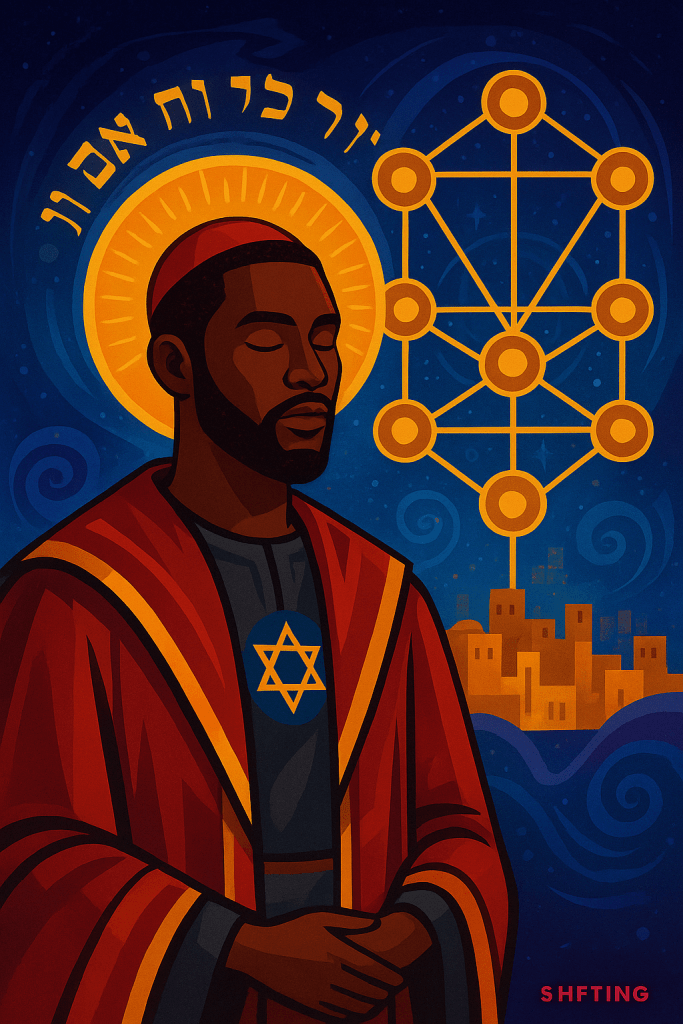
Our Sacred Science and Oral Tradition give us the metaphysical framework for this transformation. As was addressed in my last article, Image+Likenesss=Mashiyach, the sages teach that human nature was composed from both the supernal and the earthly, a deliberate fusion so that humanity could mediate heaven and earth. If humans were made only of the supernal, they would be immortal without multiplication; if only of the earthly, they would procreate but remain finite. So the Eternal wove both into our fabric: a capacity for eternity and a footing in time. The moral law is the tether; sin severs and shortens; fidelity restores and lengthens life. The choice is solely ours to make.
For clarity, our sacred science sharpens the same point, informing us that Adam’s soul was fashioned to reflect the spiritual worlds; to be a miniature of the supernal order so that Israel (and through Israel those who grafted in) could walk as a visible mirror of the Invisible. An article from Chabad entitled Rooted in the Supernal Image insists this was the original design: man included “all the worlds,” and after injury humanity can, through spiritual repair and return to the covenant, reclaim that reflecting role. The implication is radical: transformation is not merely personal rehab, it is cosmic re-participation.
As the unfolding of prophecy would have it, Yeshua’s life enacted both dimensions of the Adamic pattern. He embodied the Eternal mind, wisdom that did not collapse into mere theory, and He enacted the covenantal behaviors that translated that mind into world-changing practice. By living in total alignment with the Father’s will and by overcoming death, he demonstrated what it looks like for the heavenly pattern to be made manifest in history.
His example is what personified and inspired Rav Shaul’s point in 1 Corinthians 15 which is cosmological and communal: just as we bore the image of the earthly man, so shall we bear the image of the heavenly man. Yeshua’s resurrection catalyzed the primary mechanism: those who are transformed will wear the heavenly model. That does not mean a simple identity swap, it means a complete metamorphosis, the same person altered into a different ontological register.

The oral tradition says the same thing using a different idiom: return (teshuvah), covenant fidelity, and Torah-centered becoming are the disciplines by which the supernal and the earthly re-unite in a person or people. Here again, however, Yeshua opened the door, and now it’s our work to walk through it by joining our will to the Eternal will, thereby repairing what was broken in the soul’s primordial structure due to sin, and by living in the communal rhythms of covenant life. Yet for this work to have clarity and focus, we must know exactly what it is we are moving toward. Without naming our pursuit, our efforts scatter like seed on stony ground.
This is why I chose the methodology of breaking down each word, letter by letter. In Hebrew, a word is more than sound, it’s architecture. Each letter carries energy, intention, and symbolic resonance. To truly name what we pursue, we have to uncover the DNA embedded in the letters themselves, because they hold the inner map of what we are becoming. For the sake of this article, let’s now consider the words, son, children, Adam and Elohim:
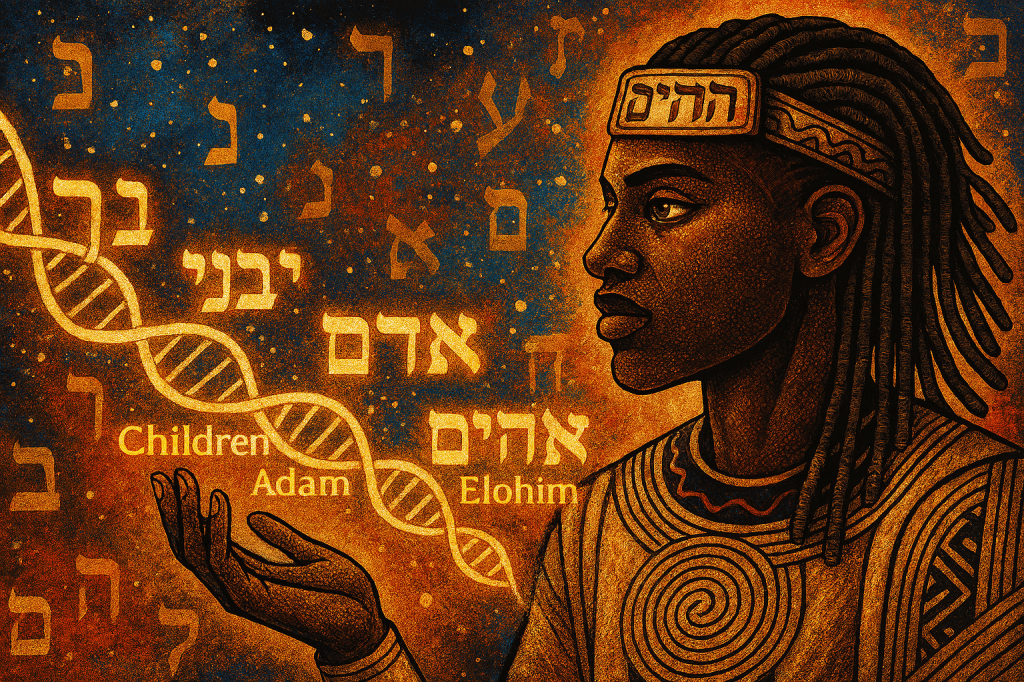
- Ben (בן) — son. Spelled bet, nun. Bet (ב) is “house/household”; Nun (ן) signifies dwelling, covenantal belonging, and generational continuity. To be a son is first to have a place within a house, a lineage, and a story. It marks identity not as an isolated individual but as one whose life unfolds within the structure of family and peoplehood.
The second letter is nun (ן), often associated with life, growth, and perpetuity. Nun is the seed that carries potential forward, the unfolding of vitality from one generation into the next. It bends downward in its final form, symbolizing humility and rootedness—reminding us that true sonship is not about status but about serving as the living extension of what came before.
Together, ben (בֵּן) means more than “son” in the biological sense. It describes one who dwells in the house (bet) and carries life forward (nun). It is identity and vocation in one word: to be a son is to embody continuity, to expand the covenant through obedience, and to carry the image of the father into the world. This is why in Hebraic consciousness, to be called ben Elohim is not merely to be labeled as divine offspring—it is to be charged with dwelling in the house of Elohim and manifesting His life, His light, and His likeness into creation. - B’nai (בני) — children/sons of. Spelled bet, nun, yod. The word b’nai (בני) begins with the letter Bet (ב), the house. Bet is the container, the dwelling place, the generational structure in which life is formed and transmitted. It symbolizes continuity and covenant, for children extend the household into the future. To be b’nai is to be rooted in a house not made with hands but established by the word of Elohim.
The next letter is Nun (נ), the sprout, the seed that falls into the ground and rises anew. Nun speaks of life emerging from death, of continuity through descent, and of the humility required for growth. Children embody this mystery: they are the living sprouts of the house, bearing both the legacy and the promise of renewal. Nun also whispers of faithfulness, for its form suggests a righteous one who bends low yet rises again.
The final letter is Yod (י), the smallest letter yet the spark of infinite possibility. Yod is the hand of Elohim, the point of divine energy that begins every form. In b’nai, Yod seals the word with transcendence—it reminds us that children are not only flesh of our flesh but sparks of the Eternal planted in time. The presence of Yod ensures that the destiny of the house is never merely biological but always spiritual, touched by the divine hand.
Together, בני (b’nai) reveals that children are the house (bet) extended through the sprouting seed (nun) and sealed with the divine spark (yod). To be b’nai Elohim is therefore to be a dwelling place for divine life, to rise as sprouts of righteousness, and to bear within ourselves the spark of the Eternal. It is both identity and mission: to live as sons and daughters who manifest the house of Elohim in the world. - Adam (אָדָם) — The first letter, Aleph (א), is the silent ox-head, the primal breath, the unity of the Divine. It represents Elohim as the Source, the One who is beyond form yet present in all form. Aleph is the beginning, the unseen force that animates life, the infinite compressed into a single point. In Adam, Aleph reminds us that humanity begins not in the dust, but in the divine breath breathed into that dust.
The second letter, Dalet (ד), is the door. It symbolizes humility, poverty of spirit, the posture of one who stands open to receive. Dalet is also the threshold—between higher and lower, between heaven and earth, between potential and manifestation. Within Adam, Dalet signifies that humanity is always standing at a doorway: we may open toward the supernal or remain locked in the earthly. The choice to walk through determines our destiny.
The third letter, Mem (ם), is water, the womb, the flow of life and death. Mem carries the secrets of transformation, for water both nurtures and dissolves, cleanses and overwhelms. As the final letter in Adam, Mem grounds us in mortality and materiality—the earth we till, the blood in our veins, the return to dust. Yet it also points to rebirth, to immersion in living waters, to the potential of becoming more than clay when joined with Spirit.
Together, Aleph-Dalet-Mem weave the mystery of humanity: a being that holds within itself the breath of Elohim, the doorway of choice, and the waters of transformation. Adam is not only the name of the first man; it is the code for every human life. We are always called to reconcile Aleph and Mem—the Divine and the dust—through Dalet, the door of covenantal faithfulness. In this way, Adam is both prototype and process: the eternal question of what we will become. - Elohim (אֱלֹהִים) —The word Elohim begins with Aleph (א), the silent letter that holds the sound of all potential. Aleph is the unity of opposites—heaven and earth, spirit and matter, hidden and revealed. It reminds us that the Source of all life is beyond articulation, yet simultaneously the very breath that animates speech. In Elohim, Aleph anchors us in the ineffable Oneness from which multiplicity flows.
The second letter, Lamed (ל), rises like a tower above the line, symbolizing aspiration, learning, and instruction (limmud). It represents the eternal call of Torah—the upward drive of humanity to connect with the Divine. In Elohim, Lamed reminds us that divinity is not only transcendent but also instructive: the One who teaches, guides, and draws creation toward higher order.
Next is Heh (ה), the letter of revelation, breath, and the window that opens us to vision. Heh signals that Elohim is not a hidden abstraction but a self-revealing Presence who makes Himself known in creation, covenant, and prophecy. It is the breath of life breathed into Adam, and the covenantal breath that sustains Israel.
The fourth letter, Yod (י), is the smallest letter yet the seed of all others, symbolizing humility, essence, and divine spark. In Elohim, Yod is the point of infinity planted within the finite, the reminder that even the vast cosmos emerges from a singular, concentrated spark of divine will. It is also the sign of intimacy, for Yod appears in the divine Name and is the mark of covenant.
Finally, Mem (ם) closes the Name, the letter of water, womb, and mystery. Mem represents both the revealed (mem open) and the concealed (mem closed), showing that Elohim is the One who both discloses and withholds. It is the flow of life through creation and the hidden depths that sustain existence. Mem in final form at the end of Elohim suggests the eternal, unbroken nature of divine sovereignty.
Taken together, Elohim is the Name that holds the paradox of unity and multiplicity: Aleph, the Oneness; Lamed, the instruction; Heh, the revelation; Yod, the seed of essence; and Mem, the sustaining waters of mystery. It is the blueprint of creation itself, the Name that speaks of the Divine as both transcendent and immanent, infinite yet intimately woven into the fabric of life.
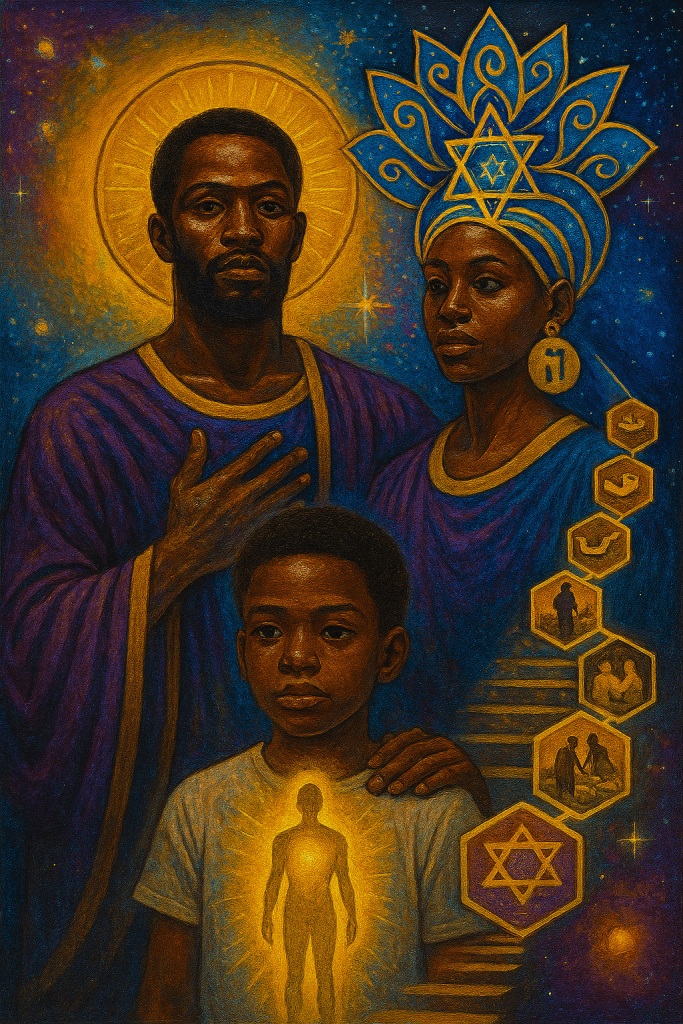
When you read these together, the program is clear: the son (ben), the children (b’nai), and the human (adam) are meant to be formed into the likeness of Elohim, a collective transformation from a natural state into a heavenly vocation.
This is not an abstraction but an actual labor of work. The following steps laid out below are distilled from Torah discipline, spiritual, emotional, intellectual, and physical repair, in my life, and in relation to the Torah based counsel I’ve offered others. The objective is what I identified in an article I wrote from 2017 entitled From Sheep to Bride: The Journey of Zion. Ultimately, as the title of this article suggests, the principle is for moving from the ordinary Adamic condition toward the reality of b’nai Elohim, or as Romans 10.4 tells that the goal is Messiah unto righteous for all who believe. The steps to achieve this, from what I’ve been are as follows:
- Repentance and Return, Teshuvah, is to reame and redirect
We must first admit the distortion and understand that repentance isn’t performative guilt; it’s reorientation. Again, referencing From Sheep to Bride, we must know that the journey “is to go from the humble and lowly lamb to that of the bride.” This evolution, if you will, describes a movement from instinct to covenantal belonging, from natural to supernatural, from animal to Elohim. We begin by naming patterns, confessing honestly, and turning our daily compass toward Torah. - Discipline the Mind to renew the Inner Sanctuary
The shift in my life began with my initiation of reading, critical thinking, and refusing simple answers. This is because renewing the mind creates a new operating system. Think back to Wide Fidelity Reception and how our receivers must be in tune with the frequency in order to transmit the Word of Life. It is through engaged disciplined study of Torah, commentaries, and other critical texts, along with intentional, self-willed practice of the principles which are what truly stands in refutation against false narratives. So let us read with intention so that study forms our will. - Practice Obedience by producing the likeness as work. As we have written about in Image+ Likeness=Mashiyach, our similitude or likeness, in Hebrew demut, is made by habit. Ritual, mitzvot, discipline in speech, chastity, charity, Sabbath practice, and moral restraint are the living stones by which the inner image of the Temple takes a public shape. The oral tradition insists that when Israel fulfills the will of the Master, we are called “truly Adam,” as obedience remakes our identity.
- Repair the Psyche with emotional Integration
Lust, shame, addiction carve hollows in the soul. Healing requires therapy, confession, accountability, and the daily practice of small loyalties. In From Sheep to Bride I described “overcoming emotions and desires by humble submission to the will of the Most High Elohim.” That submission is a discipline that heals the nervous system and retrains desire. - Join a Covenant Community because we are the Body of Messiah
The second Adam is a communal reality: Rav Shaul writes to us saying that “just as we have borne the image of the earthly man, so shall we bear the image of the heavenly man.” Transformation and transfiguration are corporate works. To bring this manifest reality about, it is undeniably essential to join a serious community with a study house, a congregation that prays together, a covenant circle that upholds accountability which will require you to embody what you profess. We are told in the letter to the Hebrews that we are to be concerned for one another in order to stir up love and good works, not forsaking the assembling of ourselves together, as is the habit of some, but encouraging, and so much more as you see the Day coming near. - Serve & Bear Witness and use our testimony as a thermostat
The outward life verifies the inward state. Serve the vulnerable, teach what we’re learning, and let our lives re-teach our virtue. Our public obedience is what polishes our private identity, and our words are weighed as wise when we walk according to what we say. - Practices concentrated contemplation to receive the supernal
Prayer, meditative Torah, reading the Psalms, and deeper contemplations are means of receiving the supernal influx of Light. We are remade from above as we practice heavenly-aligned disciplines below. - Persevere in the work of the continual arc of teshuvah
Like I mentioned in chronicle #41, the sages teach that we as human were made of both realms so that we choose matters. This is why Moshe exhorted Israel in Deuteronomy 30 to choose life. He knew that if we sin we die; but if we don’t, we live. Knowing this, our transformation is a lifetime enterprise as the pattern is repeated across generations. So when we keep the long game in mind, along with know that in Messiah there is no sin, we are able to both crossover as Hebrews and overcome ourselves and men with Elohim as Israelites.
I am convinced that hese steps of transformation aren’t just abstract stages, because taken from my experiences, they’re lived ethics. On my journey, I’ve found that to move from Adam to Elohim requires not only inward realizations but applications and outward practice, or like I’ve mentioned before, orthopraxy. See, practical ethics are the daily choices we make, the disciplining of our appetites, the refining of our speech, the ordering of relationships, and aligning our behavior with covenantal truth. Resurrection ethics, on the other hand, pertain the long vision of Eternity, the way we live as if the age to come is already breaking in, as if death has already been swallowed up, as if the Spirt of Elohim is fully dwelling within our bodies, right here, right now. When these two ethics, practical and resurrection ethics, in Spirit and Truth, flow together, we become rooted both grounded in the present, and uplifted toward eternity.
And this is why every step we take matters: our discipline awakens discernment, our discernment cultivates obedience, our obedience births faithfulness, and our faithfulness becomes the vessel of honor. This pattern, prophetically speaking, is nothing new; it’s the same blueprint that Abraham was shown by Melkitzedek and when Yeshua revealed to Nicodemus in the 3rd chapter of the witness of Yohanan,
Amen, amen, I tell you, unless one is born from above, he cannot see the kingdom of Elohim.”
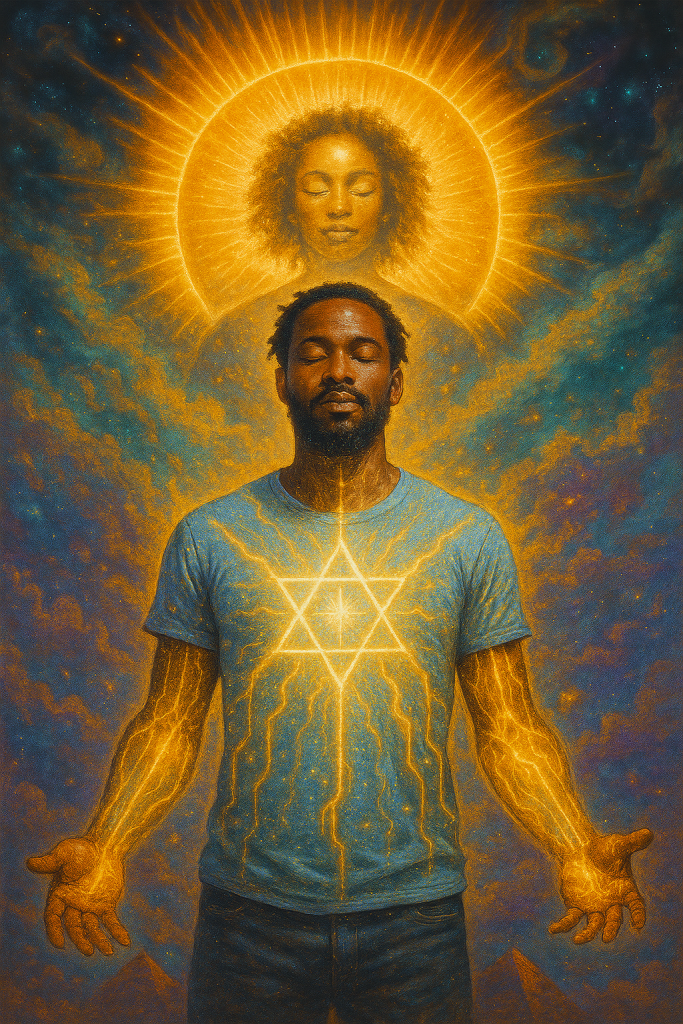
In this light, the steps aren’t just about moral development, but about being born again into the image and likeness of Elohim, walking in both practical integrity and resurrection hope.
And as I bring this chronicle to a close, it only makes sense for me to refer to Paul’s closing line in 1 Corinthians 15 where he gives a promise and a program: that whatever we are in dust, we will be in esteem. With this in mind, it behooves us to bear in mind that the transfiguration goal is not to escape embodiment, but to redeem it; our goal is to have our flesh brilliantly redesigned into the sublime design so that in space and time we can carry the Heavenly image of Elohim. Yes, Yeshua’s life and resurrection demonstrate that our bodies are the houses of esteem; so it is our task to become vessels fit to allow heaven’s radiance to emit from within.
This, my beloved reader, is the work of saints and activists, mystics and city-walkers, priests and prophets. The move from b’nai Adam to b’nai Elohim requires our courage, study, accountability, and community. It requires the same humble willingness that I came to in my college years when I chose the life of the mind over the life of appetite. And truthfully, this goes even further: it trains the heart, the hands, and the house for holiness to enter and preside.
And if you’ve been with me throughout this journey, then you already know the drill: name the distortion, walk the discipline, join the people, and press into the lifegiving door that Yeshua opened. The sages remind us that the fusion of the supernal and the earthly was intentional; our vocation, our work, is to study it, comprehend it and live it out. Let the pattern be our map and the Torah our atlas. Let our lives be the testimony that the second Adam is not an isolated figure but a collective destiny.
So my powerful bredren and sistren, rise, return and repair.
Creation itself awaits the children of Elohim who will wear the Light of Life with responsibility and accountability.
So let us continue to become, as we press onward and manifest our individual and collective transfiguration as it is written in 1 Yohanan 3.1-2,
See what love the Father has given us, that we should be called children of Elohim! For this reason the world does not know us, because it did not know Him. Beloved ones, now we are children of Elohim. And it has not yet been revealed what we shall be, but we know that when He is revealed, we shall be like Him, for we shall see Him as He is.
Selah…
Discover more from SHFTNG PRDGMZ
Subscribe to get the latest posts sent to your email.

