
_________________________________________________________________________________________
From here Rabbi Pineḥas ben Ya’ir would say: Torah study leads to care in the performance of mitzvot. Care in the performance of mitzvot leads to diligence in their observance. Diligence leads to cleanliness of the soul. Cleanliness of the soul leads to abstention from all evil. Abstention from evil leads to purity and the elimination of all base desires. Purity leads to piety. Piety leads to humility. Humility leads to fear of sin. Fear of sin leads to holiness. Holiness leads to the Holy Spirit. The Holy Spirit leads to the resurrection of the dead. And piety is greater than all of them, as it is stated: “Then You did speak in a vision to Your pious ones” (Psalms 89:20).
Avodah Zarah 20b.11
Pursue peace with all, and pursue holiness (qedushah) without which no one shall see the Master.
Hebrews 12.14
_________________________________________________________________________________________

I remember in 2021 walking into my house with my firstborn son, returning from grabbing some Chipotle after Shabbat. We settled into the living room to watch Naruto, still vibing in the Sabbath air of the day. Just moments earlier, while walking in the house, we spoken with our neighbor, a 14‑year‑old boy who had just recently come back from juvie. The crazy thing was that he was a typical urban youth in many ways, but the weight of his choices and the pull of the streets made him turn into a YN. So not too long after we got settled in and started watch Naruto, the peace we enjoyed for the day was shattered with five gunshots that disrupted the twilight. Looking at each other stuck, we heard the screech of tires pealing to get away, followed by a brief, but heavy silence which was broken by an even heavier piercing, uncontrollable cry of a mother pleading in vain for her son to rise and come back to her on this particular dark and fateful conclusion of a Sabbath day.
I wish that I could say that this story was made up, but unfortunately, it really happened, and it was something that didn’t sit right with me for months. What’s even more unfortunate is that for many communities, this reality seemingly never stops pressing down on our lives. Simply stated, this is the result of our loss of reverence for life itself, as well as the lack of value of a human soul, which we once understood as sacred. But this image of ourselves is one that has been beaten out of us and left us desensitized. And now that we have this view of ourselves, it’s become increasingly apparent that we’ve diminished our very existence to currency and created a vicious cycle of pride, violence, trauma, and despair. Most unortunately for us, we’ve come to value material and use people, instead of the other way around.
In light of our condition, I’m thoroughly convinced that the absence of holiness in our hearts and minds has left a gaping void where once covenant with the Most High and conscientiousness of our thoughts and ways dwelled and recreated our entire reality for blessing and good (Deuteronomy 28.1-14). Without our recognition of holiness, however, there is no reflection of the image of Elohim in one another, nor is there a representation of the eternal likeness on Earth, resulting in no chance for us to anchor ourselves against the flood of destruction by which we are being barraged. Resultingly, our people stumble in the dark, searching for identity while forgetting that holiness is the very breath that gives us value, purpose and direction.
And so here is where we find ourselves in the state of our urban culture and heritage in the diaspora; one where moral de-evolution and ethical erosion have eaten away at our social fabric. We find ourselves at a ledge where commitment is out of fashion, and sacredness appears as an outdated, forgotten lifestyle. And we wonder why these generational curses are so stacked up on us and it appears as if there is no reprieve or amelioration for our most dismal condition.
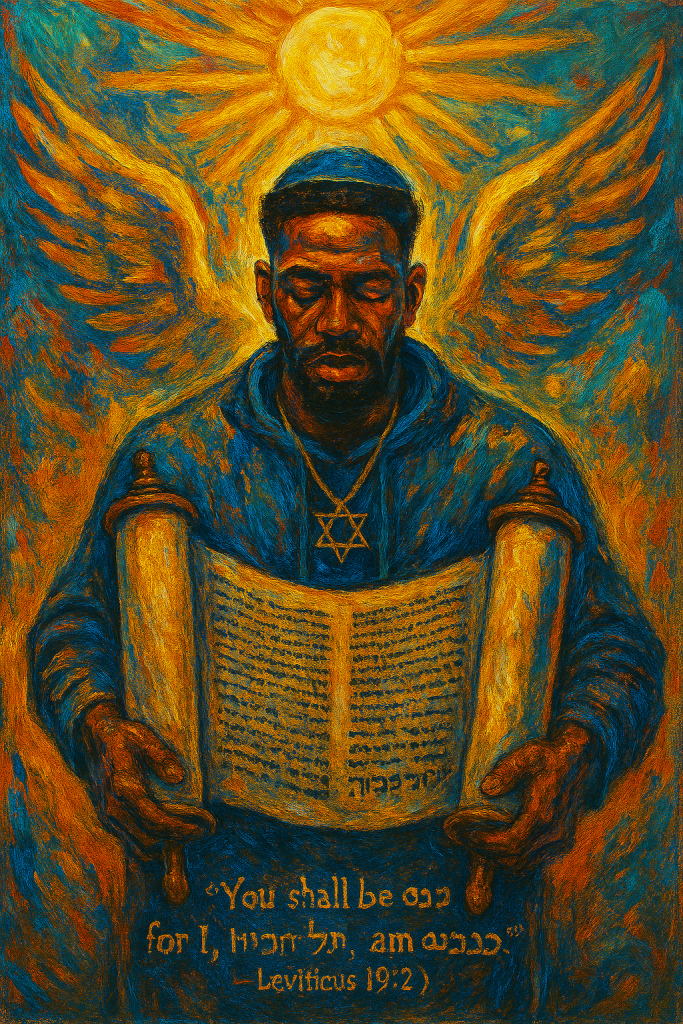
But we all know that it doesn’t have to be this way; this brokenness, this unholiness is not our beginning nor our final destination. The truth is, for us, and any who takes it to heart, that the wisdom of Torah has always cut through the noise, whether it be exile, empire, enslavement or even the endless pull of assimilation. Something else that I’m also thoroughly convinced about is that holiness, or kedushah, is, unequivocally, the answer to ALL of our dilemmas. This is because kedushah, a byproduct of Torah observance, isn’t just an abstract idea but a lived reality; it isn’t some magical sprinkle of pixie dust dropped on our souls because we said the right name or believed in “somebody” else’s work. No, extremely to the contrary, holiness is a discipline, a lifestyle, a cultivated way of being, an expression of our faith, our exercise of faithfulness, the result of our spiritual training and conditioning that we enter into and accordingly live. Holiness is the day-by-day invitation of the Shekinah Presence of HaShem into our every movement, every word, every thought, every emotion, every impulse. For us, to walk in holiness is to structure our lives by the mitzvot of Elohim, the commandments that anchor heaven’s order into earth’s chaos. It is in this light that the Torah reveals: “you shall be qadosh, for I, HaShem your Elohim, am qadosh” (Leviticus 19:2). And the thing about qedushah, or holiness, is, it’s not a suggestion, it’s an identity. The command for our holiness doesn’t rest on emotional highs or mystical sentiment, it’s about everyday action, intention and alignment.
Over the years, I’ve come to the innerstanding that to be qadosh isn’t a magical act, but what it does mean is to live distinctly set-apart. Qedushah isn’t just a personal sentiment or glow; it’s, rather, a communal code. It’s about integrity in business, compassion in judgment, restraint in appetite, reverence in worship and restraint in privacy. The holiness code of Leviticus 18–19, read in Parashat Kedoshim, lays what holiness is out with precision: don’t exploit, don’t steal, don’t curse the deaf, don’t place stumbling blocks before the blind. Instead, leave the corners of your field for the poor, honor your elders, love your neighbor as yourself. Holiness is social justice, covenantal ethics, and spiritual fidelity all braided together.
What I’ve also come to know, accept and embrace is that the mitzvot are not shackles; instead, they’re wings. The Oral Tradition, in the Siddur with its daily rhythm of prayer, the Mishnah in its practical halakhot (bindings and loosenings of rabbinic rulings guiding us as we “walk” out the Torah), remind us that it’s the commandments that sanctify us, as the blessing from the Siddur inform us: baruch atah Hashem Eloheinu, Melekh ha’olam, asher kid’shanu b’mitzvotav/blessed are You, HaShem our Elohim, King of the Universe, who sanctifies us with Your commandments.” Every mitzvah is an invitation to embody our Father and King’s will. Mashiyach Yeshua ben Yoseph affirmed this reality when He said, “If you love Me, keep My commandments” (John 14:15); this is because love, in its truest expression, is not sentimental, it’s loyal obedience.
Relative to obedience is the dynamic of the covenant which we are to uphold as the Bride of Israel. In this capacity, sanctification is thought of as a betrothal and engagement between Israel and HaShem. According to the Sefat Emet, this idea is explained in the following way on page 337 in the book. As relating to the festival of Sukkot, of which today is the fourth day of the eight day long feast, the following insight is shared:
The sukkah is like a huppah, concluding the marriage of man and wife. ‘For I caused Israel to dwell in sukkot when I took them out of the Land of Egypt’ (Let. 23.43). At the Exodus from Egypt Israel were sanctified (wedded) to Elohim, as it says, ‘I am HaShem who sanctifies (or weds) you, who brought you forth from the Land of Egypt to be your Elohim’ (Lev. 22.32-33).
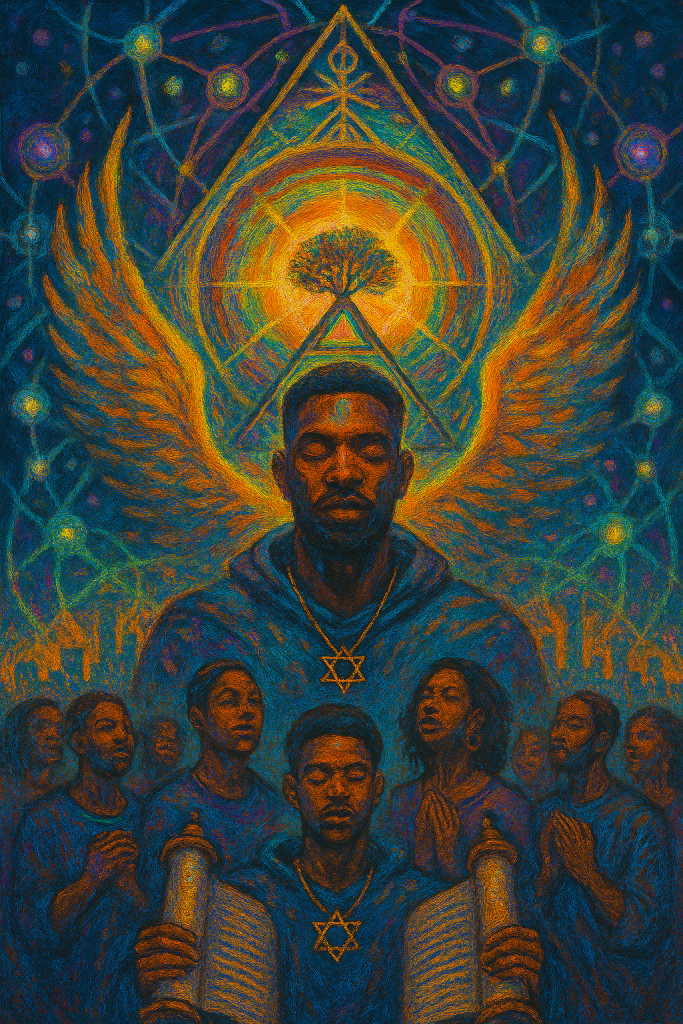
In further consideration of the principle of sanctification as being wedded, holiness is a matter that’s never solitary, but communal. As such, the Hebrew vision of holiness is the collective catalyst for the construction of covenantal consciousness. To capture this dynamic, Israel as a nation is called goy kadosh, a holy people, set apart not by genetics but by obedience and faithfulness to Torah. Individually, we are all called to guard our hearts, minds, and bodies in fidelity to Elohim. Collectively, we are charged to build a society where the Shekinah of Elohim rests so that justice and mercy are able to embrace in Spirit and Truth.
The Shema declares the great principle: “You shall love HaShem your Elohim with all your heart, all your soul, and all your strength” (Deut. 6:5). Leviticus 19:18 completes it: “Love your neighbor as yourself.” Yeshua Himself tied these together as one, revealing how all the Torah and prophets hang on these two. But the glue to it all is obedience, and what initiates obedience is love which is proven in covenantal faithfulness. Holiness without mitzvah is a shell; mitzvah without love is mechanical. Together, they form the wholeness of holiness.
To dive deeper into the principle of holiness, let’s now consider the inner meaning of these Hebrew words as revealed with each letter. As I’ve already revealed Hebrew word qadosh (קָדוֹשׁ) means holy, set apart. As we examine this word, we find that qadosh is composed of the letter qof, dalet, vav and shin unveils the following:
- ק (Qof): horizon, cycles, the hidden dimension—holiness begins in the unseen.
- ד (Dalet): door, humility, entryway—holiness requires opening to HaShem.
- ו (Vav): connection, hook—holiness binds heaven and earth.
- ש (Shin): flame, divine fire—holiness is consuming, purifying.
From this we find that qadosh means: the hidden dimension revealed through humble entry, binding heaven to earth with the consuming flame of the Eternal One.
And as relates to mitzvah (מִצְוָה) which means commandment, and also connection. Composed of the letters mem, tzadi, vav and hei, we find the following:
- מ (Mem): water, flow—life from Torah.
- צ (Tzadi): righteousness—alignment with justice.
- ו (Vav): connection.
- ה (Hei): revelation, divine breath.
Mitzvah thus means: the flowing life of righteousness that connects us to the breath of HaShem.
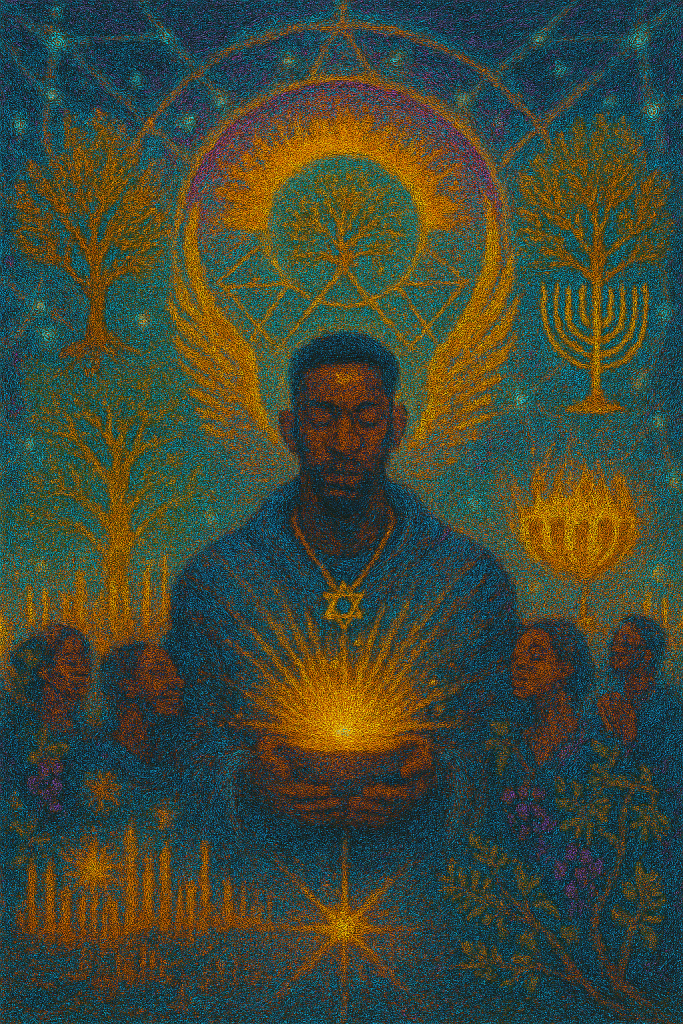
In this light we see that holiness is imperative because it is a portal to our destiny. Without holiness, we dissolve into the noise of nations. With holiness, we become vessels of Presence, conduits of redemption. The writer of Hebrews, which is quoted at the beginning of the article, makes it plain: Pursue peace with all, and pursue holiness (qedushah) without which no one shall see the Master. Yeshua affirmed the same in calling His disciples to be light, salt, and branches that bear fruit.
For us to return to holiness, we must embrace our call as a Priesthood and seek to set apart Guard your speech. Honor Shabbat. Give tzedakah. Keep your word. Love your neighbor with tangible deeds. Pray daily with intention. Study Torah not as literature but as living covenant. And above all, invite the Shekinah into your home, your work, your streets.
I call you, sons and daughters of light, seekers of truth, to rise into holiness, not as borrowed culture but as embodied covenant. Let us as individuals walk qadosh, so that collectively we become a dwelling place for Shekinah. Let our obedience manifest as justice, compassion, and reverence, so that the Kingdom of Heaven is no longer abstract but visible, tangible, irresistible. For the King of Kings will return to a holy people, and His glory will rest on a holy nation.
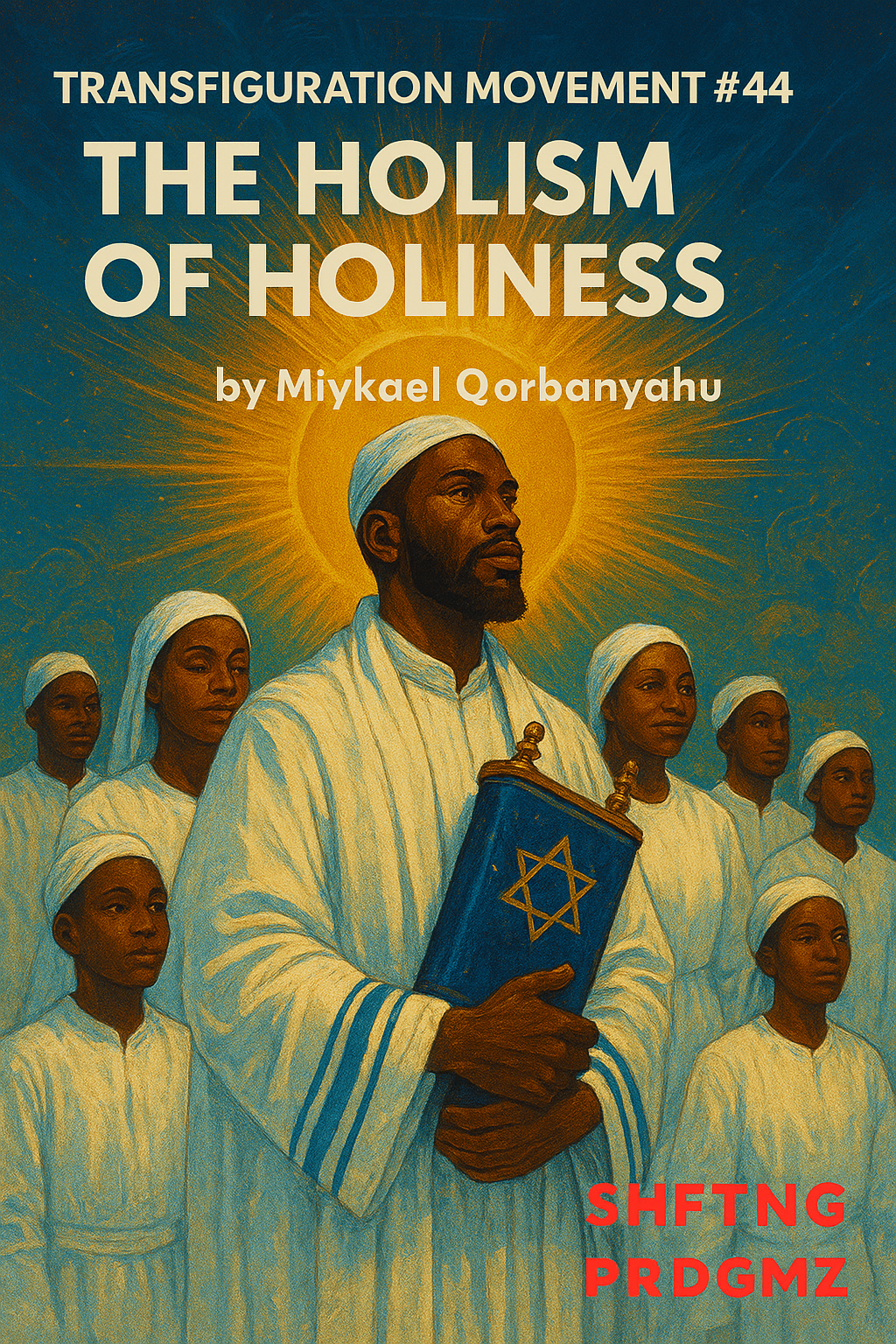
Be holy, for I am holy. And let this be the mark of our generation—Transfiguration #44—the holism of holiness, a consciousness so whole that heaven and earth embrace in the oneness of Elohim.
For holiness is not a costume we wear, nor a performance we perfect, it is the unveiling of what was hidden within us from the beginning. To be holy is to be whole, to be integrated in heart, mind, and deed; to be restored to our original image, when Adam walked in harmony with Elohim and creation sang in tune with its Maker. The holism of holiness is not merely moral purity, but the alignment of Heaven and Earth, Elohim and Humanity, the inner and outer world reflecting one light, one law, one love, one life.
When this happens, then our holiness will heal what history has attempted to divide; it must reconcile male and female, Israel and the nations, heaven and earth. It must move from Temples to pavement, from liturgy to life. To be holy is to live fully awake, to perceive the Eternal in every face, in every breath, in every act of mercy and justice. It is to take the sacred seriously enough to sanctify the ordinary.
So let our hearts become altars, our lives become offerings, our words become blessings. Let our work be our worship and our rest be revelation. Let us not seek holiness as escape, but as embodiment, as the return of the Kingdom within and among us.
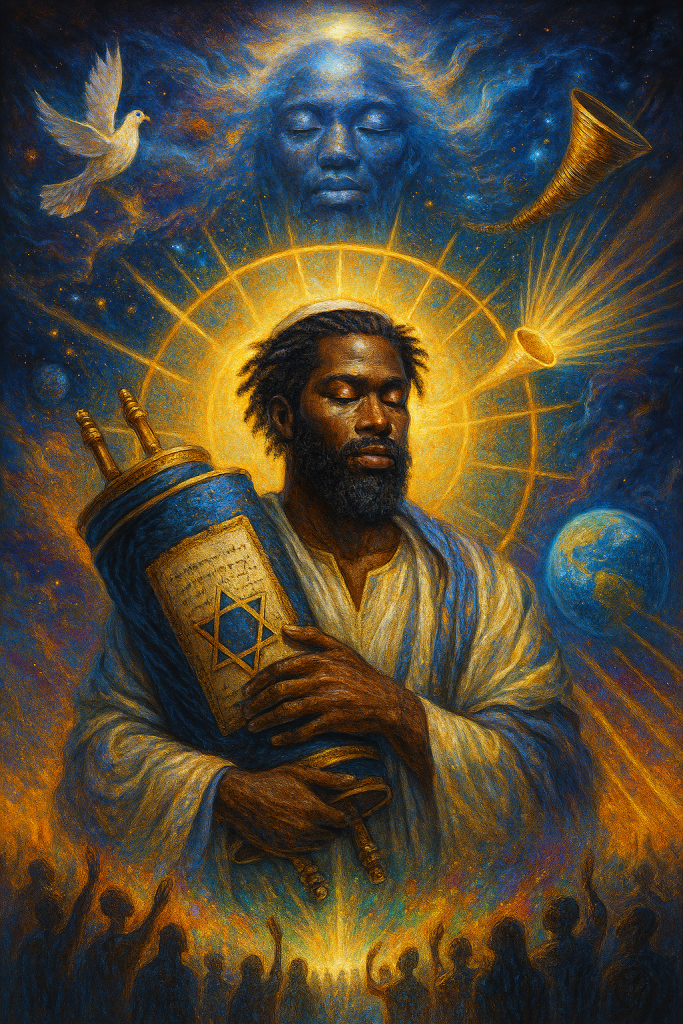
For as it was in the beginning, the Spirit still hovers over the deep, waiting for a people who will respond to the call of light again. The call has gone forth, the trumpet has sounded: Kedoshim tihyu: be holy, not halfheartedly, not with fragmentation, but fully and wholeheartedly, radiantly in the Spirit of Oneness. This is the holism of holiness: when the sacred circulates through every cell, and creation itself is redeemed through our restoration. Then the Name of HaShem will be one, His esteem will fill all the earth, every knee will bow and every tongue confess that HaShem is King and humanity will be transfigured.
Selah.
Discover more from SHFTNG PRDGMZ
Subscribe to get the latest posts sent to your email.

