
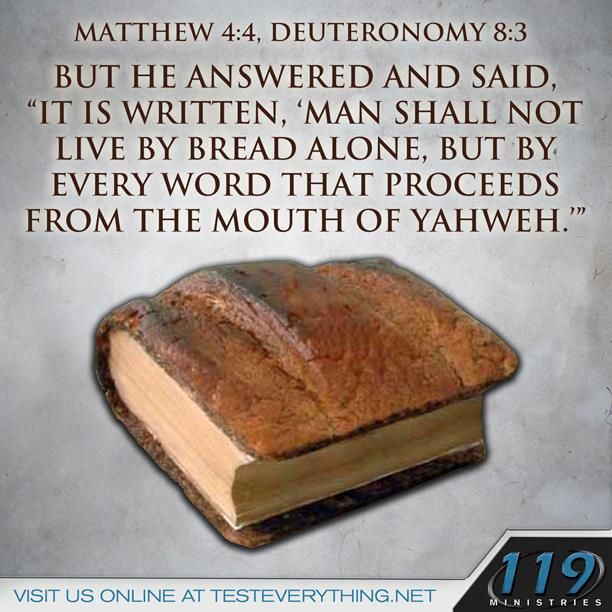
Deuteronomy 8.1-10
Earth/eretz: the embodiment of energies for purpose of transformation; lit., the extension of mind through transformations/ ; the stages of transformation of the light energies; designated exchange level: lit., residing concepts of Light governing the pursuits and transformations for use of energies and sacrifices; the place of transformations/sacrifices, either unto unity or separateness; the place of inheritance—of the flow of life—designated for the expressions of soul; place of coming to maturity and fullness; lit., the extended/initiated mind in pursuit; counterpart to the heavens/names; space given for the invisible attributes of life—the twelve light energies—to be fully expressed as Yisrael; space to balance and tune, proportionately, the soul’s energies unto the wholeness of man; note: when the energies are balanced and appropriated according to life’s measurements, then the energies have fully expanded into soul, which is then eternally renewed, becoming self-perpetuating by the wholeness thus achieved (Jn. 5:26); “Earth” aretz, as the collected body of energy, is distinguished from “ground” adamah, which are elements of the visible creation configured on behalf of adam: earth is the state of love, bonding, favor, compensation, fulfillment, satisfaction. Value, 291: man in pursuit transformation unto unity; knowledge is the appropriation of alef energies. See ground; world/hidden; compare Egypt, noting that Mitzrayim is an inverse/reflected/turned-inside-out variation on land.
brook/nachal: to take possession, occupy, seize, obtain; to exchange, receive; lit., to internalize/unfold the covenant agreement arrangements of order; also: stream, brook, river, ravine, current—even as a valley or brook receives, or inherits, from what is above; lit., the assimilative nature of a level of being given direction as a result of instruction. Value, 88: the expression of service; a region of help, opportunity. See inheritance.
fountain/ayin: the eye; perception, sight; the appearance, look; the face; lit., the eye receiving giving a display; that which appears—buds, openings, sights; a cistern, spring, fountain; an opening, aperture; also: bud, loop, hole; to consider, reflect, meditate, ponder; to be balanced; to peruse; to examine carefully; to hate, be hostile, antagonistic—active results of negative deliberation, as revealed by the look in the eye; name of the sixteenth letter of the alefbet and the third level/octave of the bet; culminating frequency of bet and tet. Value, 130: sanctified guidance. See ayin; En Mishpat.
deep/tahowm: their formlessness ; an abyss; an underground/subterranean water supply; a passively reflective nature; lit., the measurement of life cradled within the multitudes/waters. Value, 451: the composite potentialities of seed.
valleys/biqah: to split wide open; to penetrate, cleave, sever; to crack open the elements in order to penetrate or examine components; lit., a form or state of consciousness under the dome overshadowed of by the perpetuity of Light; note: the “plain” in Shinar, meaning “transmutation of the angelic,” refers to penetration of the energy fields unto composition of soul/body—the exploration of the physical realm for the purpose of enhancing manifestation and expanding utilization of the elements. Value, 177: realm in which openings are penetrated. Compare lowland.
hills/har: an elevation, high range, mountain; lit., an illuminated mind; the light of the mind; also: nation; lit., innumerable individuals. Value, 205: the mind’s emanations.
Wheat/barley: Matthew 13.24-30
Vines: John 15.1-6
Fig tree: Luke 13.6-9
Pomegranate: רָמַם râmam, raw-mam’; a primitive root; to rise (literally or figuratively):—exalt, get (oneself) up, lift up (self), mount up.
Oil: to shine brightly: a distillation of the mature fruit of soul components, which yields a pure oil from the understanding mastered: the oil of the soul arises out of the water forms and is collected to fuel the menorah, which enlightens the tabernacle; lit., fire extracted from our potentialities perfecting our actions in the manifested power of regeneration; note: because olive oil depicts the flow of understanding that corresponds to our potential in life, it is used as the oil of anointing to signify that an individual, or a condition or stage of development of that individual, is in accordance with that person’s spiritual positioning/shem in Life—for service, restoration, healing, fulfillment. Value, 807: the sign of regeneration unto perfection. Matthew 25.1-10 (preparation, patience, commitment, obedience).
Olive: the olive tree and its fruit; source of the oil of anointing; source of illumination; lit., the instrument for attaining perfection. Value, 417: the measurement of the blessings of Torah.
Honey: Revelation 10.7-11
Bread: cake, loaf, grain, wheat, provision, food; to feed upon; a feast; a joining together of seeds into a unified form; the mature formation of grain/seeds of life—sown, cultivated, reaped, and fashioned into a loaf of being: for the Son to be called “The Bread of Life” indicates that all concepts belonging to the Father have matured/ripened and have been reformulated for man’s utilization; lit., instructions and teachings that arise within man unto fullness; also: to fight, to direct a conflict confrontation; to devour, battle, war; lit., does not occur arise ferment, without upheaval agitation water; also: to solder, join together; lit., roles to position the composite body of man. Value, 78: bread (round loaf) of covenant; perceiving mission. See war. John 6.22-69
Stones: precious stone, gem; a weight, plummet; lit., concepts by which to build perfectly: thus, the twelve inner foundation stones to build the temple of YHWH; to change into stone, fossilize; n o t e : Arabic : ibn, meaning “son of.” Value, 53: an extension of communications. 1 Peter 2.4-8
Iron: Revelation 19.11-16
Qoheleth 2.9-26
Ecclesiastes Rabbah:
Wherever ‘eating and drinking’ is mentioned in Ecclesiastes it means righteousness and good work, and not material food.–Mid. Eccles. 2.
All the peace and happiness here are mere vanity as compared with the abiding peace in the world to come.–Mid. Eccles. 2.
Hadrian said to Rabbi Joshua b. Hananiah, ‘I call on you to verify the words of your Torah regarding Palestine being a land that lacks nothing (Deut. 8.), by supplying me with pepper, quails, and silk.’ Rabbi Joshua complied and brought him the articles demanded from three different towns in Palestine.–Mid. Eccles. 2.
Revelation 21.10-22.3
Deuteronomy 10.12-13
Deuteronomy 11.7-14
For further study on Parashat Ekev, click here.
Discover more from SHFTNG PRDGMZ
Subscribe to get the latest posts sent to your email.

