
by Miykael Qorbanyahu aka the End Time Scribe
Torah: Deuteronomy 7.12–11.25 Haftarah: Isaiah 49.14–51.3 Witness: Matthew 16.1–20
_________________________________________________________________
“…the kingdom of Malchut [on the Tree of Life] shows us the access we have to the wisdom and knowledge of the world through devoted study and service. Here in Yesod [foundation on the Tree of Life] the initiate gains the [esteem] of righteousness, which is not measured by one’s perfection but rather by one’s humility in administering one’s flaws and by making an effort to change, as Solomon demonstrates in acknowledgement of his excesses and his downfalls. We learn that righteousness is not an attained state; it is an ongoing occupation that a person undertakes as a lifelong devotional service.”
Sanctuary of the Divine Presence, pg. 138
And now, Yisra’ĕl, what is יהוה your Elohim asking of you, but to fear יהוה your Elohim, to walk in all His ways and to love Him, and to serve יהוה your Elohim with all your heart and with all your being, to guard the commands of יהוה and His laws which I command you today for your good?
Deuteronomy 10.12–13
_________________________________________________________________
Consequence is something that we are all familiar with, be it good or be it bad. Typically consequences are a matter that we often view as something negative, but in all objectivity, consequence can also have a positive outcome. Defined as the effect, result or outcome of something that happened earlier, the Hebrew word eqev (עֵקֶב) suggests something that comes at the end, or on the heel of a matter. Interestingly, eqev is the root word of the name of our patriarch Jacob, or Ya’aqov (יַעֲקֹב). While the name Ya’aqov has been defined as the supplanter or the heel holder, the Hebraic idea of the name, according to the Dictionary of Torah Names and Words, depicts the outer form of man supplanting the flesh and overthrowing the waywardness of the body. This activity is a result, or in consequence of a spiritual quickening and connection to the ethical will of Messianic Torah consciousness transmitted culturally from generation to generation.
Ya’aqov underwent this process, which was initiated when he fled from Kena’an land to Aram Naharayim after he supplanted his twin brother Esau for the blessing of the firstborn. It was at the Yabbok ford when he wrestled with the messenger and his name was changed to Yisrael that his transformation truly took place. For Ya’aqov, it was a matter of facing his demons, discouragements, doubts and fears and overcoming them all during his dark night of the soul which allowed for him to come to terms with and reconcile his excesses and downfalls.
This week’s portion, Eqev, opens with an exhortation to the new generation of Yisraelites situated at the precipice of the Promised Land. Encouraging the souls who the former generation did not expected to survive the trials of the wilderness, Moshe opens this sidrah with the words,
“And it shall be, because you hear these right-rulings, and shall guard and do them, that יהוה your Elohim shall guard with you the covenant and the kindness which He swore to your fathers, and shall love you and bless you and increase you, and shall bless the fruit of your womb and the fruit of your land, your grain and your new wine and your oil, the increase of your cattle and the offspring of your flock, in the land of which He swore to your fathers to give you…”
Deuteronomy 7.12–13
With this pronouncement, the present generation of Yisraelites are being positioned to move forward and not revert to their faithless, rebellious ways that their forebearers lived. Presenting an outcome that would be favorable for them and their progeny after them, Moshe assured this new harvest of souls that the consequences of their faithfulness would result in the fulfillment of the blessings that their forefathers Abraham, Isaac and Jacob were promised. For this next generation, nothing short of a reformation of their nature which was expected of them to enter the promises of land and life that had been prepared for them. In fact, Moshe alludes to their renewal of life and the renewed covenant that he was commanded to carry out in Exodus 34, which he recounts in this week’s reading.
“At that time יהוה said to me, ‘Hew for yourself two tablets of stone like the first, and come up to Me on the mountain. And you shall make yourself an ark of wood, then I write on the tablets the Words that were on the first tablets, which you broke. And you shall put them in the ark.”
Deuteronomy 10.1–2
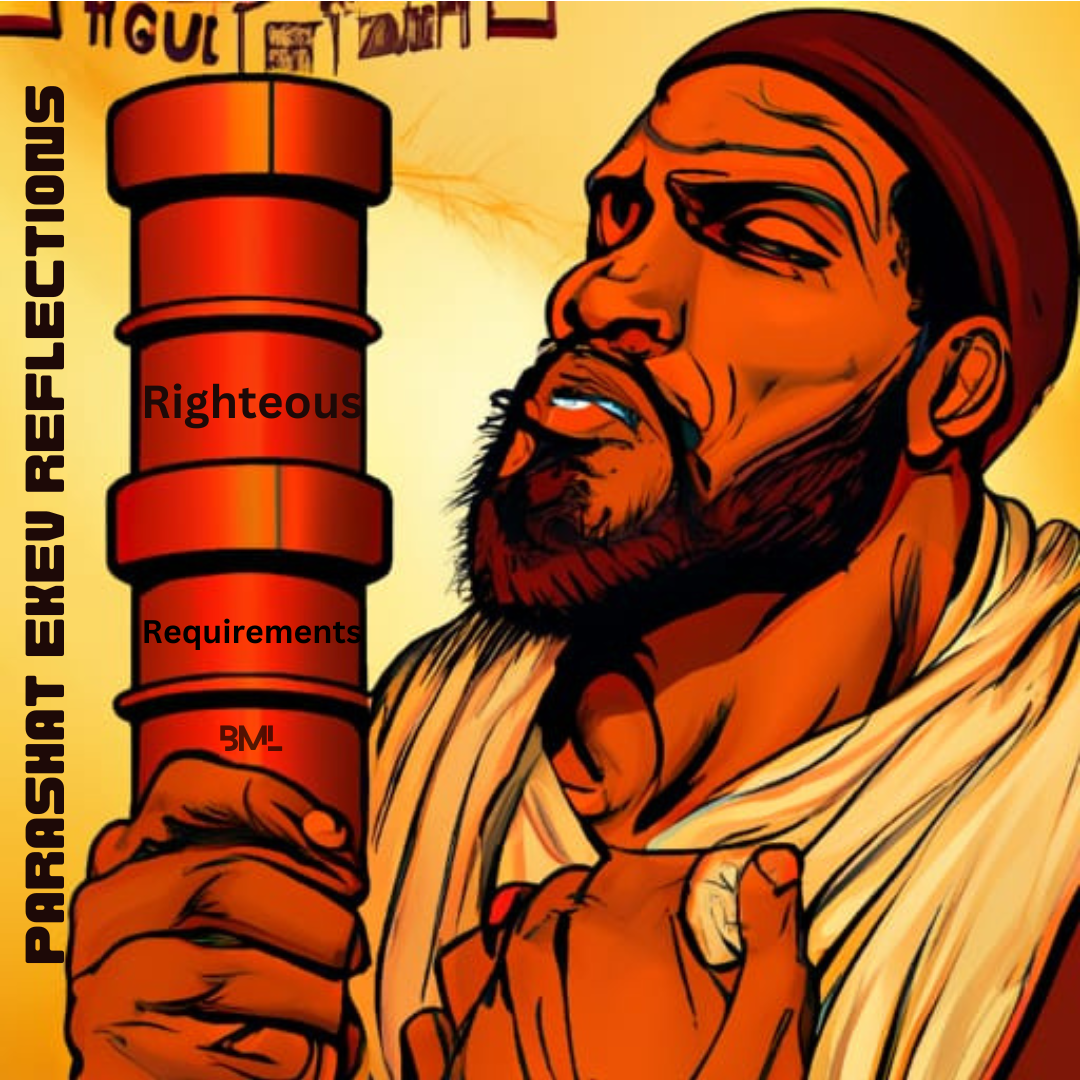
For us, the lessons of the Yisraelites from the wilderness should serve as a witness of both what is expected of and what remains for us to do in order to inherit the promises that have been given. With the explanation of the righteous requirements, in tandem with the allusion to the renewed covenant made by Moshe, it becomes our duty to embrace the lifestyle of Torah that Moshe was instructed to impart to us. Reestablishing the foundation of righteousness for Yisrael, Deuteronomy 10.12–13 shares with us the seven requirements of יהוה which Moshe was instructed to teach Yisrael in order to experience the blessing of goodness all the days of their life.
1. To fear יהוה your Elohim: As the beginning of wisdom, it is the fear of Elohim, predicated on the awesome might and righteous judgment of the Almighty, that is to keep us from walking contrary to the commandments and will of our Father and King. It is akin to the reverence that we have for our parents, fearing the thought of disappointing them and repercussions of punishment as a consequences of our wayward behavior. Idiomatically, the Hebrew word for fear, yare (יָרֵא) suggests mastery that brings expansion.
2. To walk in all יהוה’s ways: The idea of the way of the walk in Hebrew, or derekh halakha, is a reference to conducting our life in the manner which reflects the nature of Elohim. This we know through the revelation of Elohim’s character so as expressed in Torah. From this we find the word “middot,” or attributes, can be best identified from Exodus 34 as eternal, compassionate, merciful, favorable, slow to anger, plenteous in mercy, truth, forgiving and pardoning. It is essential that we take on the nature of יהוה so that the world is able to experience the presence of the Most High through our witness.
3. To love יהוה: Love is the core essence of our relationship with the Heavenly One. This love is not a mere emotional sentiment, but a deep, abiding commitment to align our hearts, minds, and actions with the will of יהוה. It is the kind of love that is selfless, sacrificial, and unwavering, akin to the love between a devoted parent and child. This love compels us to seek intimacy with יהוה, to yearn for a profound connection that transcends the superficial and mundane.
4. To serve יהוה your Elohim with all your heart and with all your being: Service in this context extends beyond ritualistic practices; it encompasses a lifestyle of devotion and dedication. It is the recognition that every aspect of our lives is an opportunity for sacred service. From our work to our relationships, from our personal growth to our interactions with the world, all must be infused with the consciousness of serving יהוה. This level of devotion requires a wholehearted commitment and an alignment of our actions with our beliefs.
5. To guard the commands of יהוה and It’s laws: Guarding the commands and laws of יהוה is a continuous act of mindfulness and vigilance. It involves protecting and preserving the sacred teachings and principles that guide our lives. Just as a watchman diligently safeguards a valuable treasure, we are entrusted with the responsibility of upholding the Torah’s wisdom and applying it to our daily choices. This guardianship ensures that the light of celestial guidance continues to shine brightly in a world often clouded by confusion and darkness.
6. Which I command you today for your good: The Torah is a gift bestowed upon us for our own benefit. Its precepts and guidelines are not meant to restrict or burden us, but to lead us to a life of fulfillment, purpose, and harmony. Embracing the Torah’s teachings allows us to navigate the complexities of existence with clarity and wisdom. It is a roadmap that leads to a life of wholeness, where our actions align with the higher purpose for which we were created.
7. To walk humbly with יהוה: Humility is the cornerstone of spiritual growth and transformation. Walking humbly with יהוה entails recognizing our limitations, acknowledging our imperfections, and surrendering our ego-driven desires. It is an attitude of openness, receptivity, and willingness to learn from every experience. By cultivating humility, we create space for celestial guidance to flow into our lives, enabling us to evolve into vessels through which the celestial plan can manifest.
Incorporating these seven requirements into our lives will allow for us to fully embrace Messianic Torah consciousness. Just as the Yisraelites were called to prepare themselves for the inheritance of the Promised Land, we too are called to prepare ourselves for the realization of our spiritual potential and the fulfillment of our heavenly purpose purpose for our eventual redemption and reacquisition of the Promised Land. As we integrate these principles into our daily existence, we not only deepen our connection with יהוה but also contribute to the establishment of a planet characterized by righteousness, love, and harmony. May our lives be a witness and testament to the transformative power of embracing Messianic Torah consciousness, and may we, like Ya’aqov who became Yisrael, undergo a profound spiritual transformation that reflects the celestial Light within us.
Selah
Discover more from SHFTNG PRDGMZ
Subscribe to get the latest posts sent to your email.


1 Comment