
____________________________________________________________
And Yitzhaq went out to meditate in the field at the eventide: and he lifted up his eyes, and saw, and, behold, the camels were coming.
Genesis 24.36
Let the words of my mouth and the meditation of my heart be acceptable in Your sight, O YaH, my rock and my redeemer.
Psalm 19.14
Meditate upon these things; give yourself wholly to them, that your progress may be evident to all.
1 Timothy 4.15
____________________________________________________________
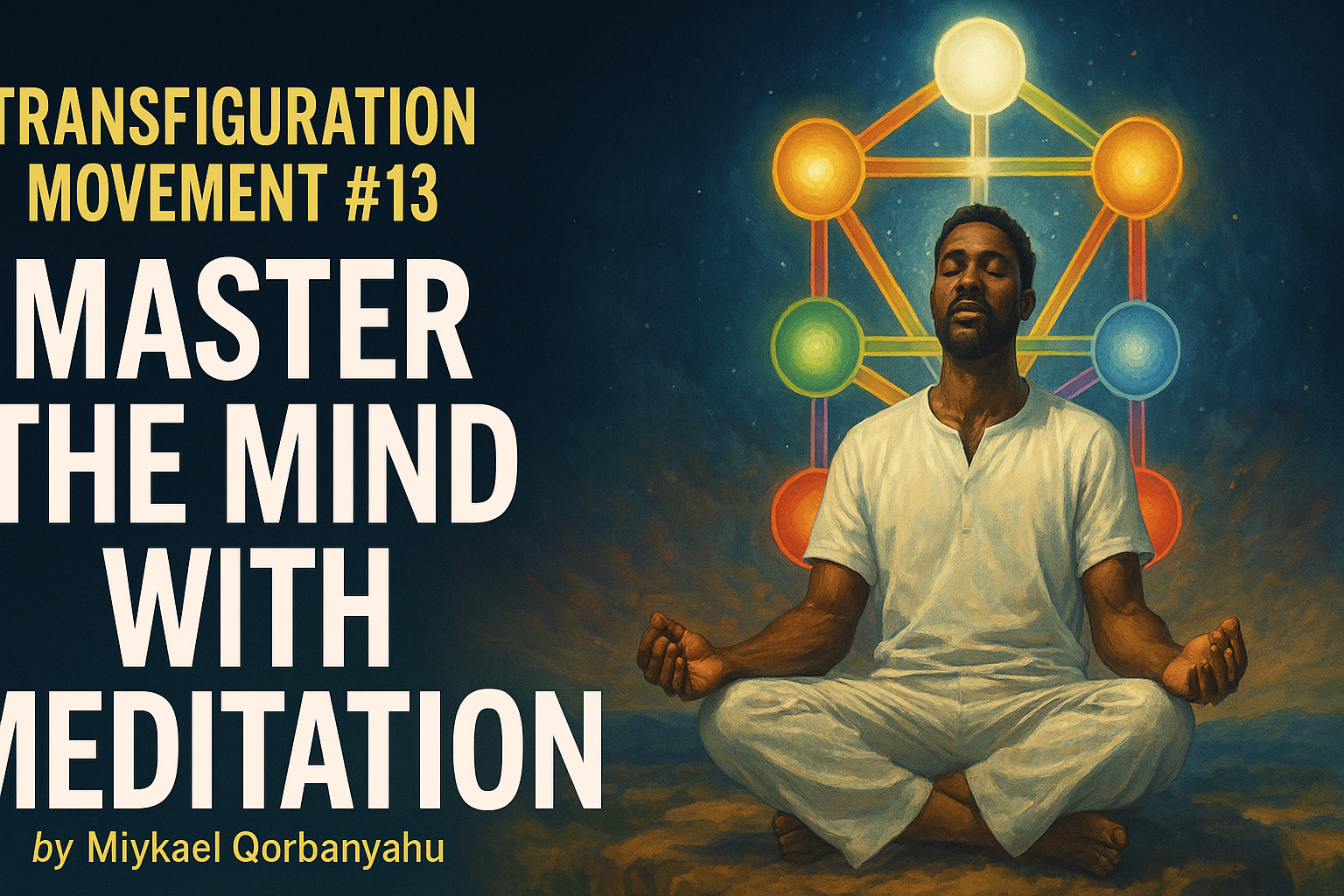
One night while in college, I was in my dorm room in Gannett Hall at the University of Maine seated in lotus position meditating on my bed. At that time I was pretty fresh on my journey for meaning and self-discovery. I was only in the session for a few moments when there was a knock on my door. After breaking out of my meditation, I went to the door and opened it; suddenly, three of my teammates, Trey, Scottie and Geoff tried to rush me, as we would regularly rough house each other being college football players having fun. I remember subtley stepping aside and throwing Trey on the bed, while Scottie, I simply over powered and knocked him to the right of the door, and finally, I stepped right into Geoff and took him down to the floor with relative ease. After I had countered their attack, I ran down the hall pointing back at them, cracking up laughing for failing in their attemp to jump me. Though I noted it, I didn’t really let it settle on me because, at that time to me, it was absolutely hilarious.
But in hindsight and all seriousness, that moment in Gannett Hall was more than just college antics; it was a living testament to what meditation had already begun to awaken in me. Though I had only just begun my journey of inward exploration, that brief meditation session had brought me into a deeper self awareness; a calm, rooted presence in body and mind. When they rushed me, I didn’t panic, nor did I flinch. My response was rooted, instinctive, measured, and pretty much effortless. It was like I was watching it happen in slow motion, moving with the energy instead of reacting against it. Meditation had raised my perception of that moment and anchored me in the now. I wasn’t just present, I was aware and aligned. That awareness, that clarity, gave me control in the chaos and showed me early on that the mind, when trained, has the power to override panic and operate in purpose. And though I didn’t know it then, and pretty much even dismissed it, that right there is the foundation of transfiguration, mastering the moment by mastering the mind.
Later on that year, I enrolled in a world religions course and found myself drawn to the silence and simplicity of Zen Buddhism. As a Philosophy minor, I had the luxury of taking classes on comparative religious studies, and for the most part, it was an awesome experience and exposure. Through Zen, I found that the posture, the focus on breath, the stillness, seemed like something powerful to engage. But after trying it for a few weeks, I stopped. Yeah, I hear you, reader, ‘why did you stop, Miykael?’ I stopped because I experienced something that I didn’t feel; not in the sense that nothing happened, but in the senese that I didn’t feel it in a disturbing kind of way. While I was meditating one night, more than likely after an illicit episode with a random paramour, I felt a dark, cold, and empty presence. I immediately broke that off and just set meditation aside like a bad habit. And for a while, something didn’t sit right in my spirit with it, and I refused to meditate again for quite some time.
A few years after my graduation, though, one of my uncle-in-laws would always encourage me to meditate. “Michelob,” he would say, “You need to meditate. I know you study and read alot, but you need to meditate so you can get direct insight.” Blowing it off like I knew everything already, I resisted and resisted, as I was still young and subconsciously ambivalent to meditation from my earlier experience. But eventually, I yielded and finally returned to the discipline, but this time from a place rooted in my heritage. Having a deeper insight of what meditation truly is, I didn’t let the void pull me, I grounded myself in light, in purpose, and in Torah.
Since then, meditation has become a part of my inner rhythm. It has helped me find calm in chaos, clarity in confusion, insight in silence, and intuition beyond intellect. Through meditation, I’ve tapped into deeper dimensions of myself and heard whispers of the Ruach that words could never carry. It became not only a practice but a pathway toward mastery of the mind and alignment with the Most High.
The Scriptures don’t shy away from meditation. They actually command it.
“This book of the Torah shall not depart out of your mouth; but you shall meditate therein day and night, that you may observe to do according to all that is written in it: for then you shall make your way prosperous, and then you shall have good success.”
Joshua 1:8
“But his delight is in the Torah of YaH; and in His Torah does he meditate day and night.”
Psalm 1:2
“I will meditate in your precepts, and have respect unto your ways.”
Psalm 119:15
In Hebrew, one of the primary words for meditation is הִגָּיוֹן (higayon), which appears in several Psalms and conveys a sense of deep reflection, inner murmuring, or contemplative utterance. Another related word often used in Scripture is שִׂיחַ (siach), meaning meditative conversation or focused internal dialogue. However, for this movement, we draw on the word הגה (haga), the root of higayon, which appears in Joshua 1:8: “You shall tohagah (תָּהֲגֶה) therein day and night…” This word, haga, is made up of three Hebrew letters: Hei (ה), Gimmel (ג), and Hei (ה).
- Hei (ה) represents breath, revelation, and the Shekinah presence. It is the sound of stillness, the spirit-filled pause that opens and closes sacred speech. Meditation begins and ends in the breath, revealing what is hidden and opening space for holiness.
- Gimmel (ג) symbolizes movement and giving, often depicted as the letter that “runs” to give. In meditation, this speaks to the flow of supernal energy moving through the soul; the consciousness that moves beyond the ego to give itself fully to Presence.
- Hei (ה) again closes the sequence, reinforcing the idea of entering and exiting with sacred breath, signaling that meditation is a return, a cycle, a gateway between the inner world and the Infinite.
Putting these letters together, haga teaches us that higayon is the sacred act of breathing in revelation, allowing supernal energy flow to move through us, and breathing out in stillness and awareness. In this light we see that higayon is not a passive activity, it is, rather, an active participation in the supernal rhythm of life, a conduit between Heaven and Earth. This deeper definition reveals higayon as a spiritual movement of generosity: we receive light, circulate it within, and return it to the Source with clarity, gratitude, and intention.
This is how higayon empowers transfiguration: it makes the soul transparent enough to reflect the image of Elohim and strong enough to host His presence.
From Dawid to Yitzhaq, from the prophets to the sages, higayon was never viewed as foreign; it was familiar. It wasn’t some strange Eastern ritual, it was our practice of stillness, focused thought, and communion with the Most High. The oral tradition teaches that Yitzhaq went out “to haga in the field” (Genesis 24:63), which the Sages interpret as structured prayer and deep contemplation. Rav Nachman of Breslov taught that “Hitbodedut, ”personal, isolated higayon, is the highest form of connection to the Most High.
Modern neuroscience and medical research have affirmed what the ancient sages practiced instinctively: higayon changes the brain, body, and emotional landscape. Numerous peer-reviewed studies show that higayon reduces levels of cortisol, the primary stress hormone, promoting emotional stability and resilience. According to a study published in Psychosomatic Medicine, mindful higayon significantly lowers inflammation markers and improves immune function.
Functional MRI scans have shown that consistent higayon increases gray matter in regions of the brain associated with memory, learning, empathy, and self-awareness. Other studies confirm that long-term meditators, in Hebrew hagutim, exhibit increased gamma wave activity, which is associated with heightened perception, cognitive clarity, and spiritual insight.
Higayon also enhances heart rate variability, which is a marker of nervous system health, according to research in the Journal of Alternative and Complementary Medicine. These physiological changes are not simply physical benefits, they create the internal conditions necessary for stillness, spiritual awareness, and higher consciousness.
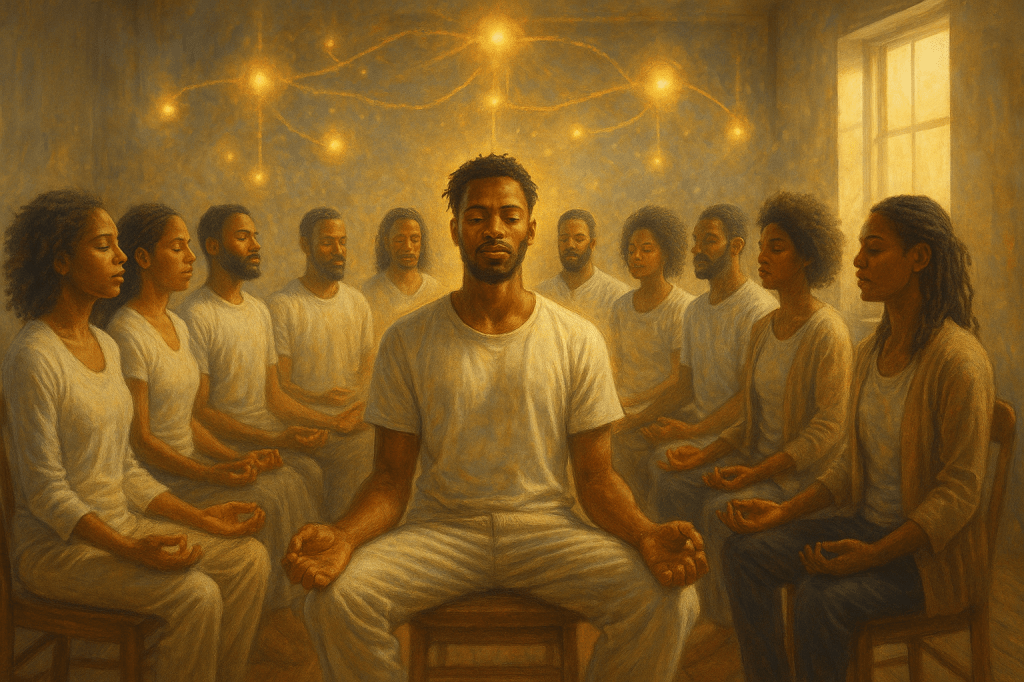
One of the most compelling studies on higayon is called the Maharishi Effect is a term coined from the research of Maharishi Mahesh Yogi. This study set out to observe haga phenomena undertaken when a critical mass of individuals engage in deep, coherent higayon, particularly transcendental higayon. From the study, research found that there is a measurable decrease in societal stress, crime, and conflict in their surrounding environment. This collective harmony is believed to arise from a unified field of consciousness being activated by the synchronized resonance of those in higayon. While the term is modern, the principle is ancient and deeply consistent with Torah and Messianic consciousness.
The Torah tells us that when Israel is united in heart and spirit, Heaven responds in peace and provision as revealed in the blessings found in Deut. 28:1-14. Just as Yahoshua taught that “where two or three are gathered in My Name, there am I in their midst,” the collective spiritual focus of a set-apart community has the power to shift the frequency of entire nations. This reveals to us that transfiguration is not just individual, it’s communal. When we haga as one, aligned in Torah, Ruach, and intention, we generate a spiritual field that not only purifies us internally but radiates externally, impacting the world for healing, for justice, and for redemption. This is how higayon fuels the movement, not just to be changed, but to change everything around us.
We haga, therefore, to remember, reset and release. We haga not to escape the world, but to engage it with greater awareness and power. Higayon clears the internal noise so we can hear the whisper of the Ruach. It resets the nervous system so the body can host peace. It aligns our thoughts so that our actions flow from wisdom instead of reaction. It unlocks the spiritual sensitivity that allows us to see with the inner eye, feel with the inner ear, and walk by the inner flame.
As I wrote in Transfiguration Movement #9: Transform by Renewing Your Mind, the journey of transfiguration begins in the mind. Higayon is how we train it and harness our thoughts instead of being ruled by them. It’s how we root ourselves in the present while staying aligned with the eternal.
Higayon, therefore, is not magic, it’s mastery.
And mastery is what the Transfiguration Movement is about; mastery of the flesh, the mind, the heart, the spirit. We fast, we pray, we study, we submit, and we haga. Because in the stillness, we find the strength. In the quiet, we hear the call. In the centering, we step into the light.
The beautiful thing is that there are many ways to haga, but the key is consistency and simplicity. One foundational method is breath awareness, where you focus your attention on your natural breathing rhythm. A helpful practice is to count each complete respiration, inhale and exhale, as one. Count up to ten, and if your mind wanders or an outside thought interrupts, gently reset back to one without judgment. This teaches patience, discipline, and mental stillness.
Another approach is visualization, where you picture a sacred image or scene, such as standing before the burning bush with Moshe, or standing at Mount Sinai with all of Israel receiving the Torah. Engage your senses: hear the shofar, see the fire, feel the presence of Elohim. Let this qadosh scene draw you into alignment with your purpose and calling.
A Torah-based exercise is higayon chanting of a verse, take a passage like “Shema Yisrael, YHWH Eloheinu, YHWH Echad” and repeat it softly and slowly, tuning your breath and heart to the vibration of the words.
Another simple yet powerful practice is hitbodedut, or secluded personal conversation with Elohim. Go to a quiet place, speak from the heart, cry if needed, whisper, or sit in silence, just be present and real. These practices train the soul to listen, to align, and to enter into the light of supernal awareness that transforms the inner and outer world alike.
And to everyone walking this 90-day Transfiguration Journey, set time aside to sit still and breathe deep.
At its deepest level, let us full accept that higayon is not merely an intellectual exercise, but a spiritual frequency that tunes the soul to Heaven’s resonance. It is the sound beneath the sound, the stillness beneath the movement, the superal logic that pulses through all of creation. In the process of transfiguration, higayon becomes the gateway through which fragmented thoughts are gathered, calmed, and reordered according to the harmony of Heaven. This is where higayon truly lives, again, not in escaping the world, but in aligning with the Creator’s intention for it, and for us. In the quiet repetition of breath, in the sacred image held in the heart, in the whispered Shema or raw outpouring of hitbodedut, we find ourselves shifting and becoming, ascending into the deeper design of who we were always meant to be.
So as this chapter in the Transfiguration Movement closes, let us not forget that to master the mind through higayon is not about escaping life, but embracing it more consciously. It’s about becoming aware of the unseen architecture that holds all things together, and choosing to live from the center rather than the circumference. In this age of noise and endless distraction, higayon becomes our rebellion, our resistance, our return. It is our response to a fractured world and our reentry into the sanctuary of wholeness.
So Keep breathing. Keep listening. Keep sitting still long enough for the voice within to become the voice above. This is where transformation begins. And this is how we, together, rise.
My bredren ad sistren, close your eyes and open your soul.
Don’t rush.
Don’t strive.
Just be.
Reflect on Torah.
Speak from the spirit.
Listen with your heart.
Yes, the world is noisy, but within you is a sanctuary.
So haga.
Master your mind.
Guard your gates.
Keep climbing.
Know that transfiguration begins in stillness.
“And in stillness and trust shall be your strength.”
Isaiah 30:15
Now go, light up the world because it’s waiting for the transfigured children of Elohim.
Selah…
Discover more from SHFTNG PRDGMZ
Subscribe to get the latest posts sent to your email.


Todah Rubah Moreh for this chapter!!! I have connected this teaching with the “Elijah Experience” in scripture . In the end it was the “Still Small Voice” that caused his fractured dimensional soul to return to awareness of self and purpose. I really like that you included options for customizing our meditation. Personalizing is key to following through and maintaining. May the Most High continue to increase you on this transformative journey.🙏🏾
LikeLiked by 1 person
HalleluYaH!!! Todah rabah for your feedback ima!!! Elijah’s experience was truly powerful and one that shows how important being in tune is for us to hear the voice of the Spirit!
LikeLike