
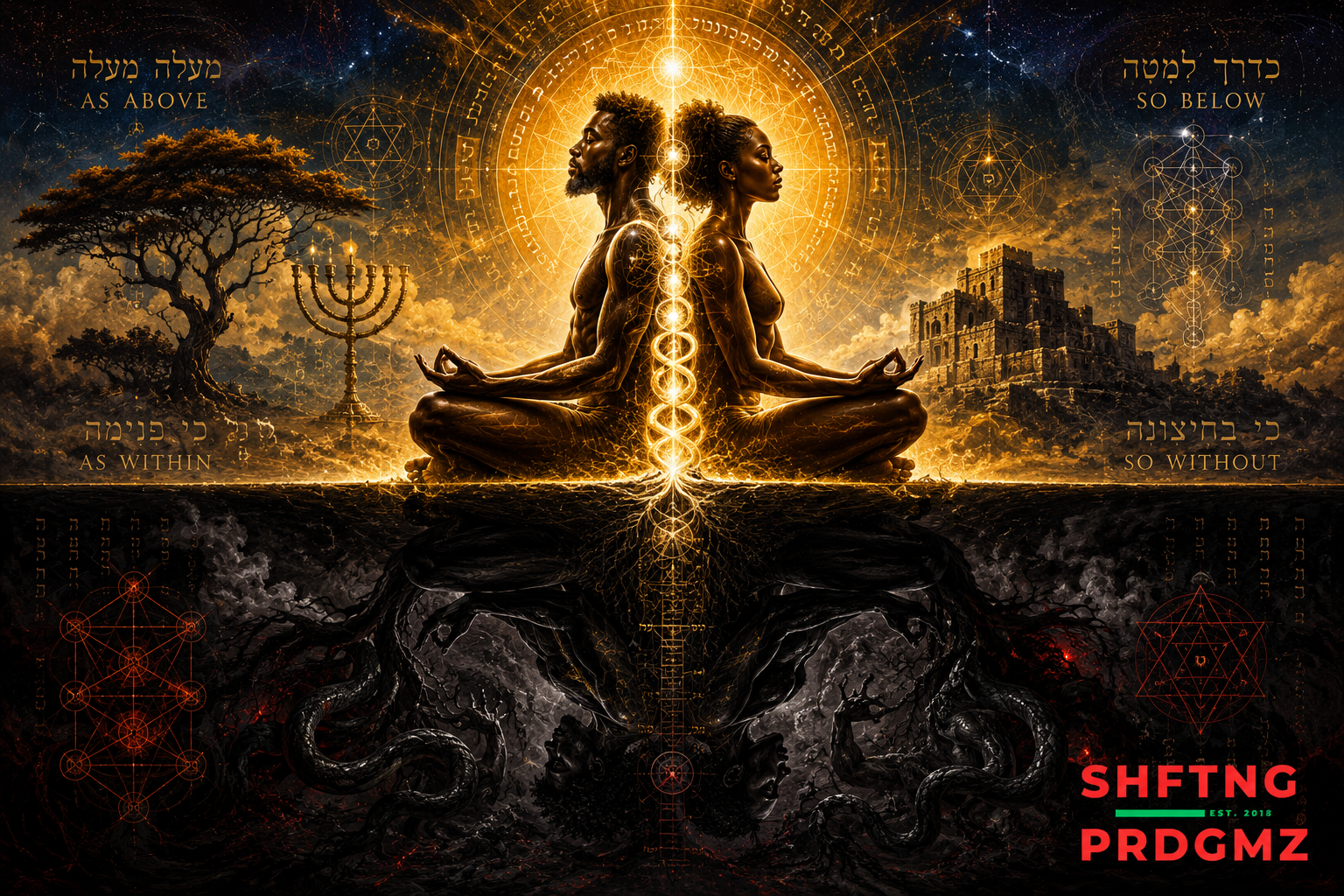
by Miykael Qorbanyahu
________________________________________________________________________________________
The serpent kills and the serpent gives life. When Israel looked upward and subjected their hearts to their Father in Heaven, they were healed.
Rabbi Nachman
And the serpent was more crafty than any beast of the field which 𐤉𐤄𐤅𐤄 Elohim had made…
Gensis 3.1a
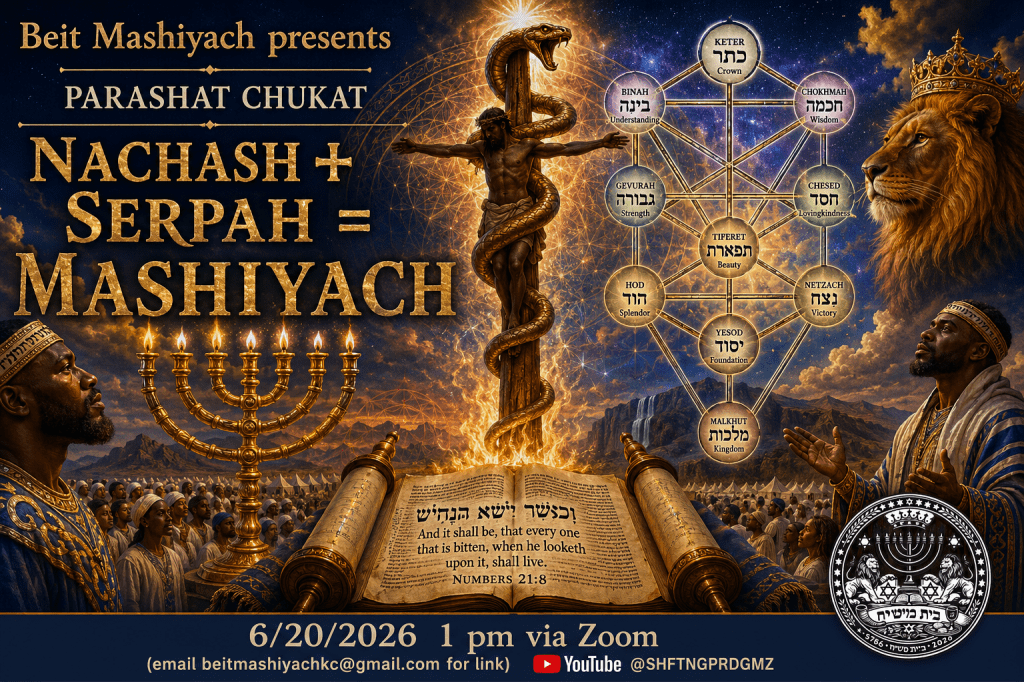
And 𐤉𐤄𐤅𐤄 said to Mosheh, “Make a fiery serpent, and put it on a pole. And it shall be that everyone who is bitten, when he looks at it, shall live.”
Numbers 21.8
Serpents, brood of adders! How would you escape the judgment of GĕHinnom?
Matthew 23.33
And as Mosheh lifted up the serpent in the wilderness, even so the Bĕn Aḏam has to be lifted up,
so that whoever is believing in Him should not perish but possess everlasting life.
John 3.14-15
________________________________________________________________________________________
Every generation has their interpretation of the story of the serpent.
For many, the image rises from the mist of Eden: a cunning creature gliding through the Garden, whispering seduction into the ears of Chawwah, drawing humanity away from the command of YaH and into the shadow of exile. Religious tradition has long cast the serpent as the villain of the sacred drama, the embodiment of temptation, rebellion, and evil. Yet Torah rarely exhausts itself upon the surface; beneath every narrative flows another stream, beneath every image sleeps another meaning. The language of Scripture speaks simultaneously to history, to consciousness, and to the hidden architecture of the soul.
The Garden of Eden therefore reveals more than the fall of humanity; it unveils the first great conflict within humanity. The serpent appears before Adam and Chawwah long before it appears within them. Its voice echoes through the narrative as the voice of separation, the subtle persuasion that fulfillment may be found apart from alignment, wisdom apart from obedience, power apart from responsibility. The Hebrew text calls this serpent Nachash, a word whose roots reach beyond the image of a reptile. Ancient associations connect the term with divination, enchantment, hidden perception, and the pursuit of secret knowledge. Within the language itself rests a clue: the Nachash represents a mode of consciousness captivated by appearances, intoxicated by power, and fascinated with knowledge divorced from covenant.
This mystery reaches far beyond the boundaries of Eden. Every soul encounters the serpent. Whenever desire outruns discipline, whenever appetite eclipses wisdom, whenever ambition abandons righteousness, the whisper of Nachash moves through the chambers of the heart. Its language remains unchanged across generations:
Become without surrender.
Ascend without transformation.
Possess without sacrifice.
Such impulses form the roots of what the sages would later call the Yetzer Ha Ra, the inclination that pulls consciousness downward toward self-preservation and self-gratification.
Yet Torah refuses to leave the serpent imprisoned within darkness.
Generations after Eden, as Israel sojourned in the harsh landscape of the wilderness, another serpent rears its head in the sacred text. Israel, now liberated from Mitzrayim, yet still carrying MItzrayim within, begins murmuring against YaH and against Mosheh. The wilderness becomes a mirror exposing the inner condition of the nation.
Gratitude gives way to complaint.
Trust gives way to fear.
Covenant gives way to craving.
In response, fiery serpents descend among the people.
The Hebrew text identifies them as Seraph.
The root saraph carries the meaning of burning, consuming, and refining. This burning presence of the seraphim are the flames that surround the Word like a crown. And while fire can destroy, it also has the power to purify. It’s in this light that fire consumes impurity and reveals hidden treasures. In this form, fire appears in the vision of Yeshayahu, where Seraphim hover above the heavenly throne crying, “Kadosh, Kadosh, Kadosh, YHWH Tzevaot; the whole earth is full of His esteem.”
The paradox seizes the attentive reader.
How does the same language describe serpents in the wilderness and celestial beings before the Throne?
How does the symbol associated with judgment become associated with worship?
The mystery deepens when YaH commands Mosheh to fashion a serpent of bronze and raise it upon a pole.
The image of the wound becomes the instrument of healing.
The source of affliction becomes the pathway toward restoration.
The poison becomes medicine.
The Mishnah addresses this very question:
“Did the serpent kill, or did the serpent give life?”
The sages answer with remarkable simplicity. Whenever Israel lifted their eyes heavenward and subjected their hearts unto their Father in Heaven, healing flowed through the camp. The bronze serpent possessed no magical power. Rather, the symbol redirected consciousness. Eyes fixed upon suffering became eyes fixed upon heaven.
Fear gave way to faith.
Complaint gave way to remembrance.
The serpent upon the pole became a lesson written in bronze: elevation transforms perception, and transformed perception alters destiny.
Here the Torah begins unveiling one of its most profound secrets.
The Nachash and the Seraph do not represent two unrelated realities, they reveal two directions through which the same life force may travel.
One crawls through the dust, the other burns before the Throne.
One sinks into appetite, the other rises through devotion.
One clings to possession, the other becomes an offering.
The distinction lies not in power but in orientation.
Kabbalistic wisdom teaches that every force within creation contains the potential for descent and ascent.
Water may nourish a field or flood a city; fFire may warm a home or reduce it to ashes.
The determining factor concerns neither the water nor the fire but the vessel through which they move. So too with the energies residing within the human soul.
Passion may become lust or worship.
Ambition may become greed or purpose.
Anger may become violence or righteous courage.
Desire may descend into bondage or ascend into holiness.
The sages understood this dynamic through the language of the two inclinations. Every human being carries both the Yetzer Ha Ra (evil inclination) and the Yetzer Ha Tov (good inclination). Popular imagination often reduces these concepts into simplistic categories of good and evil, but the rabbinic tradition paints a more nuanced portrait. The Yetzer Ha Ra encompasses the drives associated with survival, ambition, acquisition, sexuality, competition, and self-interest. Without such impulses, no one would build a home, establish a family, cultivate a field, or defend a community. The challenge concerns neither eradication nor suppression. Mastery remains the objective.
This understanding emerges within the Shema itself.
“And you shall love YHWH your Elohim with all your heart.”
The Hebrew text reads, B’kol levavkha.
The unusual spelling contains two bets (ב). The sages discerned a profound mystery hidden within those letters. Love of YaH must encompass both inclinations:
The set-apart and the profane.
The disciplined and the passionate.
The prayer and the hunger.
The commandment calls for nothing less than the consecration of the whole person.
Heaven seeks more than piety. Heaven seeks integration.
The ascent from Nachash to Seraph ultimately reaches its fulfillment within what may be called Messianic Consciousness. This phrase does not merely describe belief in Mashiach, rather, it speaks of participation in the mind, character, and pattern of Mashiach. The journey concerns far more than intellectual agreement with doctrine. The transformation touches the construct of the soul itself, bringing the whole person into harmony with the will, wisdom, and nature of YaH.
Throughout the prophets, the Seraph appears nearest the Throne. Flames surround these heavenly beings because every trace of separation has been consumed. No conflict remains between desire and duty, passion and purpose, heaven and earth. Their cry of “Kadosh, Kadosh, Kadosh” emerges from complete alignment with the Shekinah Presence. Within the symbolic language of Scripture, the Seraph embodies a state of consciousness purified by fire and fully yielded unto Elohim.
Such imagery sheds light upon the mission of Mashiach.
The life of Yahoshua reveals the pattern of the Seraph manifested in human form. Every temptation encountered in the wilderness, every confrontation with religious hypocrisy, every act of compassion, every expression of obedience, and ultimately every step toward the execution stake demonstrates mastery over the lower inclination. The appetites of the flesh never occupied the throne of his being. The Father’s will governed every thought, word, and action. What appeared in Isaiah as the burning one standing before the Throne appears in the Synoptic Witnesses as the Son walking among humanity. Heaven and earth meet in one consciousness.
Sha’ul alludes to this mystery in Romans 10:4:
“For Mashiach is the goal of the Torah unto righteousness for everyone that believes.”
The Greek word translated “goal” is telos, a term conveying completion, fulfillment, maturity, aim, or ultimate purpose. Paul does not portray Mashiach as the termination of Torah, rather, Mashiach stands as the living embodiment of Torah’s intended destination; the commandments find their fullest expression within a transformed heart. The written word becomes living reality. The external instruction becomes internal nature.
Viewed through this lens, Torah functions as Jacob’s ladder while Mashiach represents the summit toward which the ladder ascends. Every mitzvah, every act of repentance, every discipline of self mastery, every movement toward righteousness directs the soul toward the consciousness revealed in Mashiach. The Torah forms the pattern, Mashiach reveals the perfected image.
The sages taught that the righteous incline both the Yetzer Ha Tov and Yetzer Ha Ra toward the service of Heaven. Mashiach reveals the complete manifestation of that teaching.
Hunger becomes fasting.
Ambition becomes mission.
Suffering becomes sacrifice.
Power becomes service.
The very energies that enslave humanity under the dominion of the Nachash become consecrated instruments in the hands of the Seraph.
This mystery echoes within the Shema itself. “You shall love YHWH your Elohim with all your heart.” Not with part of the heart, not with the sanctified portion alone, not merely with the Yetzer Ha Tov. The double bet in levavkha calls for the consecration of both inclinations. Every faculty of human existence belongs upon the altar. Every desire becomes fuel for divine purpose. Every passion becomes an offering.
Messianic Consciousness therefore represents the crowning stage of the alchemical process. The serpent no longer rules from beneath. The flame now governs from above. The lower nature remains present yet submitted. Instinct serves wisdom. Flesh serves spirit. Earth serves heaven. The wilderness becomes a sanctuary and the heart becomes a throne room.
This perhaps explains why the Seraphim stand nearest the Presence. Their fire symbolizes the completed work of transformation. Nothing remains fragmented; nothing remains divided. Every aspect of being has entered into agreement with the Eternal.
The Nachash seeks knowledge.
The Seraph embodies wisdom.
The Nachash grasps.
The Seraph offers.
The Nachash asks what may be acquired.
The Seraph asks what may be given.
Between these two voices unfolds the story of humanity.
Within Mashiach, however, the struggle finds its resolution. Dust becomes flame. The image of Adam gives way to the image of the heavenly man as alluded to in 1 Corinthians 15.47 which states,
The first man was of the earth, earthy; the second Man is the master from the heaven.
The serpent raised upon the pole becomes a prophetic witness that what once crawled through the garden may ultimately stand before the Throne. Such remains the hidden purpose of Torah, the revelation of Mashiach, and the destiny awaiting every soul willing to pass through the refining fire. Within this framework, the journey from Nachash to Seraph reveals the great alchemical work of the soul.
Ancient alchemists spoke of transmutation, the refinement of base metals into gold. The sages spoke of a similar process unfolding within the human heart.
Raw instinct enters the furnace of Torah.
Desire passes through the fire of discipline.
Ambition encounters the refining flame of purpose.
What emerges bears little resemblance to its former state. The gold always existed within the ore. The furnace merely revealed what remained hidden beneath layers of impurity.
Modern neuroscience echoes this ancient wisdom through a different vocabulary. Deep within the brain reside structures associated with survival, fear, territoriality, aggression, and immediate gratification. Higher regions govern reflection, empathy, imagination, moral reasoning, and long term vision. The sages possessed no language for neural pathways, yet they understood the conflict intimately. One consciousness crawls through the dust seeking immediate satisfaction. Another stretches toward heaven seeking eternal meaning. One reacts. The other discerns. One consumes. The other creates.
Neither realm was created for destruction.
A king gains little by slaughtering his subjects.
Order emerges when governance flows from the throne.
Likewise, the higher faculties of the soul must govern the lower impulses rather than annihilate them. The animal nature becomes a servant. The divine image assumes its rightful seat upon the throne. The serpent learns obedience to the flame.
Jacob’s ladder offers another image of this ascent. Its base rested upon the earth while its summit disappeared into heaven. Such remains the condition of humanity. Dust forms the body. Breath animates the soul. Instinct anchors us to the earth while revelation calls us upward. Every prayer becomes a rung. Every act of repentance becomes a rung. Every mitzvah becomes a rung. Every victory over impulse becomes a rung. Step by step, the soul ascends from appetite toward awareness, from reaction toward wisdom, from Nachash toward Seraph.
Practical transformation begins with awareness. The serpent thrives in unconsciousness. Prayer redirects desire toward heaven. Fasting teaches mastery over appetite. Torah illuminates hidden motives. Gratitude silences the voice of scarcity. Teshuvah restores alignment whenever the soul wanders from its center. Through such disciplines, the wilderness becomes a sanctuary and the furnace becomes a place of refinement.
The story of redemption therefore concerns far more than the defeat of a serpent. Torah reveals a greater mystery. The serpent of Eden and the Seraph of heaven stand at opposite ends of the same journey. One symbolizes consciousness imprisoned within itself. The other reveals consciousness set ablaze by the Presence of YaH. Between them stretches the path of transformation walked by every seeker, every prophet, every disciple, and every saint.
The Nachash crawls through the dust.
The Seraph burns before the Throne.
Between dust and flame lies the sublime labor of a lifetime.
There, in the wilderness of the heart, the poison becomes medicine, instinct becomes wisdom, desire becomes devotion, and the serpent becomes a burning one reshaped in the image and likeness of Elohim.
Selah….
Discover more from SHFTNG PRDGMZ
Subscribe to get the latest posts sent to your email.

