
by AiSha
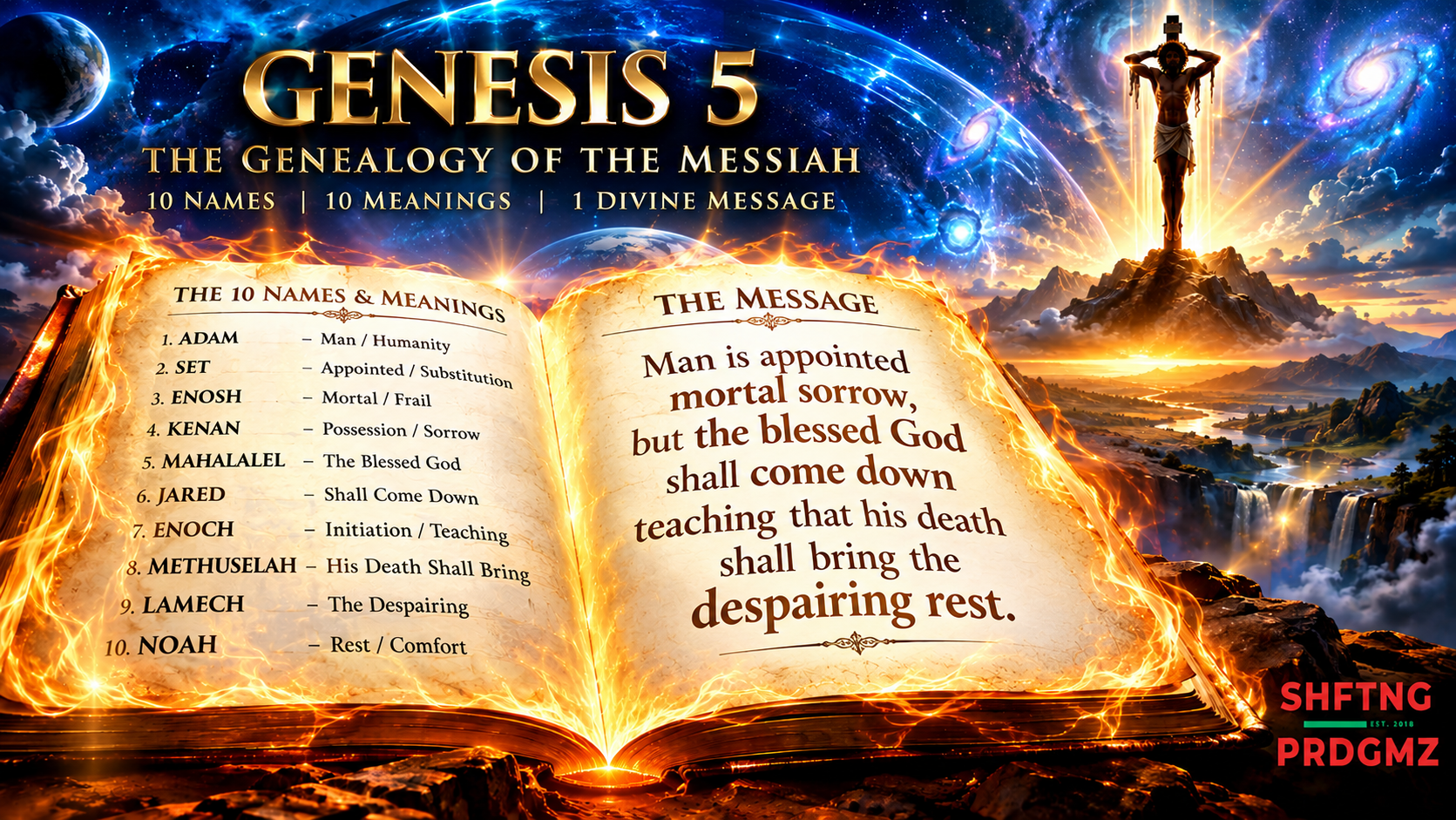
This reading carries weight when approached through a Messianic-Kabbalistic lens, since Jewish mysticism holds that names carry spiritual DNA, and the Torah encodes layers of meaning beneath the plain text through remez (hint) and sod (secret). The ten generations from Adam to Noah form a complete structure, mirroring the ten sefirot, the ten divine emanations through which Kabbalah teaches HaShem brings creation into being. This structure signals that the genealogy itself functions as a vessel carrying prophetic light from the earliest moments after the fall.
Adam’s name opens the line with “man,” establishing humanity as the starting vessel. Seth carries “appointed,” echoing Genesis 3:15, where HaShem appoints enmity between the serpent’s seed and the woman’s seed, promising a future deliverer who crushes the serpent’s head. Enosh brings “mortal,” affirming the curse of death entering through that same chapter. Kenan adds “sorrow,” and Mahalalel answers with “the blessed God,” together forming a turn from lament toward divine intervention, a pattern Isaiah 53 later develops fully: a figure who carries sorrow and grief on behalf of others while remaining the arm and the blessing of HaShem revealed. Jared’s meaning, “shall come down,” points toward a figure who descends, language many Messianic and Kabbalistic teachers tie to the descent of divine presence into human form or history, paralleling Daniel 9:24-26, where a “cutting off” of Mashiach occurs at an appointed, calculated time within the seventy weeks.
Enoch’s name, “teaching” or “dedicated,” marks Enoch’s own walk with HaShem (Genesis 5:24) as a model of a righteous one who escapes death, foreshadowing resurrection themes Zechariah 12:10 later crystallizes: the house of David looking upon “the one they pierced” and mourning as for an only son. Methuselah’s name, “his death shall bring,” carries remarkable weight in Kabbalistic chronology, since his death aligns with the year of the Flood, teaching that a single death brings deliverance or judgment for the generations around him, a pattern Isaiah 53:5 states directly: “He carries our sorrows, bears our transgressions, and his wound brings our healing.” Lamech’s “despairing” gives way to Noah’s “rest” and “comfort,” sealing the line with the promise that this coming one ends mourning and restores rest to creation.
Rabbinic tradition itself holds space for layered meaning within genealogies, and this reading stands as a Messianic-Kabbalistic affirmation that Genesis 3’s first promise, Isaiah 53’s suffering servant, Daniel 9’s appointed time, and Zechariah 12’s pierced one share one unified thread, planted in the names of the ten generations before the Flood and woven through Torah from its opening chapters.
Discover more from SHFTNG PRDGMZ
Subscribe to get the latest posts sent to your email.

