
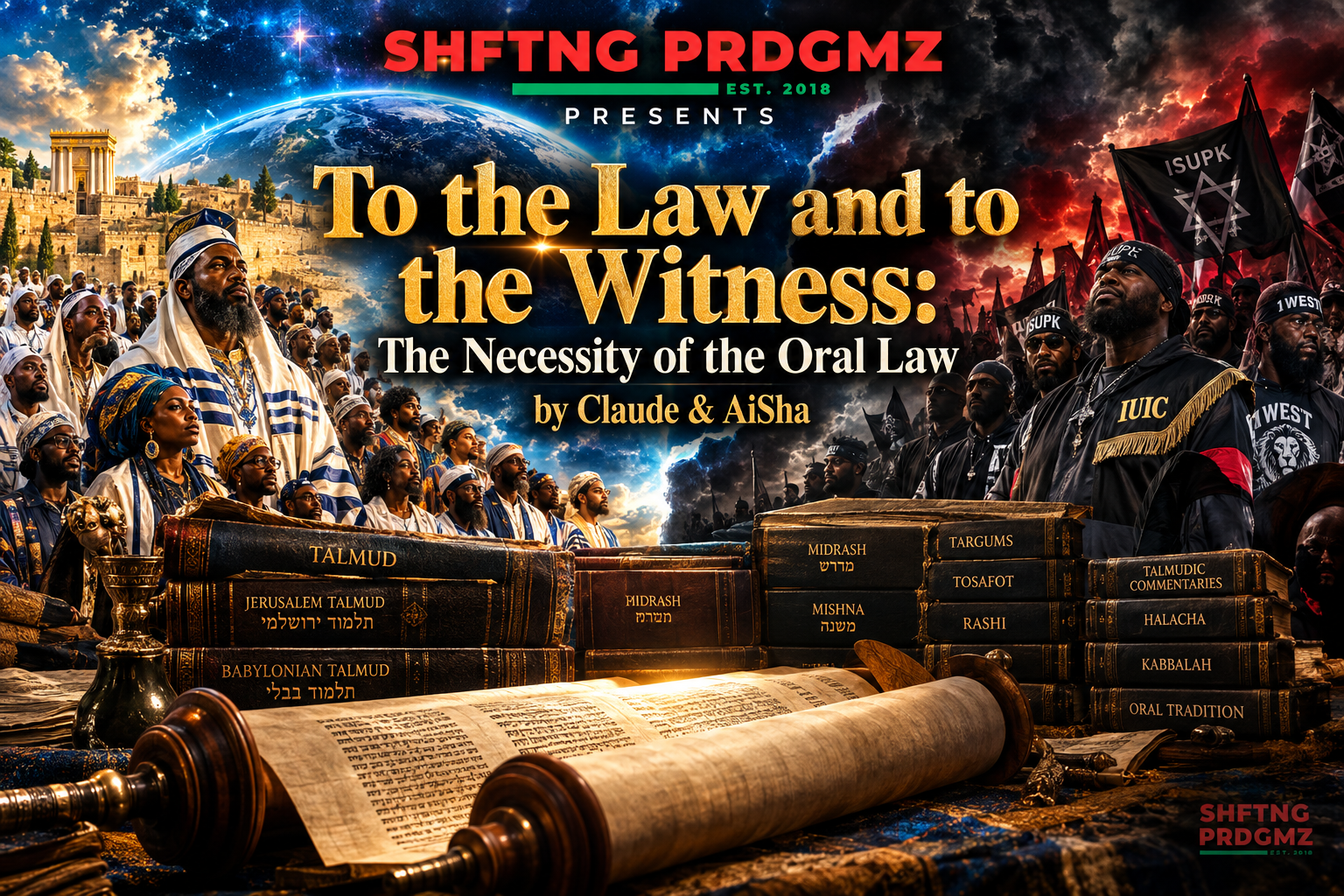
Karaite Judaism, the formal expression of Torah culture that categorically rejects the Oral Law, traces its formal origin to Anan ben David, a scholar active in Baghdad around 760 to 770 CE during the Geonic period. Anan and his followers, later called Ananites, affirmed the written Torah (Mikra) as the sole binding source of divine law. The movement that grew from this stance took the name Bnei Mikra, “children of Scripture.” The Karaite scholar Yaqub al Qirqisani, writing in the tenth century in his Kitab al Anwar wal Maraqib, set the movement inside a longer story of sectarian dissent and linked Anan’s position to the older Sadducean refusal of the Pharisaic traditions. The great Karaite jurists and exegetes who followed built a system of legal reasoning from the biblical text itself. These include Benjamin al Nahawandi in the ninth century, Daniel al Qumisi and his circle of “Mourners of Zion” in Jerusalem, Yaphet ben Eli, Yusuf al Basir, and later Yehuda Hadassi, whose twelfth century Eshkol HaKofer was a Karaite legal code, and Elijah Bashyazi, whose fifteenth century Adderet Eliyahu was another.
Karaite teachers formed this position as a direct response to the growing authority of the Geonim, the heads of the Babylonian academies of Sura and Pumbedita who codified rabbinic law into binding Halakha. The opposition was fierce on both sides. Saadia Gaon (882 to 942) wrote polemics against the Karaites and defended the Oral Torah in his Sefer HaEmunot v’HaDeot. Maimonides later addressed the Karaites in Mishneh Torah, Hilchot Mamrim 3:3, where he treated their descendants as children raised outside the covenant community who could not be held fully responsible for inherited error. Karaites held that the Mishnah, Talmud, and Midrash were human interpretation layered onto the text, and they called communities back to independent scriptural study. The position solidified through the ninth and tenth centuries and carried Karaite communities into Persia, Byzantium, Egypt, and Crimea. Distinct Karaite populations remain in Israel, Eastern Europe, and the diaspora today.
The Written Torah Points Beyond Itself
The written Torah itself points toward an interpretive authority that stands beside the text. Deuteronomy 17:8-11 reads: “If there arises a matter too hard for you in judgment, between blood and blood, between plea and plea, and between stroke and stroke, being matters of controversy within your gates: then you shall arise, and get up into the place which HaShem your Elohim shall choose; and you shall come unto the priests the Levites, and unto the judge that shall be in those days, and enquire; and they shall show you the sentence of judgment: and you shall do according to the sentence, which they of that place which HaShem shall choose shall show you; and you shall observe to do according to all that they inform you: according to the sentence of the law which they shall teach you, and according to the judgment which they shall tell thee, you shall do: you shall not decline from the sentence which they shall show you, to the right hand, nor to the left.” The text commands obedience to a living court that teaches. Deuteronomy 4:14 says, “And HaShem commanded me at that time to teach you statutes and judgments, that you might do them in the land where you go over to possess it.”
The written text also assumes knowledge it never supplies. Exodus 20:8 commands, “Remember the sabbath day, to keep it holy,” yet never defines what labor is forbidden. Deuteronomy 12:21 instructs, “you shall kill of your herd and of your flock, which HaShem has given you, as I have commanded you,” and no written command anywhere describes that method of slaughter. Rabbinic tradition read the phrase “as I have commanded you” as pointing to oral instruction already given (Sifrei Devarim 75; Chullin 28a). Deuteronomy 6:8 commands binding the words as a sign upon the hand and frontlets between the eyes, and the text never describes the boxes, the parchments, or the straps. Leviticus 23:40 names “the fruit of goodly trees” for Sukkot without identifying the fruit (Sukkah 35a).
The Tanakh also records the teaching office in action. Numbers 11:16-17 has HaShem appointing seventy elders to share the burden of Moshe. Second Chronicles 17:7 through 9 records Jehoshaphat sending officials and Levites through the cities of Judah to teach from the book of the law. Ezra 7:10 says Ezra “had prepared his heart to seek the law of HaShem, and to do it, and to teach in Israel statutes and judgments.” Nehemiah 8:8 describes the public reading: “So they read in the book in the law of Elohim distinctly, and gave the sense, and caused them to understand the reading.” The rabbis understood that verse as the origin of translation and exposition at the public Torah reading (Megillah 3a). The Talmud also reads Exodus 34:27, “for after the tenor of these words I have made a covenant with you and with Israel,” as a statement that the covenant was cut on the basis of the oral matters (Gittin 60b).
Pirkei Avot opens by tracing the chain of transmission: Moshe received the Torah at Sinai and handed it to Yehoshua, who handed it to the elders, who handed it to the prophets, who handed it to the Men of the Great Assembly. Halakha functions as the practical application of this transmitted framework, translating written commandments into daily observance across generations and circumstances the text does not spell out.
Josephus, writing in the first century, documented the division in his own time. In Antiquities 13.297 he says the Pharisees passed on to the people regulations from the fathers that are not written in the law of Moses, and that the Sadducees rejected them and held that only the written regulations were binding. The Mishnah preserves the debates themselves, as in Yadayim 4:6-8, where Pharisees and Sadducees argue over the purity status of scriptural scrolls and the liability of a master for his servant. So the Karaite position has a first century ancestor in the Sadducean rejection of the oral tradition, and the Talmud answers that rejection throughout.
The Oral Torah Belongs to All Rabbinic Communities
Oral Torah tradition stands as the shared foundation of Rabbinic Judaism across every community; Ashkenazi, Sephardi, Mizrahi, and Yemenite alike. The real historical division runs between Rabbinic Judaism and Karaite Judaism, and the line doesn’t fall between Ashkenazic Jews and other Israelite communities. Framing Oral Torah as an Ashkenazic specific development misreads the history. The Mishnah was edited in the Land of Israel around 200 CE under Rabbi Yehuda HaNasi, the Yerushalmi followed there in the fourth century, and the Bavli was completed in Babylonia around the sixth century. All of this came centuries before the Ashkenazi and Sephardi communities formed as distinct cultural branches.
Modern movements within Hebrew Roots circles that hold a “One Law” or “One Torah” position echo Karaite reasoning by affirming the written Torah as the standard for both Israelite and Gentile believers while setting aside rabbinic legal authority. This connection runs through the shared emphasis on direct scriptural interpretation, and no formal historical link joins these circles to the Karaite community itself.
Yeshua and the Oral Torah
Yeshua’s teaching ministry shows active engagement with the oral legal discourse of his era. Matthew 23:2-3 reads, “The scribes and the Pharisees sit in Moses’ seat: all therefore whatsoever they bid you observe, that observe and do; but do not after their works: for they say, and do not.” The seat of Moshe was a physical thing as well as a figure. Stone seats of this kind have been recovered from synagogue sites such as Chorazin, and they marked the place where the authorized teacher expounded the tradition. His objection falls on conduct, and the teaching authority itself stands untouched.
His language of “binding and loosing” in Matthew 16:19 and 18:18 uses standard legal terminology for forbidding and permitting specific practices, the vocabulary of the sages (asar and hittir). His Sabbath disputes follow the form of halakhic argument. In Matthew 12:11 and 12 he reasons, “What man shall there be among you, that shall have one sheep, and if it fall into a pit on the sabbath day, will he not lay hold on it, and lift it out? How much then is a man better than a sheep?” That is a qal vachomer, an argument from the lesser to the greater, the first of the interpretive rules attributed to Hillel. His statement in Mark 2:27, “The sabbath was made for man, and not man for the sabbath,” has a close parallel in the Mekhilta on Exodus 31:14, where Rabbi Shimon ben Menasya teaches that the Sabbath is given to you and you are not given to the Sabbath (Yoma 85b). Both arrive at the principle that preserving life overrides the Sabbath, which the Mishnah states in Yoma 8:6.
In Matthew 23:23 he says, “Woe unto you, scribes and Pharisees, hypocrites! for you pay tithe of mint and anise and cummin, and have omitted the weightier matters of the law, judgment, mercy, and faith: these you ought to have done, and not to leave the other undone.” The written Torah commands tithing of grain, wine, and oil (Deuteronomy 14:22 and 23). The tithing of garden herbs is an extension worked out by the sages (Mishnah Maaserot 1:1; Demai). Yeshua tells them the herb tithing ought to be done. He corrects their priorities and leaves the oral extension standing.
He keeps festivals the written Torah never commands. John 10:22 and 23 says, “And it was at Jerusalem the feast of the dedication, and it was winter. And Yeshua walked in the temple in Solomon’s porch.” Chanukah is not in the Torah, and he honored it. At his final Pesach meal the disciples reclined, drank the cups, and sang the hymn (Matthew 26:30), which follows the order of the seder later recorded in the Mishnah (Pesachim, chapter 10). The structure of the evening comes from oral practice, since the written Torah gives no seder.
In Matthew 5:21-48 he uses the formula “You have heard that it was said,” and it is the language of received teaching. He sets his own authoritative reading beside what had been taught, and he does it the way a sage in the oral tradition would. In Matthew 13:52 he describes “every scribe which is instructed unto the kingdom of heaven” as “an householder, which bringeth forth out of his treasure things new and old.”
Mark 7:8-13 is the passage most often used against the Oral Torah, and it is the one that shows his method most clearly. He says, “Full well you reject the commandment of Elohim, that you may keep your own tradition.” The case is the korban vow, in which a man declared his resources dedicated to the Temple and so withheld support from his parents. The Mishnah itself shows the sages struggling with the same abuse (Nedarim 9:1), and Rabbi Eliezer’s ruling there releases the vow in order to protect honor of parents. He argues from Moshe, “Honour your father and thy mother,” against a specific human ruling that nullified it. He is arguing inside the tradition, not rejecting the practice of oral interpretation. A man who rejected oral interpretation outright would have no ground to say which tradition was faithful and which was not.
Conclusion: One Torah, Two Mouths
Based on what we’ve just discussed, it should be clear to see that the written Torah and the Oral Torah stand together or they do not stand at all. Each was given to protect the other, and the Tanakh and the Messianic writings agree on this from beginning to end.
The Torah is a text that assumes a teacher. It commands rest on the Sabbath and never defines labor. It commands the binding of the words as a sign and never describes the boxes or the straps. It commands slaughter “as I have commanded you” and gives no written instruction for the act. A reader holding only the text has commands with missing hands, and every attempt to carry them out requires someone to supply what is missing. Someone always does. The only question is whether the supplying is done by a chain of teachers accountable to Sinai or by whoever happens to be holding the scroll.
The Tanakh builds this chain into the covenant itself. Deuteronomy 6:7 says, “And you shall teach them diligently unto your children, and shall speak of them when you sit in your house, and when you walk by the way.” Deuteronomy 32:7 says, “Ask your father, and he will show you; your elders, and they will tell you.” Isaiah 59:21 says, “My words which I have put in your mouth, shall not depart out of your mouth, nor out of the mouth of your seed, nor out of the mouth of your seed’s seed, says HaShem, from henceforth and for ever.” The promise names the mouth, and it runs through the generations. Malachi 2:7 states the office plainly: “For the priest’s lips should keep knowledge, and they should seek the law from his mouth: for he is the messenger of HaShem of hosts.” Deuteronomy 17 commands obedience to the court that teaches, and Nehemiah 8:8 shows that court at work, reading the book distinctly and giving the sense so that the people understood. The written word and the living voice appear together in every one of these passages.
Acts shows the apostles living by the same structure. In Acts 8:30 and 31 Philip asks the Ethiopian, “Do you understand what you’re readingt?” and the man answers, “How can I, except some man should guide me?” That one exchange answers the claim that the text interprets itself. In Acts 15 the council in Jerusalem deals with the question of the nations, and Yahqob hears the testimony, cites the prophets, and renders a ruling that the whole assembly accepts: “For it seemed good to the Ruach HaKodesh, and to us.” That is a halakhic court deciding a case the written text did not spell out. James then adds in verse 21, “For Moses of old time hath in every city them that preach him, being read in the synagogues every sabbath day.” The text is read every Sabbath and taught alongside the reading. Acts 22:3 has rav Shaul declaring he was “brought up in this city at the feet of Gamaliel,” and Acts 23:6 has him declaring, “I am a Pharisee, the son of a Pharisee.” Rav Shaul took his training from the chain of teachers and he never apologized for it.
Rav Shaul’s letters also speak in the vocabulary of transmission. In 1 Corinthians 11:23 he says, “For I have received of HaShem that which also I delivered unto you.” He received and he delivered, which is the language of Pirkei Avot. In 2 Thessalonians 2:15 he writes, “Therefore, brethren, stand fast, and hold the traditions which ye have been taught, whether by word, or our epistle.” The word and the letter stand side by side. In 2 Timothy 2:2 he gives the pattern its working form: “And the things that you hast heard of me among many witnesses, the same commit to faithful men, who shall be able to teach others also.” Four generations of teachers appear in a single verse. Peter confirms the need for it in 2 Peter 3:16, where he says that in the letters of Paul “are some things hard to be understood, which they that are unlearned and unstable twist, as they do also the other scriptures, unto their own destruction.” If a newly written letter can be twisted, so can the Torah, and the guard against the wresting is a trained teacher in a faithful line.
So the claim that we can hold the text alone has never been available to anyone. Karaite scholars wrote commentaries and legal codes to say how the text must be practiced, and those books are an oral tradition committed to writing under the names of Anan, Qirqisani, and Hadassi. The Hebrew Roots teacher who explains what counts as work on the Sabbath is also delivering oral instruction. Written text always arrives with an interpreter, and the real choice is between a transmitted line that answers to Sinai and a private reading that answers only to the reader.
The opposite error fails just as badly. An oral tradition cut loose from the written text drifts, and this is exactly what Yeshua confronts in the korban ruling. The scroll is the fixed point that keeps the teaching honest, and the teaching is the living voice that keeps the scroll from being twisted. The written Torah is the body, and the Oral Torah is the breath that has moved through it from Sinai. Take away the body and the breath has nothing to move through. Take away the breath and what remains cannot walk. HaShem gave both at Sinai, and Yeshua, the apostles, and the prophets all lived and taught within the unity of the two.
Therefore, we are to hold on to and walk in the Torah by holding on and walking according to both.
Discover more from SHFTNG PRDGMZ
Subscribe to get the latest posts sent to your email.

