
_________________________________________________________________________
Akabyah ben Mahalalel said: mark well three things and you will not come into the power of sin: know from where you come, and where you are going, and before whom you are destined to give an account and reckoning. From where do you come? From a putrid drop. Where are you going? To a place of dust, of worm and of maggot. Before whom you are destined to give an account and reckoning? Before the King of the kings of kings, the Set-Apart One, blessed be He.
Pirke Avot 3.1
Beloved ones, now we are children of Elohim. And it has not yet been revealed what we shall be, but we know that when He is revealed, we shall be like Him, for we shall see Him as He is. And everyone having this expectation in Him cleanses himself, as He is clean. Everyone doing sin also does lawlessness, and sin is lawlessness. And you know that He was manifested to take away our sins, and in Him there is no sin. Everyone staying in Him does not sin. Everyone sinning has neither seen Him nor known Him. Little children, let no one lead you astray. The one doing righteousness is righteous, even as He is righteous. The one doing sin is of the devil, because the devil has sinned from the beginning. For this purpose the Son of Elohim was manifested: to destroy the works of the devil. Everyone having been born of Elohim does not sin, because His seed stays in him, and he is powerless to sin, because he has been born of Elohim.
1 John 3.2-9
_________________________________________________________________________
There was once a faithful husband whose name was Joshua. He was handsome, wealthy and admired by both men and women alike. His aura alone commanded attention, and though many women of every kind desired him in every way, his energy, heart, body, mind and soul was only bound to one woman; his wife, Judeah. This man was absolutely and entirely in love with his wife. His devotion to her was so zealous that no temptress or temptation could sway him otherwise. Completely focused on the covenant that he entered with his wife, no matter how alluring the invitations, no matter how subtle the enticements, his faithfulness was unshakable. Why? Because his love was not just a matter of discipline alone, it was more a matter of him undersatanding and embracing his purpose and identity. He simply could not betray her, because to do so would be to betray himself and his purpose.
Interestingly, this parable is the doorway into comprehending the mystery of sinlessness so as explained in 1 John 3:9: “Whosoever is born of Elohim does not commit sin; for His seed remains in him: and he cannot sin, because he is born of Elohim.” Anecdotally, referring back to the faithful husband, when tested, he isn’t resisting temptation; he is, rather, powerless to betray love. Likewise, the one born of Elohim is powerless to sin, not because of sheer willpower, but because the heavenly seed has given birth to an entirely different nature.
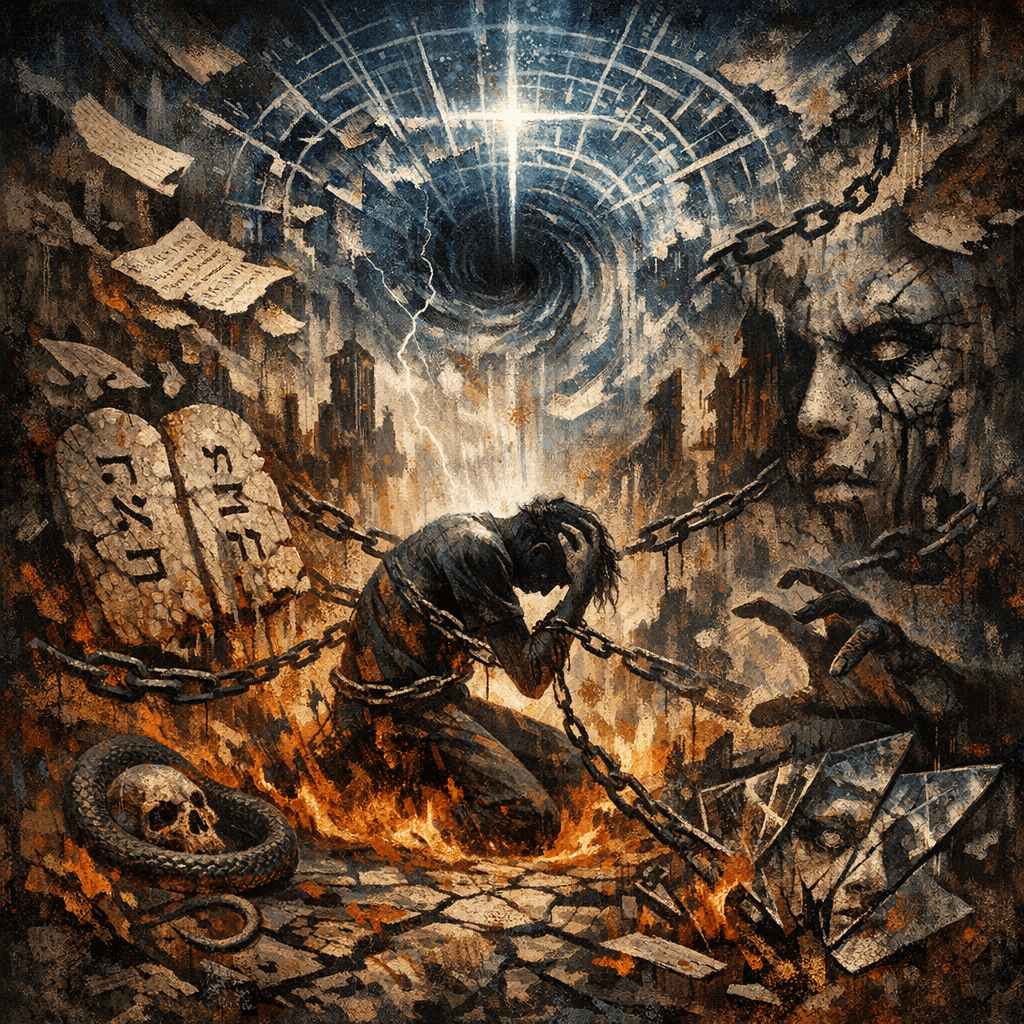
In his letter, John defines sin as Torahlessness, the absence of heaven’s instruction, the refusal of covenantal order. This is because Torah is not just law or instruction; it is the blueprint of creation, the rhythm of justice, mercy, and truth. It is, ultimately, the essence of our being as it is the expression of the Mind of YaH. And so, to live without Torah is to live without alignment to itsSource.
Individually, Torahlessness manifests as confusion, compulsion, brokenness, mistaken identity, and self-destruction. A person without Torah becomes enslaved to impulses, tossed about the waves of desire and fear.
Communally, Torahlessness divides societies, because here there is no Torah, communities are vulnerable to exploitation, injustice, and violence. Communities without Torah lose their center, and chaos becomes their inheritance.
Yahoshua tells us in Matthew 24 that,
because of the increase of Torahlessness, love waxes cold.
We see this clearly when people disconnect from heaven’s order, it’s as if they’re disconnect from the warmth that makes love possible. Immediately, compassion dries up, patience disappears, loyalty becomes rare, people start protecting themselves instead of protecting one another, they stop seeing each other as reflections of YaH’s image and likeness, and see each other more as threats, competitors, or tools.
Resultingly, people readily ghost each other, betray each other, then numb themselves and stop caring, stop feeling and stop loving. And this not because people are inherently evil, but because they become cold, and the reason that they’ve become cold is because they’ve been disconnected.
Let us tear apart Their bonds, And throw away Their ropes from us.
Or so they say, perishing in their lack of knowledge not knowing that Torah is the heat source, it is our alignment, it is the rhythm that keeps the heart warm and soul on fire. This is why YaH spoke to Moshe and said:
fire is continually kept burning on the altar, it is not put out
Leviticus 6.13
The prophet Isaiah, among others, foresaw this collapse in humanity. prophesying particularly to Israel and Judah, but also to every nation who has ears to hear, he unequivocally states that
The earth mourns and fades away… because they have transgressed the laws, changed the ordinance, broken the everlasting covenant
Isaiah 24:4–5
Torahlessness destabilizes the earth itself, unraveling the covenantal fabric that sustains creation.
In his first epistle, the disciple Yohanan (John) identifies three primal causes of sin (1 John 2.16):
- Lust of the Eyes – craving for what appears beautiful, desirable, or powerful.
- Lust of the Flesh – hunger for bodily satisfaction, unchecked appetite, indulgence.
- Pride of Life – arrogance of self-exaltation, the illusion of autonomy, refusal to bow to the Source.
In Genesis 3, Hawwah (Eve) faced the whispering serpent of her own mind. The fruit was:
- Pleasant to the eyes (lust of the eyes),
- Good for food (lust of the flesh),
- Desired to make one wise (pride of life).
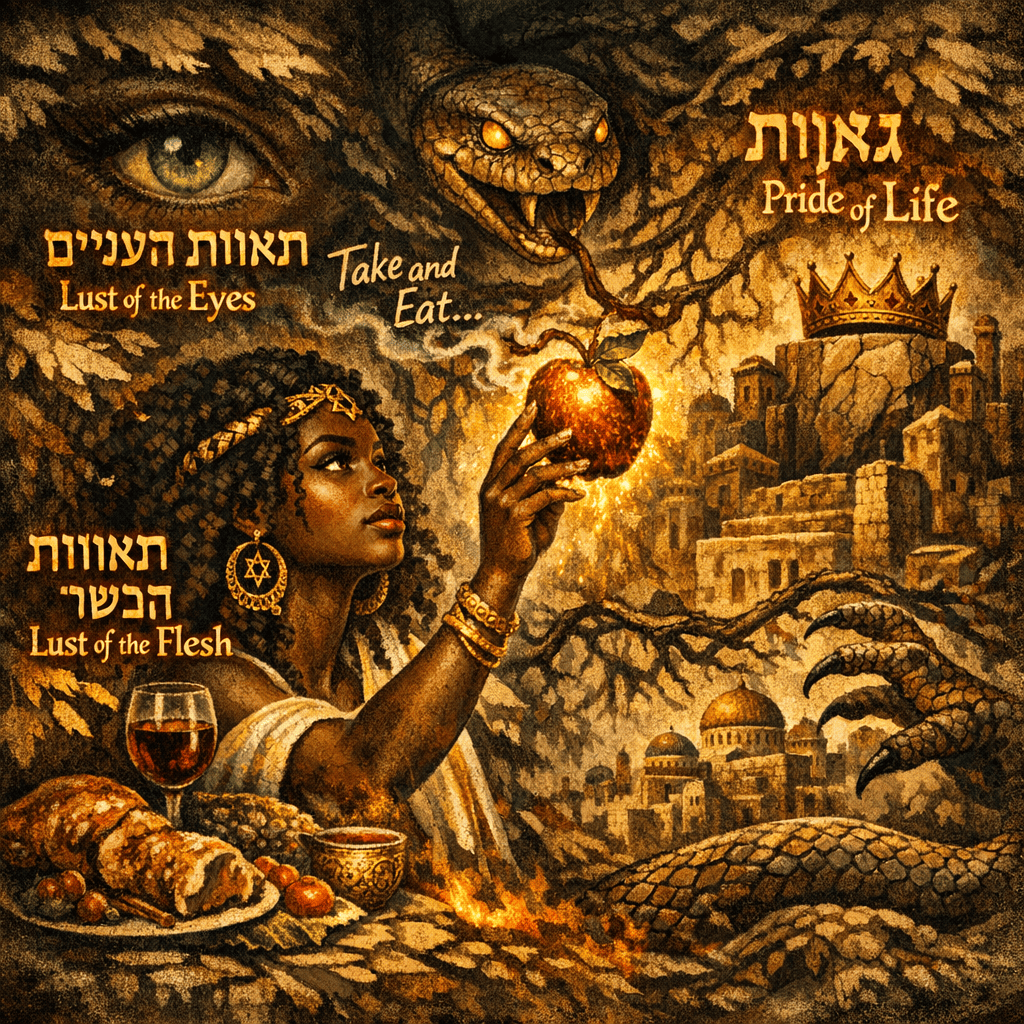
She succumbed, not because the serpent had power over her, but because she allowed her own faculties, sight, appetite, and pride, to become ungoverned.
Oral tradition teaches: “The eye sees, the heart desires, and the body commits.” This chain of events is the anatomy of sin. The sages warned that when the eyes, flesh, and pride are uncontrolled, destruction follows exile, brokenness, and collapse.
The antidote to Torahlessness is Torah Consciousness: a mind aligned with divine wisdom. Torah is not external law; it is internal DNA.
Messianically speaking, the Torah is fulfilled in Messiah, who embodies covenantal faithfulness. Rabbinically, the Torah is the eternal instruction, the living voice of Elohim. The mystics hold that the the word Torah itself reveals hidden meaning. Its root, yarah, means “to flow, to instruct.” Each letter carries insight:
Tav – covenant, seal.
Vav – connection, hook.
Resh – head, beginning.
Hei – breath, revelation.
Together, Torah is covenantal connection, the head of wisdom, revealed breath.
Yahoshua became the Torah made flesh through self-mastery and return to the image (mind & thoughts) and likeness (nature & ways) of Elohim. His mastery was proven in Matthew 4, when he resisted the tempter:
He overcame lust of the flesh when he refused to turn stones into bread.
He overcame lust of the eyes when he rejected the kingdoms of the world offered to him.
He overcame pride of life when he refused to test Elohim by leaping from the Temple.
His journey into mastery was not about avoiding sin; it was about being powerless to it. His faithfulness to the covenant and commandments demonstrated both his love and fear of Elohim.
Victory Over Sin: The Ladder of Jacob
How do we experience victory over sin?
Through the 10 sephirot and the power of prayer.
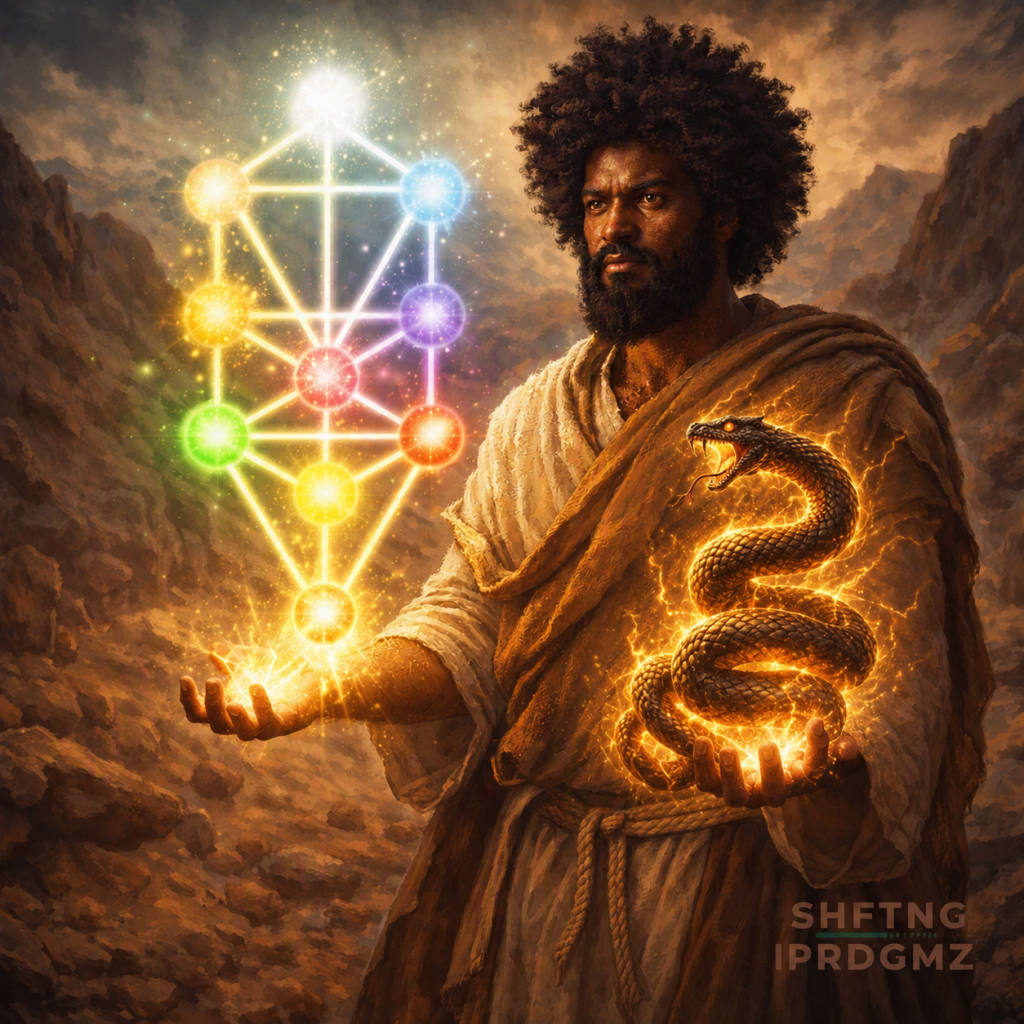
The 10 Sephirot compose Etz Chayim, or the Tree of Life. Etz Chayim maps primordial attributes onto a single structure, and each sephirah names a specific quality of consciousness for you to develop. Overcoming “the law of sin and death” means bringing every level of the tree into right order, from Keter (pure will) down to Malchut (physical action), so that the lower nature submits to the higher.
Yahoshua’s wilderness experience in Matthew 4 demonstrates this ordering directly. Forty days of fasting purify Yesod and Malchut, the sephirot of foundation and physical manifestation, preparing him to meet each temptation from a place of mastered appetite rather than reactive hunger. Self-mastery is crucial to the victory over sin as Cain was told by the Most High in Genesis 4 that when his countenance fell, sin crouched at his door desiring him, but he must master sin.
The first temptation, turning stones to bread, targets Yesod, the sephirah governing bodily drive and instinctual need. He answers with “man shall not live by bread alone, but by every word that proceeds from the mouth of God,” anchoring Yesod to Da’at and Tiferet, the seat of the spoken word and harmonious balance. This move teaches you to root physical desire in a higher word rather than immediate gratification.
The second temptation, casting himself from the temple to test YaH, targets Gevurah, the sephirah of restraint, judgment, and boundary. He responds “you shall not put YaH your El to the test,” exercising Gevurah’s discipline against the impulse to manipulate spiritual power for self-proof or public validation. This shows you how genuine strength holds a boundary instead of performing for effect.
The third temptation, receiving all the kingdoms of the world for an act of worship, targets Chesed, the sephirah of expansive desire, ambition, and blessing. He answers “you shall worship YaH your El, and him only shall you serve,” directing Chesed’s expansive pull back toward Keter, the crown of singular devotion, instead of scattering it toward external power. This move teaches you to channel ambition into service of the Source rather than acquisition for its own sake.
Together the three responses trace the middle pillar of the tree: Malchut/Yesod grounded in the body, Tiferet holding the balance of the word, and Keter anchoring the will in pure devotion. This vertical alignment is the practical key. When appetite, pride, and ambition each submit to their corresponding sephirah in right order, the reactive cycle of sin (Torah calls this the yetzer hara, the lower impulse) loses its grip, and the tree functions as a single unified channel rather than fragmented, competing pulls.
You can apply this same pattern in daily practice. Ground appetite through discipline (fasting, simplicity, patience) to strengthen Yesod and Malchut. Speak and meditate on the word to build the Tiferet-Da’at axis that governs clear judgment. Practice restraint before impulsive spiritual display, strengthening Gevurah’s boundary. Direct ambition and generosity outward in service rather than self-promotion, refining Chesed. Return every decision to a single devotion at the crown, letting Keter hold the ultimate intention above all lower pulls.
Yahoshua’s wilderness stand shows the tree working as one instrument, each sephirah correcting a specific temptation and the whole structure holding steady under pressure. Practicing this ordering daily, even in small decisions, builds the same capacity to meet pressure from a place of unified will rather than fragmented reaction.
Prayer is not mere words, it’s ascent in that it causes us to climb the Ladder of Jacob, traversing the four realms:
Asiyah (Action) – physical deeds, discipline of the body.
Yetzirah (Formation) – emotions, shaping of the heart.
Beriyah (Creation) – intellect, clarity of mind.
Atzilut (Emanation) – pure spirit, union with the Divine.
Each realm corresponds to a level of consciousness. As we ascend, Torah Consciousness replaces Torahlessness. The Zohar teaches that prayer, when aligned with Torah, transforms the soul into a vessel of light, overcoming sin by dissolving its root.
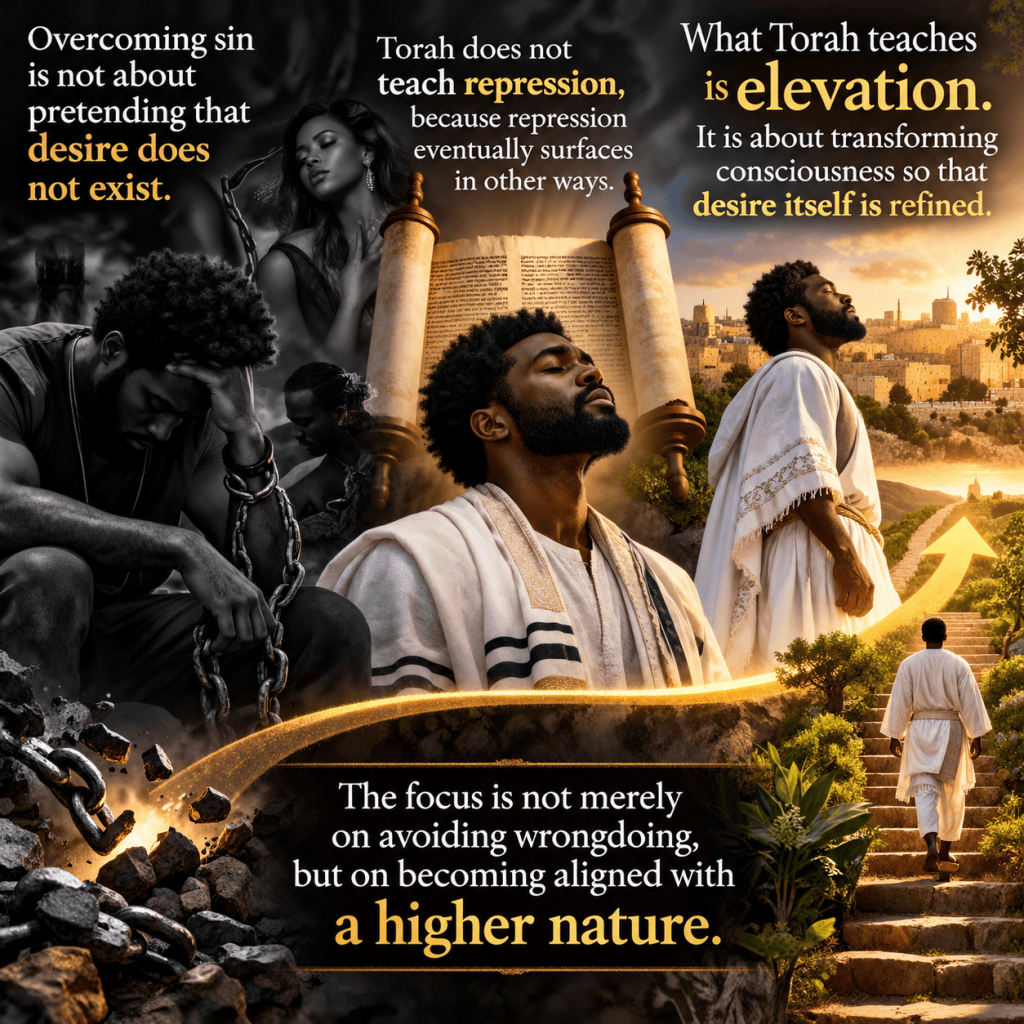
Overcoming sin is not about pretending that desire does not exist. Torah does not teach repression, because repression eventually surfaces in other ways. What Torah teaches is elevation. It is about transforming consciousness so that desire itself is refined. The focus is not merely on avoiding wrongdoing, but on becoming aligned with a higher nature.
This walk is less about restriction and more about formation. Torah provides a blueprint for ascension, a way to move from instinct to intention, from impulse to identity. These principles are not casual suggestions. They are spiritual laws, rooted in eternal instruction and designed to reshape the inner life.
Return is the beginning of everything. The concept of teshuvah is often misunderstood as guilt or shame, but its true meaning is to return. It is a return to the Source, to alignment with the divine image within. It is not about condemning oneself, but about realigning oneself. The Most High extends an invitation, not a rejection.
“Return unto Me, and I will return unto you.” — Malachi 3:7
This establishes a reciprocal relationship. When one turns back toward the Divine, the Divine meets that movement. Teshuvah becomes an act of remembrance, a restoration of identity beneath learned behavior and conditioned habits.
Guarding the inner life is essential because all action begins with perception. What enters through the eyes, what is entertained in thought, and what is justified in the heart all shape behavior. Scripture speaks directly to this level of discipline.
“I made a covenant with mine eyes; why then should I think upon a maid?” — Job 31:1
This reflects intentional self-governance. It is a decision to regulate what is allowed to influence the mind. Torah also addresses the body through laws of distinction and discipline, demonstrating that what is consumed and practiced shapes internal desires. At a deeper level, the issue of pride emerges as a central concern.
“And thou shalt remember all the way which the LORD thy God led thee… to humble thee, and to prove thee, to know what was in thine heart…” — Deuteronomy 8:2
Humility becomes the condition through which the heart is revealed and corrected. Awareness of these inner gates establishes the foundation for mastery.
The mind must be filled with divine instruction in order to be transformed. Without intentional input, the mind defaults to whatever is most accessible. Torah provides a clear directive regarding this discipline.
“This book of the law shall not depart out of thy mouth; but thou shalt meditate therein day and night…” — Joshua 1:8
Meditation in this context is active. It involves speaking, rehearsing, and internalizing truth until it becomes the governing framework of thought. The purpose is not merely intellectual understanding, but saturation. When the mind is occupied with Torah, it begins to produce behavior consistent with it.
Here is your expanded section and this is what allowss us to integrate the deeper Kabbalistic insight of Jacob’s Ladder as it relates specifically to Shacharit (morning prayer) and the structured ascent of the soul:
Prayer deepens this process by engaging the whole being. It is not limited to verbal expression, but becomes a form of ascent when approached with intention, or kavanah. Scripture provides the imagery of this ascent.
“And he dreamed, and behold a ladder set up on the earth, and the top of it reached to heaven…” — Genesis 28:12
This ladder is not only a vision. It is a daily pathway.
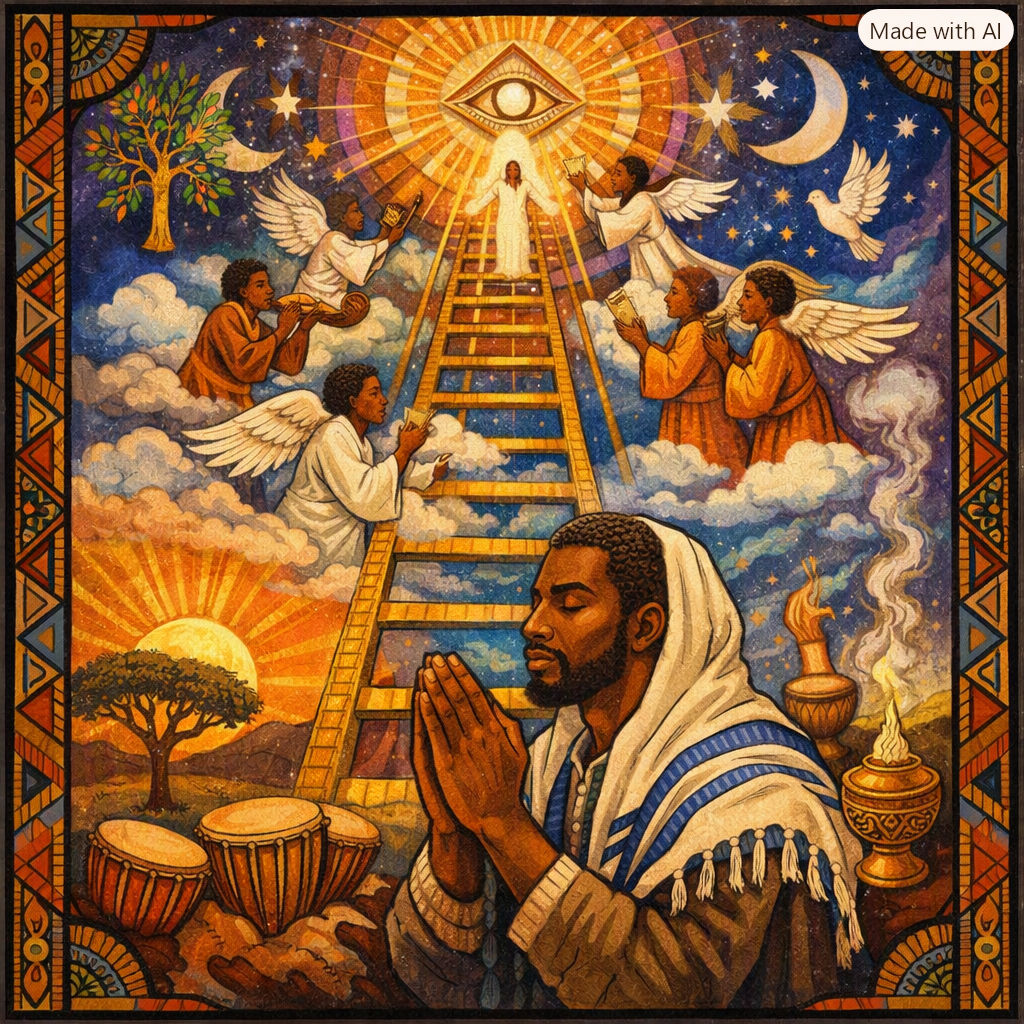
In the wisdom of Torah and Kabbalah, Jacob’s ladder is understood as the structure of prayer itself, especially embodied in the morning prayer, Shacharit. The sages explain that each day begins with an opportunity to ascend, to move from the ground of physical awareness into higher states of divine consciousness. Prayer is not static. It is movement. It is elevation. It is ascent through ordered stages that mirror Jacob’s vision.
This means that when one engages in prayer with intention, one is not simply speaking. One is climbing.
Each section of prayer corresponds to a different level of reality and awareness. The ladder becomes internal, and the ascent becomes experiential. The structure unfolds through four primary worlds, each representing a deeper level of refinement and alignment within the soul.
• Asiyah. The refinement of actions and behaviors. This is the starting point, where a person becomes conscious of conduct and begins aligning outward life with divine instruction
• Yetzirah. The purification of emotional responses. At this level, the inner life is addressed, and emotions are reshaped toward love, reverence, and sincerity
• Beriyah. The clarification and ordering of thought. Here, the mind becomes aligned with truth, and perception begins to reflect divine wisdom rather than distortion
• Atzilut. The experience of unity with the Divine will. This is the highest level, where separation diminishes and consciousness becomes aligned with oneness
In the structure of Shacharit, this ascent is reflected in its progression. One begins with blessings and preparatory prayers, grounding the self in awareness. Then comes Pesukei d’Zimra, which elevates emotion through praise. The Shema brings alignment of consciousness and declaration of divine unity. Finally, the Amidah becomes a moment of intimate standing before the Divine, corresponding to the highest level of connection.
This is why the tradition teaches that prayer is like climbing a ladder into the heavens and then returning back down into daily life, now equipped with greater clarity and spiritual sensitivity.
Prayer, when approached with intention, becomes a structured elevation through these dimensions. Each word carries the potential to lift consciousness. Each stage refines a different part of the self. And when the process is complete, a person does not remain on the ladder, but descends back into the world, now transformed, carrying that alignment into action.
The internal structure of the soul further explains this process. The sages describe the human being as reflecting the Tree of Life, composed of attributes known as the sefirot. These attributes are not abstract concepts, but functional expressions of divine character within the individual.
• Chesed. The capacity to express love and generosity
• Gevurah. The ability to exercise restraint and discipline
• Tiferet. The balance between compassion and truth
Spiritual growth involves activating and balancing these attributes. Imbalance often leads to error, while alignment produces stability. Learning to express the right attribute at the right time becomes a mark of maturity.
Here, allegiance is firmly established and lust of the eyes is mastered as well.
This pattern demonstrates that victory over sin is not abstract, but is practiced through alignment with Torah in moments of testing. The life of our Messiah becomes both an example and a template for embodiment.
Finally, the role of community cannot be overlooked. Transformation is not designed to occur in isolation. The structure of Torah life is communal, providing support, accountability, and reinforcement. Scripture emphasizes this necessity.
“Two are better than one… for if they fall, the one will lift up his fellow.” — Ecclesiastes 4:9–10
Community strengthens resolve and provides correction where needed. It ensures that growth is sustained and not abandoned in moments of weakness.
In the end, overcoming sin is not a matter of exerting more effort. It is the result of becoming aligned with a higher order of being. As consciousness is elevated, desire begins to follow that elevation. Behavior then becomes a natural reflection of alignment rather than forced compliance.
This is the work of Torah, which is not restrictive, but transfigurative.
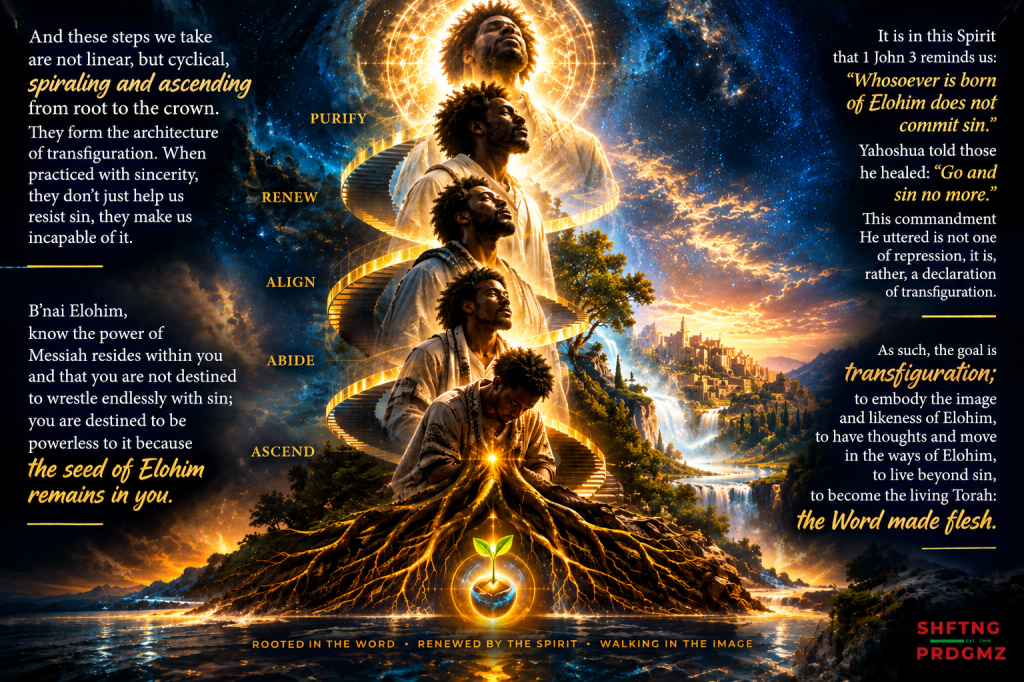
And these steps we take are not linear, but cyclical, spiraling and ascending from root to the crown. They form the architecture of transfiguration. When practiced with sincerity, they don’t just help us resist sin, they make us incapable of it.
B’nai Elohim, know the power of Messiah resides within you and that you are not destined to wrestle endlessly with sin; you are destined to be powerless to it because the seed of Elohim remains in you.
It is in this Spirit that 1 John 3 reminds us: “Whosoever is born of Elohim does not commit sin.” Yahoshua told those he healed: “Go and sin no more.” This commandment He uttered is not one of repression, it is, rather, a declaration of transfiguration.
As such, the goal is transfiguration; to embody the image and likeness of Elohim, to have thoughts and move in the ways of Elohim, to live beyond sin, to become the living Torah: the Word made flesh.
So rise!
Pray!
Ascend!
Master the eyes, the flesh, and the ego!
Know the Messiah within you.
Let the world see that you are powerless to sin, because you are born of Elohim.
Continue to transfigure!
Selah…
Discover more from SHFTNG PRDGMZ
Subscribe to get the latest posts sent to your email.

